How to Become an Aviation Mechanic: A Complete Guide for Future A&P Students
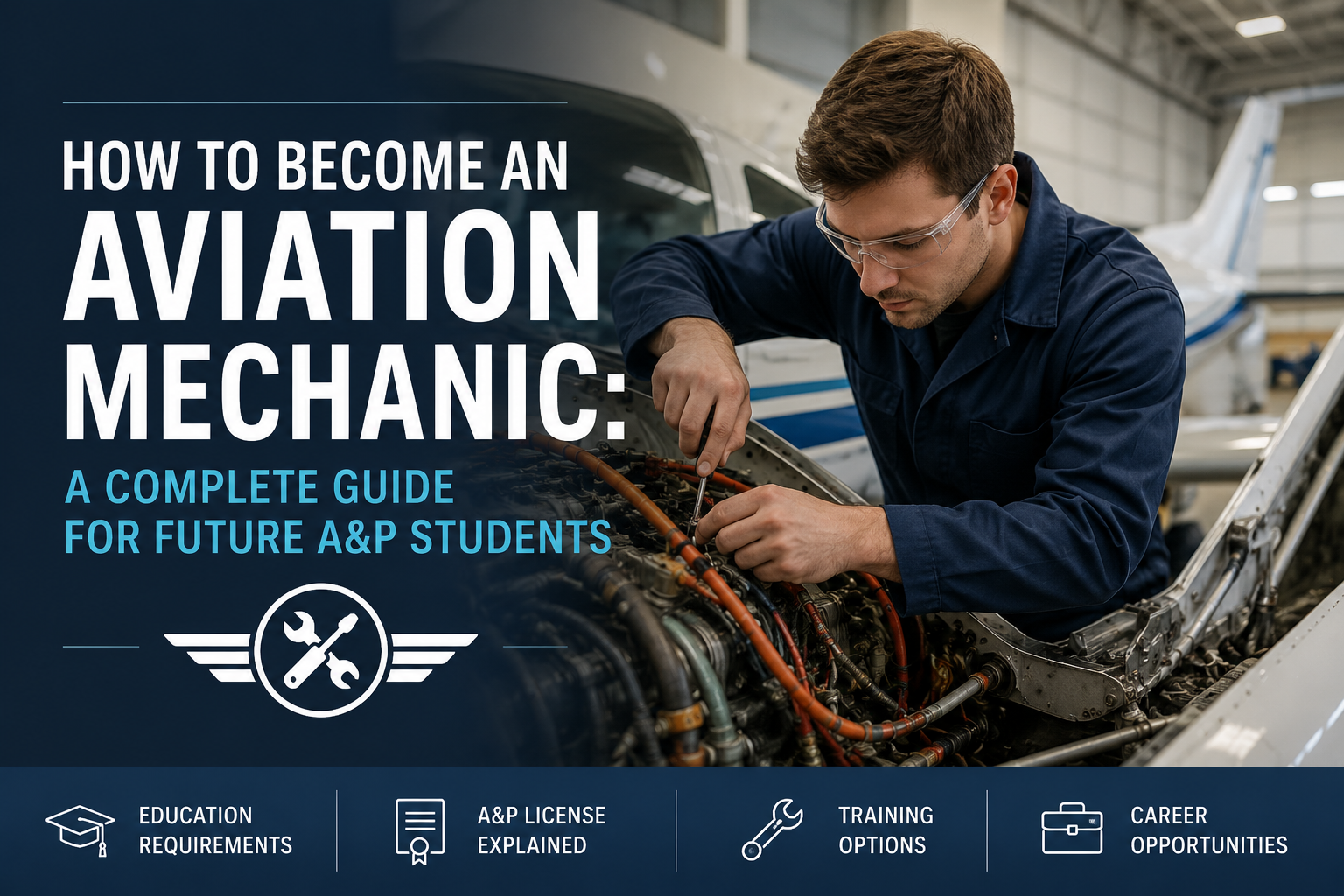
Aviation maintenance is one of the most important careers in the aviation industry. Aviation Maintenance Technicians, often called AMTs or aircraft mechanics, inspect, troubleshoot, repair, and maintain aircraft so they remain safe, reliable, and ready to fly.
For students comparing hands-on technical careers, the Airframe and Powerplant certificate—commonly known as the A&P certificate—can lead to opportunities with airlines, repair stations, manufacturers, fixed base operators, general aviation shops, corporate flight departments, and emerging aviation technologies.
What Does an Aviation Mechanic Do?
Aircraft mechanics maintain and repair aircraft systems to keep them safe and airworthy. Their responsibilities often include:
- Inspecting aircraft structures and systems
- Diagnosing mechanical or electrical issues
- Repairing or replacing aircraft components
- Performing scheduled maintenance
- Testing aircraft systems
- Approving aircraft for return to service
Aviation mechanics work on many types of aircraft, including:
- Commercial airliners
- Corporate and private aircraft
- Helicopters
- Cargo aircraft
- Military aircraft
- Unmanned aircraft systems (UAS)
Where Aviation Mechanics Work
Most Aviation Maintenance Technicians work in:
- Airlines
- Maintenance, Repair, and Overhaul (MRO) facilities
- Aircraft manufacturers
- Fixed Base Operators (FBOs)
- Corporate aviation departments
- General aviation maintenance shops
Some mechanics specialize in fields such as:
- Avionics (aircraft electronics)
- Rotorcraft (helicopters)
- Balloon and airship maintenance
- Unmanned aircraft systems
Aviation Mechanic Salary and Career Outlook
Aircraft and avionics maintenance careers offer strong earning potential because the work is highly technical, regulated, and essential to aviation safety. According to current U.S. labor data, aircraft mechanics and service technicians earn a national median wage of about $78,680 per year, while avionics technicians earn a median wage of about $81,390 per year.
Actual compensation varies by employer, location, shift, overtime opportunities, specialization, and experience. Aviation schools can help students understand which training path best supports their long-term career goals.
|
Experience Level |
Annual Salary |
|
Entry Level |
$50,000 – $65,000 |
|
Mid Career |
$70,000 – $90,000 |
|
Experienced / Airline |
$100,000+ |
Major airlines often provide additional benefits such as:
- flight privileges
- overtime pay
- union contracts
- retirement programs
FAA Requirements for Becoming an Aviation Mechanic
To become a certified aviation mechanic in the United States, you must obtain an FAA Aviation Mechanic Certificate.
This certificate includes two ratings:
Airframe (A) – aircraft structure and systems
Powerplant (P) – aircraft engines
If you earn both ratings, it is called an A&P Certificate.
Basic Eligibility Requirements
You must:
- Be at least 18 years old
- Be able to read, write, speak, and understand English
Training Pathways to an A&P Certificate
There are three primary ways to qualify for the FAA mechanic certificate.
1. Attend an FAA-Approved Aviation Maintenance Technician School
This is the most common path.
Students complete a structured training program covering:
- aircraft structures
- engines
- electrical systems
- avionics
- maintenance procedures
Training typically takes:
18–24 months
Graduates are eligible to take FAA certification tests.
2. Qualify Through Practical Work Experience
You may qualify through hands-on experience instead of school.
Required experience:
- 18 months for Airframe OR Powerplant
- 30 months for both ratings
Experience must involve:
- aircraft maintenance
- repair work
- aircraft systems
3. Use Eligible Military Aviation Maintenance Training
Military aviation technicians may qualify through the Joint Service Aviation Maintenance Technician Certification Council (JSAMTCC) program.
FAA Testing Process
To earn an FAA Aviation Mechanic certificate, applicants must pass three types of exams.
1. Knowledge Tests
There are three written exams:
- General
- Airframe
- Powerplant
Passing score: 70%
Each test takes approximately 2 hours.
2. Oral Examination
Conducted by an FAA Designated Mechanic Examiner (DME).
Tests knowledge of:
- aircraft systems
- maintenance procedures
- regulations
3. Practical Examination
Hands-on testing where applicants demonstrate real maintenance tasks.
Examples include:
- inspecting aircraft structures
- troubleshooting systems
- performing repairs
Step-by-Step A&P Certification Process
- Gain training or qualifying experience
- Apply using FAA Form 8610-2
- Obtain an FAA Tracking Number (FTN)
- Pass the FAA knowledge tests
- Complete the oral and practical exams with a DME
- Receive a Temporary Mechanic Certificate
Your FAA certificate does not expire unless surrendered, suspended, or revoked.
Do You Need an A&P Certificate to Work as an Aircraft Mechanic?
Not always.
Some technicians work under supervision without certification.
However, most employers strongly prefer or require an A&P certificate because it allows mechanics to:
- approve aircraft for return to service
- advance into higher-paying positions
- gain broader career opportunities
Why Aviation Maintenance Is a Strong Career Choice
Demand for aircraft mechanics is expected to remain strong due to:
- airline fleet growth
- retirements in the maintenance workforce
- increased air travel
- expanding cargo operations
- growth of advanced aircraft systems
Mechanics with A&P certification and avionics skills are especially in demand.
Is Aviation Maintenance School Right for You?
This career may be a great fit if you enjoy:
- working with machines and technology
- solving technical problems
- hands-on work
- aviation and aircraft
- stable, well-paying careers
Aircraft mechanics are essential to aviation safety and keep the global aviation system running every day.
Take the Next Step Toward an Aviation Maintenance Career
If you are ready to begin a hands-on aviation career, start by researching FAA-approved aviation maintenance programs. The right school can help you build the technical foundation, practical skills, and certification preparation needed to pursue Airframe and Powerplant ratings.
From classrooms and labs to hangars and real maintenance environments, aviation maintenance training prepares students for a career built on precision, responsibility, and safety.
Frequently Asked Questions
How long does it take to become an aviation mechanic?
Many FAA-approved Aviation Maintenance Technician School programs can be completed in about 18 to 24 months. Students who qualify through work experience may need 18 months for one rating or 30 months for both Airframe and Powerplant ratings.
What is an A&P certificate?
An A&P certificate is an FAA Aviation Mechanic Certificate with both Airframe and Powerplant ratings. It allows qualified mechanics to perform and approve many types of aircraft maintenance work.
Do I need aviation experience before enrolling in school?
Not necessarily. Many aviation maintenance programs are designed for students who are new to the field, while still providing the technical and hands-on training needed to prepare for FAA certification exams.
What exams are required for A&P certification?
Applicants must pass FAA knowledge tests plus oral and practical exams administered by a Designated Mechanic Examiner. These exams evaluate technical knowledge, maintenance procedures, regulations, and hands-on skills.
What kinds of jobs can aviation maintenance graduates pursue?
Graduates may pursue roles with airlines, MRO facilities, aircraft manufacturers, FBOs, corporate aviation departments, general aviation shops, and other employers that maintain aircraft and aviation systems.
Is aviation maintenance a good career path?
Aviation maintenance can be a strong career path for students who enjoy technical problem-solving, hands-on work, aircraft systems, and safety-focused responsibilities. A&P certification and avionics skills may also support broader career opportunities.
Ready to Train for an Aviation Maintenance Career?
Take the first step toward becoming an aviation maintenance professional. Request information from an admissions advisor to learn more about program length, class schedules, tuition options, financial aid availability, and FAA certification preparation.
· Request program information to compare aviation maintenance training options.
· Schedule a campus tour to see classrooms, labs, hangars, tools, and training aircraft.
· Speak with admissions about enrollment requirements, start dates, and student support services.
· Apply today and begin preparing for a hands-on career in aircraft maintenance.