Flight Dispatcher Training and Careers: How to Become an Aircraft Dispatcher in 2026
Flight Dispatcher Training and Careers
Every airline flight begins long before the aircraft leaves the gate. Behind the scenes, aircraft dispatchers analyze weather, select routes, calculate fuel requirements, review airport conditions, monitor operational restrictions, and help determine whether a flight can be conducted safely.
For people interested in airline operations but not necessarily in becoming pilots, flight dispatcher training can provide a direct pathway into an important aviation career.
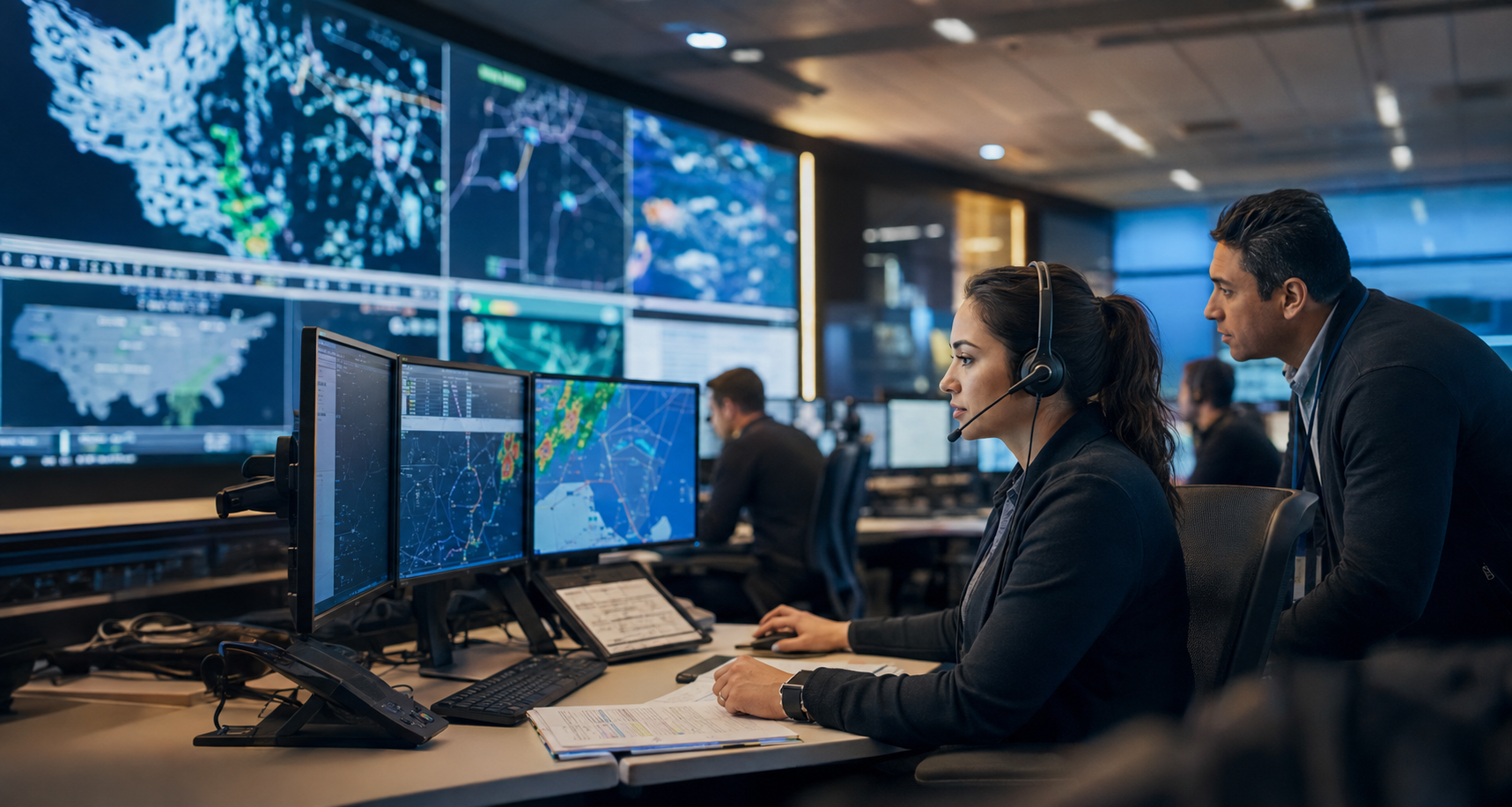
Aircraft dispatchers work in airline operations centers, where they coordinate with pilots, maintenance teams, air traffic personnel, station operations, and other departments. The position combines aviation knowledge, technology, communication, decision-making, and real-time problem-solving.
This guide explains what aircraft dispatchers do, how FAA dispatcher certification works, what students learn during training, and how to choose the right flight dispatcher school.
What Is an Aircraft Dispatcher?
An aircraft dispatcher—often called a flight dispatcher or airline dispatcher—is an aviation professional who helps plan, authorize, and monitor airline flights.
In many operations conducted under Federal Aviation Regulations Part 121, the aircraft dispatcher and pilot in command share responsibility for the safe planning and operation of a flight. Dispatchers evaluate the conditions affecting each flight and help determine whether it should depart, be delayed, rerouted, diverted, or canceled. (faa.gov)
Aircraft dispatchers typically work from an airline’s operations control center rather than from an airport control tower or aircraft cockpit.
What Does a Flight Dispatcher Do?
A dispatcher may be responsible for several flights simultaneously. The workload depends on the airline, aircraft, routes, weather, and complexity of the operation.
Common aircraft dispatcher responsibilities include:
-
Reviewing current and forecast weather
-
Selecting safe and efficient flight routes
-
Calculating fuel requirements
-
Identifying destination and alternate airports
-
Reviewing Notices to Air Missions
-
Evaluating airport and runway conditions
-
Monitoring aircraft performance limitations
-
Reviewing maintenance restrictions
-
Preparing and approving dispatch releases
-
Monitoring flights from departure through arrival
-
Communicating changing conditions to flight crews
-
Coordinating delays, reroutes, diversions, and cancellations
-
Supporting airline operations during severe weather or emergencies
Dispatchers must remain aware of changing weather, airspace restrictions, mechanical issues, airport closures, crew limitations, and other conditions that could affect flight safety.
The job requires careful attention because operational conditions can change quickly.
Aircraft Dispatcher vs. Air Traffic Controller
Aircraft dispatchers and air traffic controllers both support aviation safety, but their responsibilities are different.
An aircraft dispatcher works for an airline and helps plan, release, and monitor flights. Dispatchers evaluate weather, routing, fuel, aircraft restrictions, and operational conditions.
An air traffic controller works within the national airspace system and provides aircraft separation, clearances, and traffic-management instructions.
Dispatchers coordinate with pilots before and during a flight, while air traffic controllers communicate with aircraft as they move through controlled airspace.
Aircraft Dispatcher vs. Pilot
Pilots operate the aircraft from the cockpit. Dispatchers work from the ground and provide operational planning and flight-monitoring support.
A dispatcher does not fly the airplane, but the role requires a strong understanding of many of the same subjects pilots study, including:
-
Aviation weather
-
Navigation
-
Aircraft systems
-
Federal aviation regulations
-
Aerodynamics
-
Flight planning
-
Aircraft performance
-
Weight and balance
-
Emergency procedures
-
Aeronautical decision-making
This makes aircraft dispatch a strong career option for someone who enjoys aviation, airline operations, weather analysis, and complex decision-making.
Do You Need a Pilot License to Become a Flight Dispatcher?
You do not need a pilot certificate or previous flight experience to begin most aircraft dispatcher training programs.
FAA-approved dispatcher courses are designed to provide the aeronautical knowledge and operational training needed to qualify for certification when an applicant does not already have the professional experience permitted under FAA regulations.
The FAA’s aircraft dispatcher certification requirements also do not include an FAA pilot medical certificate. Individual employers may establish additional hiring, fitness, background, drug-testing, or security requirements.
FAA Aircraft Dispatcher Certification Requirements
Aircraft dispatcher certification is governed by 14 CFR Part 65.
To qualify for an FAA Aircraft Dispatcher Certificate, an applicant generally must:
-
Be at least 23 years old
-
Be able to read, speak, write, and understand English
-
Pass the FAA Aircraft Dispatcher Knowledge Test
-
Meet the applicable experience or approved-training requirements
-
Pass the aircraft dispatcher practical test
Applicants may take the Aircraft Dispatcher Knowledge Test at age 21. A qualifying applicant younger than 23 may also complete the practical test but generally receives a Letter of Aeronautical Competency instead of the dispatcher certificate. The certificate can be issued after the applicant reaches age 23 and completes the required FAA process. (faa.gov)
How Long Is Aircraft Dispatcher Training?
FAA-approved Aircraft Dispatcher Certification Courses require at least 200 hours of instruction. (faa.gov)
The total program length depends on the school and schedule. Training may be offered through:
-
Accelerated full-time programs
-
Traditional classroom programs
-
Part-time courses
-
Evening or weekend schedules
-
Hybrid learning formats
-
Online coursework combined with required instructor-led training
An accelerated program may complete the required curriculum in several intensive weeks, while part-time programs may take several months.
Students should verify that the specific course and training location appear on the FAA’s current list of approved Part 65 Aircraft Dispatcher Certification Courses.
What Will You Learn in Dispatcher School?
Aircraft dispatcher training is academically demanding because students must understand how multiple operational factors interact.
Aviation Weather
Students learn how to read and interpret:
-
Surface weather observations
-
Terminal forecasts
-
Weather radar
-
Significant weather charts
-
Winds and temperatures aloft
-
Convective weather forecasts
-
Icing and turbulence information
-
AIRMETs and SIGMETs
-
Tropical weather advisories
Dispatchers must determine how weather could affect routes, fuel requirements, alternates, delays, and flight safety.
Flight Planning and Navigation
Students learn how to construct safe and efficient flight plans using:
-
Airways and navigational fixes
-
Standard departures and arrivals
-
Aircraft performance information
-
Cruise altitudes
-
Airspace restrictions
-
Airport requirements
-
Required alternate airports
Modern dispatchers use specialized flight-planning software, but they must understand the calculations and operational principles behind the technology.
Federal Aviation Regulations
Dispatcher students study regulations involving:
-
Aircraft dispatch and release
-
Operational control
-
Weather minimums
-
Fuel requirements
-
Alternate airports
-
Aircraft performance
-
Crew responsibilities
-
Emergency authority
-
Flight monitoring
-
Required reports and records
Understanding the regulations is essential for both the FAA examinations and professional airline operations.
Aircraft Systems and Performance
Dispatchers do not maintain or fly the aircraft, but they must understand how aircraft systems and performance limitations affect a flight.
Training may cover:
-
Aircraft limitations
-
Takeoff and landing performance
-
Weight and balance
-
Pressurization
-
Electrical systems
-
Hydraulic systems
-
Ice-protection systems
-
Navigation equipment
-
Minimum Equipment Lists
-
Configuration Deviation Lists
Irregular and Emergency Operations
Dispatchers are trained to respond to changing conditions such as:
-
Severe weather
-
Airport closures
-
Aircraft mechanical problems
-
Medical emergencies
-
Diversions
-
Fuel concerns
-
Airspace restrictions
-
Communication failures
-
Security events
Students learn how to evaluate available options, communicate clearly, and support safe operational decisions.
The FAA Dispatcher Examinations
Becoming an FAA-certificated aircraft dispatcher normally involves two major examinations.
Aircraft Dispatcher Knowledge Test
The ADX knowledge test evaluates subjects such as weather, navigation, regulations, aircraft systems, performance, and flight planning.
Applicants must be at least 21 years old to take the ADX test. A passing knowledge-test result must generally be presented within the applicable 24-calendar-month period when applying for certification. (faa.gov)
Aircraft Dispatcher Practical Test
The practical test typically includes an oral examination and a flight-planning exercise administered by an authorized examiner.
Applicants may be asked to:
-
Analyze weather
-
Plan a complete flight
-
Select a route and altitude
-
Calculate fuel
-
Choose alternate airports
-
Interpret regulations
-
Evaluate operational risks
-
Explain aircraft systems
-
Respond to abnormal situations
Completing an approved course does not automatically guarantee certification. Students must still meet the FAA requirements and pass the required examinations.
What Skills Make a Good Aircraft Dispatcher?
Successful dispatchers need more than technical knowledge. Airlines look for professionals who can remain organized and make sound decisions when operations become complicated.
Important dispatcher skills include:
-
Attention to detail
-
Clear communication
-
Weather-analysis ability
-
Time management
-
Situational awareness
-
Sound judgment
-
Computer proficiency
-
Teamwork
-
Stress management
-
Regulatory knowledge
-
Problem-solving ability
Dispatchers must also be comfortable working in an environment where priorities and operational conditions can change rapidly.
Where Do Aircraft Dispatchers Work?
Aircraft dispatchers are most commonly associated with passenger and cargo airlines. Related opportunities may also exist with aviation service providers, government contractors, corporate flight departments, charter operators, and operations-support companies.
Job titles can include:
-
Aircraft Dispatcher
-
Flight Dispatcher
-
Airline Dispatcher
-
Assistant Dispatcher
-
Flight Follower
-
Operations Controller
-
Crew or Operations Coordinator
-
Dispatch Instructor
-
Dispatch Supervisor
-
Operations Control Manager
Not every flight-following or operations position requires an FAA Aircraft Dispatcher Certificate. However, certification can demonstrate advanced aviation knowledge and may improve access to airline operations careers.
What Is an Aircraft Dispatcher’s Work Schedule?
Airlines operate around the clock, so dispatch departments must remain staffed during days, nights, weekends, and holidays.
New dispatchers may begin with less-desirable shifts because schedules are often assigned according to operational needs or seniority.
A dispatcher may work:
-
Early morning shifts
-
Afternoon or evening shifts
-
Overnight shifts
-
Weekends
-
Holidays
-
Rotating schedules
Severe weather and irregular operations can make certain shifts especially demanding. However, many people enjoy the teamwork, fast pace, and direct connection to daily airline operations.
Aircraft Dispatcher Salary and Career Growth
Aircraft dispatcher pay varies significantly based on the employer, location, experience, union agreements, shift differentials, and seniority.
Entry-level positions with smaller or regional operators generally pay less than senior dispatcher positions at large airlines. Compensation can increase as dispatchers gain experience, move to larger carriers, work premium shifts, or advance into supervisory and management roles.
Possible advancement opportunities include:
-
Senior Aircraft Dispatcher
-
Dispatch Coordinator
-
Dispatch Instructor
-
Dispatch Check Airman
-
Operations Control Supervisor
-
Dispatch Manager
-
System Operations Control Manager
-
Director of Operations Control
-
Airline Safety or Compliance Positions
Students should review current job postings and employer requirements rather than relying on a single national salary estimate.
How Much Does Flight Dispatcher Training Cost?
Aircraft dispatcher training costs vary by school, location, program format, housing needs, testing fees, and included materials.
When comparing programs, ask whether the published price includes:
-
Tuition
-
Books and digital materials
-
Flight-planning software
-
FAA knowledge-test preparation
-
Knowledge-test fees
-
Practical-test or examiner fees
-
Retesting
-
Housing
-
Transportation
-
Career-placement assistance
The lowest advertised tuition may not always represent the lowest total cost. Compare the complete price and the support included in each program.
Can You Complete Flight Dispatcher Training Online?
Some schools offer online, hybrid, or distance-learning options. However, students should confirm exactly how the course satisfies FAA approval requirements and which portions must be completed live or in person.
Before enrolling in an online dispatcher course, verify:
-
The course is FAA approved
-
The approved location or delivery format covers your enrollment
-
Instructor-led requirements are clearly explained
-
Practical-test preparation is included
-
Technology requirements are provided
-
The schedule is compatible with your availability
-
Examination arrangements are clearly defined
Do not assume that a general online aviation course qualifies you for FAA dispatcher certification.
How to Choose an Aircraft Dispatcher School
Choosing the right dispatcher academy can affect your preparation, certification experience, and transition into the aviation industry.
Verify FAA Approval
Confirm that the school and course appear on the FAA’s current list of approved Part 65 Aircraft Dispatcher Certification Courses. The FAA updates its approved-course information periodically. (Federal Aviation Administration)
Compare Program Formats
Decide whether you learn best through:
-
Accelerated full-time training
-
Part-time instruction
-
Classroom learning
-
Online instruction
-
Hybrid training
-
Evening or weekend classes
An accelerated course can shorten the timeline but may require a significant daily study commitment.
Ask About Instructor Experience
Experienced instructors can help students connect classroom material with actual airline operations. Ask whether instructors have professional dispatch, airline operations, meteorology, or flight-planning experience.
Review Examination Preparation
Ask how the program prepares students for both the ADX knowledge test and the practical test.
A strong course should provide:
-
Practice examinations
-
Flight-planning exercises
-
Weather-analysis practice
-
Oral-examination preparation
-
Scenario-based training
-
Practical-test guidance
Evaluate Career Support
Career assistance may include résumé preparation, interview coaching, employer presentations, job leads, alumni networking, or recruiting events.
Schools should not guarantee airline employment. Look for transparent information about the assistance provided and the outcomes of recent graduates.
Understand the Total Cost
Request a written breakdown of tuition, testing, materials, housing, and other expenses. Review payment and refund policies before enrolling.
Is a Flight Dispatcher Career Right for You?
Aircraft dispatch may be a good career fit if you:
-
Enjoy aviation but do not necessarily want to become a pilot
-
Are interested in weather and flight planning
-
Work well under pressure
-
Can manage multiple priorities
-
Communicate clearly
-
Pay close attention to details
-
Enjoy working as part of an operational team
-
Are comfortable with shift work
-
Want to contribute directly to airline safety
The career can be challenging, especially during severe weather and major operational disruptions. It can also be rewarding for people who enjoy solving problems and helping keep an airline running safely and efficiently.
Frequently Asked Questions
How old must I be to become an aircraft dispatcher?
You must generally be at least 23 to receive an FAA Aircraft Dispatcher Certificate. You may take the ADX knowledge test beginning at age 21.
Do aircraft dispatchers need a college degree?
A college degree is not an FAA requirement for the Aircraft Dispatcher Certificate. Individual employers may establish their own education preferences.
Do aircraft dispatchers need a pilot license?
No. A pilot certificate is not required to begin an FAA-approved dispatcher certification course or qualify through the approved-training pathway.
Is flight dispatcher training difficult?
Dispatcher training can be intensive because it covers weather, regulations, navigation, aircraft systems, performance, and flight planning. Consistent study and active participation are important.
How quickly can I become an aircraft dispatcher?
The FAA-approved curriculum requires at least 200 hours of instruction. Accelerated programs may deliver the coursework over several intensive weeks, while part-time programs can take longer.
Are aircraft dispatchers the same as air traffic controllers?
No. Dispatchers work with airlines to plan and monitor flights. Air traffic controllers manage aircraft movement and separation within the airspace system.
Is an FAA medical certificate required?
An FAA airman medical certificate is not listed as a Part 65 requirement for the Aircraft Dispatcher Certificate. Employers may maintain separate health, background, security, or drug-testing requirements.
Find Flight Dispatcher Training with Aviation Schools Online
A career in aircraft dispatch can place you at the center of airline operations without requiring you to become a pilot.
The right training program can help you build the technical knowledge, operational judgment, and examination preparation needed to pursue FAA certification and compete for aviation operations positions.
Aviation Schools Online helps prospective students research aircraft dispatcher schools, compare training programs, and connect directly with aviation academies.
Search flight dispatcher training programs on Aviation Schools Online and take your first step toward a career in airline operations.