How To Become A Pilot In 2026
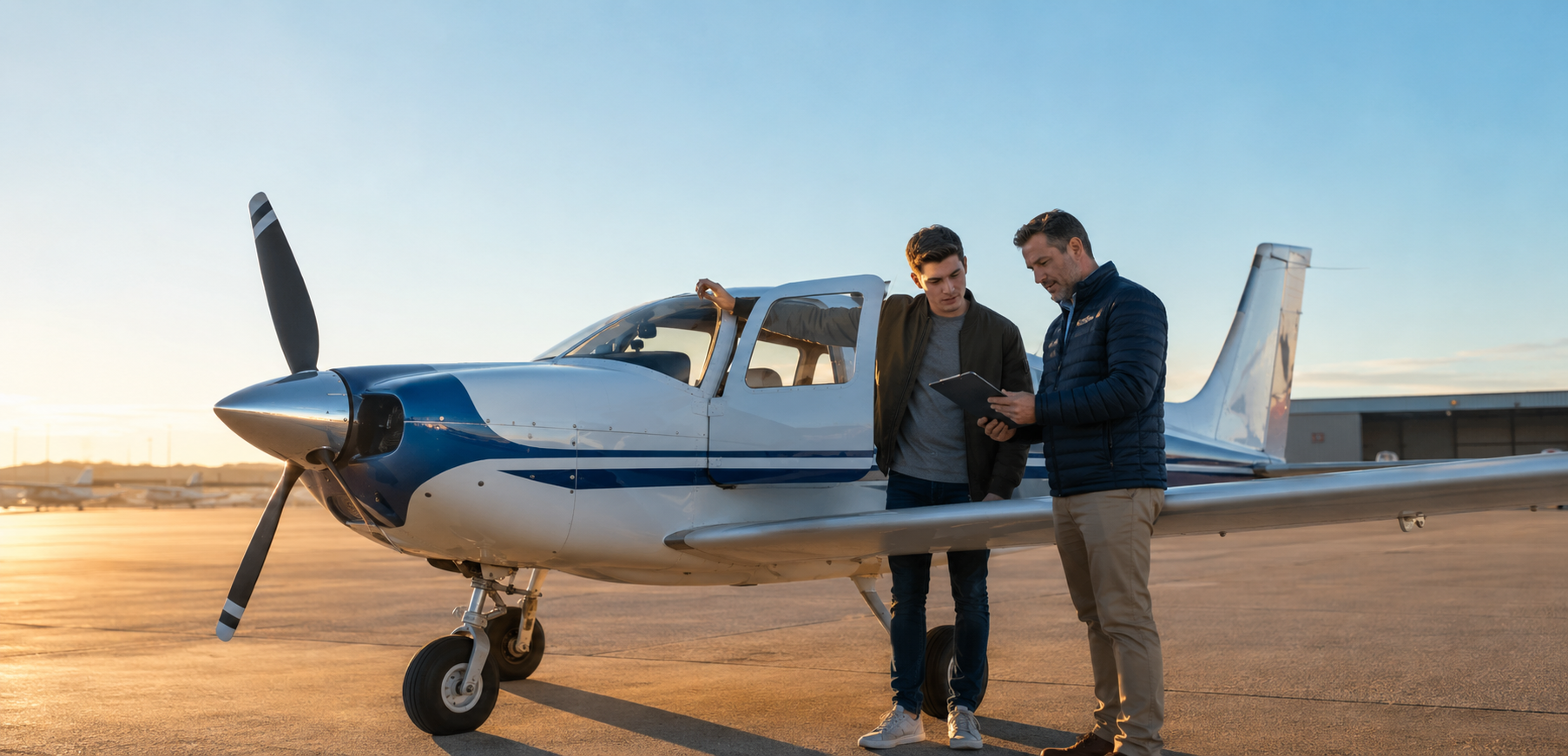
Becoming a pilot can lead to weekend adventures, business travel, flight instruction, corporate aviation, cargo operations, or an airline career. The right path depends on what you want to fly, whether you plan to be paid, how quickly you want to train, and how much you can invest.
Although professional pilot training involves several certificates and ratings, the process becomes much easier to understand when it is broken into clear milestones. This 2026 guide explains the most common airplane-pilot pathway in the United States and shows you how to evaluate flight schools before you enroll.
|
Start here: Schedule a discovery flight and speak with more than one flight school. Comparing instructors, aircraft availability, scheduling, program structure, and total estimated cost can prevent expensive surprises later. |
Flight Training in 2026: What Students Should Know
The core FAA pathway remains familiar in 2026: student training, private pilot certification, an instrument rating, commercial certification, and—when required—multi-engine, instructor, and ATP qualifications. Students are still evaluated against FAA knowledge-test requirements and the applicable Airman Certification Standards during practical tests.
What has changed most for many students is the range of training choices. Schools may combine in-person instruction with online ground school, modern flight-training devices, electronic records, and app-based scheduling. An FAA-approved aviation training device can support proficiency and may provide limited loggable credit when used under the applicable rules and syllabus, but it does not replace all required aircraft experience. Ask the school to explain exactly how simulator time will be logged and credited.
The FAA's MOSAIC changes have also expanded parts of the light-sport and sport-pilot landscape. Sport-pilot privileges remain more limited than private-pilot privileges, and aircraft eligibility, endorsements, operating limitations, and medical rules require careful review. Students considering this lower-cost entry path should confirm the current rules with a knowledgeable instructor and the FAA before enrolling.
|
2026 planning tip: Compare schools using total estimated completion cost, not a promotional minimum-hour price. Fuel, maintenance, examiner, insurance, housing, and additional-flight-hour expenses can materially change the final amount. |
What Does a Pilot Do?
Pilots plan and conduct flights while managing aircraft systems, weather, navigation, communications, regulations, passengers, and risk. The exact responsibilities vary by certificate level and job, but every pilot is responsible for sound decision-making and the safe operation of the aircraft.
Common pilot goals and career paths include:
· Recreational or personal flying
· Business and private aviation
· Flight instruction
· Corporate and charter operations
· Cargo, aerial survey, agricultural, or other specialized flying
· Regional, national, and major airline careers
Before You Begin Flight Training
A little preparation can save time and money. Before paying a large deposit or committing to a full-time program, confirm that you understand the eligibility, medical, and documentation requirements that apply to your goal.
Basic eligibility
For a private pilot certificate in an airplane, you generally must be at least 17 years old to earn the certificate, be able to read, speak, write, and understand English, complete the required training, pass an FAA knowledge test, and pass a practical test. A student may begin training earlier; age requirements for solo flight and other aircraft categories differ.
Medical certification
Most airplane students pursuing a traditional private pilot certificate need an appropriate FAA medical certificate before flying solo. Career-minded students should research medical eligibility early, because commercial and airline operations require higher medical standards. Ask an Aviation Medical Examiner about any condition, medication, or medical history that may affect certification before making a major financial commitment.
Student pilot documentation and security requirements
Your instructor or flight school can explain when to obtain a student pilot certificate and what identification is required. Non-U.S. citizens may also need approval under the Transportation Security Administration’s Flight Training Security Program before certain training begins.
Step-by-Step: How to Become a Pilot
Step 1: Take a Discovery Flight
A discovery flight is a short introductory lesson with a flight instructor. You will usually receive a preflight briefing, sit at the controls for part of the flight, and learn how lessons are conducted. Use the visit to inspect the aircraft, meet instructors, observe the school’s organization, and ask how often students are actually able to fly.
During your visit, ask:
· How many active students does each instructor manage?
· How many training aircraft are available, and how often are they down for maintenance?
· Can the school support two or three lessons per week?
· What is included in the estimate, and what expenses are excluded?
· What happens if your assigned instructor leaves or an aircraft becomes unavailable?
Step 2: Choose the Right Pilot Certificate and Training Program
Not every student needs the same certificate. A private pilot certificate offers broad personal-flying privileges but does not allow you to act as pilot in command for compensation or hire. A sport pilot certificate can require less training, but it carries different restrictions on passengers, aircraft, weather, and operations. Because light-sport rules have evolved, 2026 students should verify the current aircraft and endorsement requirements before choosing this path. Career students typically begin with the private pilot certificate and continue through instrument and commercial training.
You will also encounter two common training structures:
· Part 61 training is often flexible and works well for students balancing school, work, or family responsibilities.
· Part 141 training follows an FAA-approved syllabus and may be a better fit for structured, full-time, college, or career programs. Approved programs can qualify for reduced aeronautical-experience minimums in certain certificates and ratings.
Step 3: Earn a Private Pilot Certificate
The private pilot certificate is the foundation for most advanced airplane training. You will learn aircraft control, takeoffs and landings, navigation, radio communication, weather interpretation, emergency procedures, regulations, and aeronautical decision-making.
Private pilot training normally includes:
· Ground instruction or an approved ground-school course
· Dual flight instruction with a certificated flight instructor
· Supervised solo flight
· Cross-country and night experience
· FAA knowledge and practical tests
Under Part 61, the FAA minimum for an airplane private pilot certificate is generally 40 flight hours. Some approved Part 141 courses use a 35-hour minimum. Many students need more than the minimum to reach practical-test standards, so compare schools using realistic completion estimates rather than the regulatory minimum alone.
Step 4: Add an Instrument Rating
An instrument rating trains you to fly by reference to instruments and operate under instrument flight rules. It improves weather knowledge, precision, workload management, and decision-making. The rating is strongly recommended for frequent personal travel and is essential for most professional pilot paths.
Instrument training includes ground study, simulated or actual instrument flying, cross-country procedures, approaches, holding, communications, and another FAA knowledge and practical test.
Step 5: Earn a Commercial Pilot Certificate
A commercial pilot certificate allows you to act as pilot in command in operations where compensation or hire is permitted, subject to the regulations governing the operation. Training focuses on advanced aircraft control, accuracy, judgment, and professional standards.
A Part 61 airplane commercial applicant generally needs at least 250 hours of flight time and the required categories of experience. Certain approved Part 141 programs may use lower minimums. Holding a commercial certificate does not automatically qualify a pilot for every paid job; employers and operating rules may require additional ratings, aircraft qualifications, experience, or certificates.
Step 6: Add Multi-Engine Training When Your Goal Requires It
Many airline, charter, cargo, and corporate jobs involve multi-engine aircraft. A multi-engine rating teaches engine-out procedures, performance planning, systems management, and the handling characteristics of airplanes with more than one engine. Career students often add the rating during or after commercial training, depending on the program.
Step 7: Become a Flight Instructor and Build Experience
New commercial pilots often become Certified Flight Instructors because instructing provides a structured way to build flight time while being paid. Common instructor credentials include CFI, CFII for instrument instruction, and MEI for multi-engine instruction.
Flight instruction is not the only hour-building route. Depending on qualifications and market conditions, pilots may find work in aerial survey, pipeline patrol, sightseeing, banner towing, parachute operations, or entry-level charter and cargo roles. Every job has different insurance, experience, and regulatory requirements.
Step 8: Qualify for an ATP Certificate and Airline Hiring
Pilots serving as airline first officers generally need an Airline Transport Pilot certificate or a Restricted ATP. The standard ATP pathway typically requires 1,500 hours of total flight time, while qualifying military pilots and graduates of certain approved aviation degree programs may be eligible for a Restricted ATP at lower totals. Applicants must also meet age, knowledge, training, aeronautical-experience, medical, and practical-test requirements.
Reaching the minimum flight-time threshold does not guarantee an airline position. Hiring also depends on the pilot’s training record, checkride history, professionalism, recency, multi-engine and turbine experience, background checks, and current airline demand.
How Long Does It Take to Become a Pilot?
Your timeline depends on weather, aircraft and instructor availability, personal schedule, finances, aptitude, and how consistently you train. A private pilot certificate may take several months for a student flying regularly, while an inconsistent schedule can stretch training much longer.
As a broad planning guide:
· Private pilot training: often 3–12 months, depending on lesson frequency and local conditions
· Private through commercial and instructor certificates: often 12–24 months in an intensive full-time program
· Part-time career training: commonly 2–4 years or longer
· Airline eligibility: additional time is usually required to build the necessary experience after commercial training
|
Consistency matters: Flying two or three times per week usually helps students retain skills, repeat fewer lessons, and progress more efficiently than training with long gaps. |
How Much Does It Cost to Become a Pilot?
Flight training costs vary widely by location, aircraft type, fuel prices, instructor rates, program structure, and the number of hours a student needs. Published prices are estimates, not guarantees.
For early budgeting in 2026, many students may see planning ranges such as:
· Private pilot certificate: approximately $8,000–$25,000 or more
· Career training from zero time through commercial and instructor qualifications: approximately $50,000–$120,000 or more
Ask each school for a written estimate based on typical—not minimum—completion time. Confirm whether the estimate includes aircraft rental, fuel surcharges, instructor time, ground school, books, headset, medical examination, written tests, examiner fees, renters insurance, housing, transportation, and retesting or additional training.
Avoid choosing a school on hourly rate alone. A slightly higher rate may produce a lower total cost when the school has dependable aircraft, stable instructors, efficient scheduling, and a well-managed syllabus.
How to Choose the Right Flight School
The best flight school is the one that can reliably support your goal, schedule, learning style, and budget. Compare several schools and look beyond marketing claims.
Training fit: Does the school specialize in recreational students, accelerated career training, collegiate aviation, or a mix?
Instructor availability: Can you train consistently with an instructor whose teaching style works for you?
Aircraft access: Are there enough well-maintained aircraft to keep students flying when one is unavailable?
Safety culture: Are procedures, maintenance practices, weather decisions, and student supervision taken seriously?
Cost transparency: Will the school provide a realistic written estimate and explain deposits, refunds, financing, and extra fees?
Student outcomes: Ask about completion rates, average training hours, checkride readiness, and—in career programs—graduate placement support.
Location and weather: Local airspace, airport traffic, seasonal weather, and travel time can affect both training quality and cost.
Career Training vs. Recreational Training
If your goal is an aviation career
· Confirm your FAA medical eligibility early.
· Choose a program with a clear private-to-commercial training sequence.
· Ask about instructor hiring, multi-engine time, financing terms, and graduate outcomes.
· Consider the total cost of training and living expenses—not just tuition or hourly rates.
· Protect your training record by arriving prepared and avoiding rushed checkrides.
If your goal is personal or recreational flying
· Prioritize schedule flexibility, instructor compatibility, and convenient aircraft access.
· Compare private and sport pilot privileges before choosing a path.
· Plan for ongoing proficiency, aircraft rental or ownership, insurance, and recurrent training after certification.
Common Flight-Training Mistakes to Avoid
· Choosing a school based only on the lowest advertised hourly rate
· Paying a large, nonrefundable amount without understanding the contract and refund policy
· Training too infrequently to retain skills
· Waiting too long to investigate medical eligibility
· Assuming FAA minimum hours equal the average completion time
· Failing to budget for examiner fees, supplies, additional hours, and unexpected delays
· Ignoring instructor turnover, aircraft downtime, or scheduling limitations
· Rushing into a checkride before consistently meeting the applicable standards
Frequently Asked Questions
Do I need a college degree to become an airline pilot?
A college degree is not an FAA requirement for a pilot certificate, and many airlines do not universally require one. Employer preferences can change, however, so review current hiring standards for the airlines or operators you hope to join.
Can I work while attending flight school?
Yes. Part 61 schools and some Part 141 programs can accommodate part-time students. The tradeoff is that fewer weekly lessons may increase the overall timeline and can increase cost if skills must be relearned after gaps.
Is becoming a pilot difficult?
Flight training is challenging, but it is achievable for students who prepare, train consistently, accept feedback, and manage their time and finances carefully. Progress is rarely perfectly linear; plateaus are a normal part of learning.
What is the best first step?
Book a discovery flight, discuss your goals with an instructor, and compare multiple schools. Career students should also investigate medical eligibility before committing significant funds.
Start Your Pilot Training with Aviation Schools Online
Becoming a pilot requires commitment, but the route is clear: explore flying, choose the right school, earn the certificates and ratings your goal requires, and continue building knowledge and experience.
Aviation Schools Online helps prospective students research flight schools and aviation training programs across the United States. Use ASO to compare options, connect with schools, and take the next step toward your first pilot certificate or professional aviation career.
|
Ready to begin?: Search for flight schools and pilot-training programs near you through Aviation Schools Online, then contact several schools to compare availability, program structure, estimated completion time, and total cost. |
Important note: FAA rules, school pricing, airline hiring standards, and program availability can change. Students should verify current requirements with the FAA, an Aviation Medical Examiner, and the individual flight school before making enrollment or financial decisions.