A&P Aircraft Mechanic Schools in Illinois
Cities in Illinois with Aviation Schools:
- Altamont
- Alton
- Antioch
- Arlington
- Arlington Heights
- Auburn
- Aurora
- Berwyn
- Big Rock
- Bloomingdale
- Bloomington
- Blue Island
- Bolingbrook
- Burbank
- Burr Ridge
- Byron
- Caledonia
- Calumet City
- Canton
- Carbondale
- Champaign
- Charleston
- Chatham
- Chicago
- Chicago Heights
- Chicago Ridge
- Cicero
- Clinton
- Collinsville
- Columbia
- Cortland
- Decatur
- Deerfield
- Dekalb
- Des Plaines
- Dixon
- Elburn
- Elgin
- Evanston
- Fairbury
- Fairview Heights
- Farmer City
- Farmington
- Freeport
- Gages Lake
- Galena
- Galesburg
- Garden Prairie
- Geneseo
- Geneva
- Genoa
- Heights
- Highland Park
- Highwood
- Hillside
- Hinsdale
- Joliet
- Knoxville
- La Grange
- La Salle
- Lacon
- Lake Bluff
- Lake Forest
- Mount Prospect
- Naperville
- Oak Lawn
- Oak Park
- Palatine
- Peoria
- Prospect
- Rockford
- Schaumburg
- Skokie
- Springfield
- Waukegan
- Wheaton
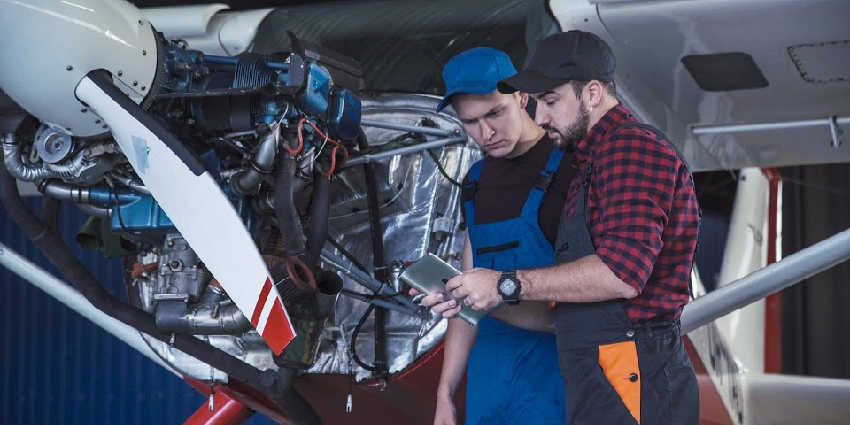
Aircraft Mechanic Schools Illinois
If you are a veteran, your veteran's benefits, especially the Post 9/11 GI Bill, are the best sources of funding available to pay for aircraft mechanic schools in Illinois. With the Post 9/11 GI Bill, you can be reimbursed for up to 100% of your aviation aircraft mechanic training expenses in Illinois. This is a sizeable amount of funding that goes a long way toward making you an A&P mechanic, but there are a few things to consider before taking the leap.
For Veterans, aviation mechanic training expenses in Illinois can be covered up to $10,000 dollar per academic year! Qualified veterans can use Post 9/11 GI Bill benefits to cover 100% of their training costs up to $10,000 dollars per academic year. Depending on the program, this is a big portion of the expense of aviation mechanic school in Illinois.
While it is worth noting this limitation, it is hardly causing alarm since it covers or severely reduces the costs of most aviation mechanic school courses.
A&P Mechanic Schools in Illinois
A&P Mechanic Schools in Illinois require VA approval for reimbursement. An arguably more important consideration before beginning your aviation A&P mechanic training in Illinois is whether a particular training provider is approved by the VA. The good news is there is a pretty standard process and it isn't a secret whether an Aircraft Mechanic School is approved.
The only potential catch is that the VA must also approve individual courses before they will reimburse your flight training costs. This means that while an aviation mechanic school in Illinois may have approval, every course they offer isn't necessarily covered by your Post 9/11 GI Bill benefits.
A&P Mechanic School Training Requirements
To be a certified A&P mechanic or avionics technician you need to meet several qualifications:
- Age 18 or older
- Read, write, speak, and understand the English language
- Have a high school diploma or equivalent
- Display the required technical skills
Aircraft Mechanic Trade School in Illinois
Today, the FAA has approximately 170 approved Aircraft Mechanic Trade Schools on their website. You can attend one or a combination of these schools to gain the practical experience you'll need to become an aircraft mechanic. These schools are mandated by the FAA to offer at least 1900 class-hours of training, and the courses last about 18 months, on average.
Some of these schools offer Associate or Bachelor degrees in conjunction with the Aircraft Mechanic Training Certification.
Many A&P mechanics today were trained in the military. As a military mechanic, you could be working on anything from large airliners and transports to jet fighters and attack helicopters. 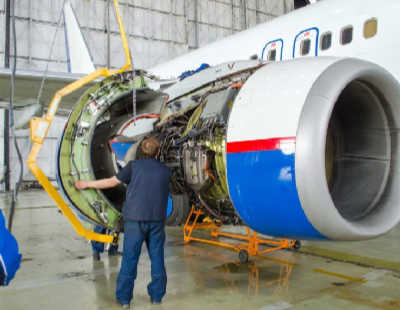 If you decide to go this route, upon your discharge from the military, you'll need to take the necessary FAA tests and have the proper documentation of your practical experience.
Once you have passed the required tests, you'll be eligible to apply for A&P mechanic jobs in Illinois. However, please note that military experience can sometimes be too specific, and not meet the broad specifications required by the FAA. Even after your discharge, you may have to attend one of the FAA-approved Aircraft Mechanic Trade Schools in Illinois.
On the job training... a very few people earn the required minimum coursework and skill set needed to pass the A&P certification tests through on the job training.
Typically, you must be under the direct supervision of an A&P for at least 30 months and be logging all of your hours to go this route. Your time log must be notarized by your employer or signed off by the supervising A&P.
A&P Mechanic Training is Improved by the VA Approval Process
The requirements for receiving an aviation mechanic certificate are standardized, but there is still a lot of variation in training programs. Since the VA mandates a fairly stringent approval process and there are ongoing paperwork requirements, most schools have a VA representative who is very familiar with the system.
The FAA demand, the approval process, and the paperwork have a net effect of improving the quality of your aviation mechanic training by weeding out weak training courses and keeping you active in your training. Once you start training, most of the paperwork can be managed for you, allowing you to focus on your aviation mechanic training.
In fact, this is the most important takeaway. The stringent requirements of the Post 9/11 GI Bill create better-equipped schools, more efficient training courses, and save you money during your aviation mechanic training. For more information and to verify your eligibility, call 1-888-GIBILL-1 or check out the GI Bill website.
FAA - A History of Aircraft Structures Facts for Illinois
Octave Chanute, a retired railroad and bridge engineer, was active in aviation during the 1890s. His interest was so great that, among other things, he published a definitive work called “Progress in Flying Machines.” This was the culmination of his effort to gather and study all the information available on aviation. With the assistance of others, he built gliders similar to Lilienthal’s and then his own. In addition to his publication, Chanute advanced aircraft structure development by building a glider with stacked wings incorporating the use of wires as wing supports.
Helicopter Transmission
The transmission system transfers power from the engine to the main rotor, tail rotor, and other accessories during normal flight conditions. The main components of the transmission system are the main rotor transmission, tail rotor drive system, clutch, and freewheeling unit. The freewheeling unit, or autorotative clutch, allows the main rotor transmission to drive the tail rotor drive shaft during autorotation. Helicopter transmissions are normally lubricated and cooled with their own oil supply.
Aircraft Mechanic Schools in Illinois
How to get your A&P Aircraft Mechanic certification in Illinois; training requirements, eligibility, and more. To earn your A&P Aircraft Mechanic Training Certificate in Illinois (A&P License in Illinois), you must attend a Federal Aviation Administration (FAA) certified Aircraft Mechanic School in Illinois OR have at least 30 months of relevant civilian or military work experience (supervised by a certified aviation mechanic from Illinois).
The FAA issues the A&P certificates (airframe and powerplant certificates), and A&P mechanics from Illinois can get either an airframe rating or a power plant rating or both--most aviation mechanics from Illinois get both. Those who want a certificate with just a single rating and who base their application on practical experience must demonstrate 18 months of work experience applicable to the chosen rating. Learn more about the training and experience requirements to become an A&P mechanic near Illinois.
After your aircraft mechanic school qualifications are met, you'll be eligible to take the required oral, practical, and written tests. You must pass all these tests within 24 months. The tests cover 43 technical subjects. Typically, tests for one certificate--airframe or power plant--take about 8 hours. (Get more details about the Aircraft A&P Mechanics Tests)
When you pass, you will have earned your FAA A&P mechanic license with airframe and/or powerplant certificates (A&P license in Illinois), and you'll be on your way to a successful career in aviation maintenance! Learn more about aviation maintenance A&P technician schools near Illinois.
A&P Mechanic Schools in Illinois
Although your certificates earned from A&P mechanic schools in Illinois don't expire, aviation mechanics from Illinois must remain "current" by meeting several criteria, including completing a minimum of 1,000 hours of hands-on work experience during the previous 24 months (or completing a refresher course) and completing at least 16 hours of additional training every 24 months.
The additional training requirement is usually satisfied by attending manufacturer events or training with outside contractors hired to conduct the training.
Avionics Technician Specialty Training
As an A&P mechanic in Illinois, if you have the training, qualifications, and tools, the FAA will allow you to work on avionics as well. Avionics technicians are not specifically required to have FAA certification if they received their avionics training in the military or from working for an avionics manufacturer.
Aircraft Mechanic Trade Schools in Illinois
Aviation maintenance technicians keep aircraft in the air by inspecting, replacing, and fixing nearly every part of an airplane or helicopter. The term aviation maintenance technician (or A&P Mechanic) is very broad and applies to nearly anyone who works on aircraft in Illinois.
However, as an aspiring Aviation Mechanic in training, you'll quickly learn that there are several different types of aviation mechanics out there in Illinois.
First of all, airframe mechanics in Illinois are licensed to perform repair work on the entire aircraft with the exception of the engine(s), propellers, and instruments. Powerplant mechanics in Illinois are authorized to work on engines and in some cases, propellers.
Although Aviation A&P Mechanics from Illinois can earn either an airframe or powerplant certificate, the vast majority of Aviation Mechanic near Illinois earn both certificates and are hereafter referred to as A&P (airframe and powerplant) mechanics. Avionics technicians work exclusively on aircraft radios, instruments, navigation, weather, traffic, and ground proximity systems. Learn more about aviation maintenance technician jobs.
Aviation Maintenance Technician Career Paths Near Illinois
As an A&P mechanic in Illinois, you are eligible to work in a huge variety of settings. You can work as a freelance mechanic at your local airfield in Illinois, get a job working for a local airport near Illinois, work for a corporate aviation department maintaining one or a fleet of aircraft in Illinois, or end up at a major airline working on passenger jets and turboprops.
After three years of operating as an A&P mechanic in Illinois (with 24 months of hands-on experience), you're eligible to move up and become an inspection authorization mechanic (IA). IA's are A&Ps with the authority to return aircraft to service after certain types of thorough inspections.
Aviation Maintenance Technician Key Points
Aircraft Mechanic Trade Schools in Illinois must be detail-oriented. Aircraft mechanics perform a variety of complex tasks where mistakes can be costly in terms of money and human life. When the tools are put away, the job is not complete; aircraft mechanics must also be excellent record keepers.
Paperwork for all inspections and work completed must be filed and logged appropriately for each task completed. The larger and more complex the aircraft, the more paperwork. Find out more about aviation maintenance technician training.
Interesting Aviation Facts for Arlington for Arlington
Military Helicopters: Observation helicopters can also be fitted with guns, anti-tank guided missiles, rocket pads as well as air-to-air missiles. Some of the observation helicopters in use are: Arospatiale Gazelle, Bell OH-58 Kiowa, Kawasaki OH-1, Boeing-Sikorsky RAH-66 Comanche (reconnaissance as well as attack helicopter)
Aviation Facts and Figures for Arlington
Hospital helicopter transport services typically require pilots to have 2,000 hours or more of flight experience. Employers also require that emergency medical services helicopter pilots obtain an instrument rating while in training to earn a commercial pilot license. Additionally, EMS pilots must have experience flying helicopters with turbine engines.
Interesting Aviation Facts for Aurora for Aurora
Military Helicopters: As the helicopter technology matured, new aircraft were added to support naval missions. These helicopters were used to deliver weapons, attack the enemy with air-launched torpedoes, etc.
Aviation Facts and Figures for Aurora
How to pick a helicopter flight school near Aurora
To visit each school, call them up and make an appointment to meet with the owner/president. You will usually have an easier time getting an appointment during the week, rather than on the weekend. Tell them you'd like to meet them to hear about the school, their training program, and why you might want to train with them.
Aviation Training Facts for Berwyn
Military Helicopters: Development of turboshaft engines helped smaller helicopters to operate from smaller vessels. Soon, choppers were equipped with magnetic anomaly detection, radar and sonar equipment.
Aviation Facts and Figures for Berwyn
Helicopter Ground School: In an airplane you can make decisions about trading forms of energy very late in the day. For example, if you pull the stick all the way back at 6000' above the ground you will gradually slow down and eventually stall and perhaps enter a spin. With many airplanes you could spin nearly all the way to the ground before applying forward stick and opposite rudder to get back to a normal flight condition. All without an engine.
Aviation Training Facts for Bloomington
Military Helicopters: Today, maritime helicopters have better electronics, engines and weapons that help them play multiple roles. Some of the types of maritime helicopters are: Merlin HM1, SH-60B Seahawk 2, Kamov Ka-27, Westland Wasp
Aviation Facts and Figures for Bloomington
Robinson Helicopters: The Robinson R22 Beta II is flown throughout the world for many applications, ranging from flight training to livestock mustering to patrolling pipelines, that require dependability, low operating costs, and performance.
Fun Facts About Flight Dispatchers
A flight dispatcher can make anywhere between $40,000 and $105,000 a year including benefits such perks as health, dental and life insurance, paid holidays and vacation, free or reduced travel fares are included as well.
Helicopter Factoid for Bolingbrooks for Bolingbrook
Robinson Helicopters: Robinson's R44 Clippers are Ravens equipped with seaworthy floats and corrosion protection for over-water operations. The Clipper's low center-of-gravity provides excellent stability on water, and the float design enables safe emergency water landings and takeoffs. Special ground-handling wheels are included with each Clipper.
Aviation Training Facts for Champaign
Unusual But Interesting Helicopter Facts in Champaign The S-333 helicopter has set the standard for light turbine powered helicopters. It has the power, speed and hover performance to meet a broad spectrum of operational requirements in missions ranging from airborne law enforcement, flight training, power and pipeline patrol to personal transportation. Best of all, the S-333 helicopter provides lower direct operating cost than most turbine powered helicopters.
Encouraging Quotes:
I'm not sure what the future holds but I do know that I'm going to be positive and not wake up feeling desperate.
Helicopter Factoid for Champaigns for Champaign
Robinson Helicopters: Equipped with a Lycoming O-540 carbureted engine, the R44 Raven I offers a balance between performance and affordability. Raven I features carburetor heat assist that enhances safety and reduces pilot workload by automatically adjusting carburetor heat in response to power changes by the pilot.
Aviation Training Facts for Chicago
Investigating a helicopter accident should start with a thorough examination of the helicopter's logbooks by an IA and the pilot's logbooks by a helicopter CFI (certificated flight instructor). Was the machine legal to fly on the day of the accident? Was the pilot legal to fly that machine? Once those questions are answered, proceed to the NTSB docket (list of FOIA dockets) to see what the pilot and witnesses said about what happened. Then look at the NTSB factual report. After that, each investigation is going to differ, depending on the circumstances and machine involved.
Helicopter Factoid for Chicagos for Chicago
Robinson Helicopters: The high performance R44 Raven II has a Lycoming IO-540 fuel-injected, angle-valve, tuned-induction engine, which eliminates the need for carburetor heat. The standard 28-volt electrical system ensures good starting performance in hot or cold weather, and provides additional electrical power for optional equipment.
Aviation Training Facts for Cicero
Unusual But Interesting Helicopter Facts in Cicero The new S-434 helicopter builds on the best qualities of the 333 model, including a well laid out cockpit, outstanding flight properties and low cost of ownership. To this, we have added a four-bladed rotor system, upgraded transmission and increased fuel capacity. The result of these improvements are increased useful load, hover performance, cruise speed and lower vibration.
Helicopter Factoid for Ciceros for Cicero
Robison Helicopters: Robinson's R44 Raven Series Helicopters provide excellent reliability, responsive handling, and altitude performance, making the R44 the ideal helicopter for private, business, and utility applications.
Aviation Training Facts for Decatur
Sikorsky Helicopters - Light Piston: The piston powered helicopter series draws its legacy from the 269 series. The 269 series helicopter was originally designed with four major objectives in mind: performance, versatility, safety and cost effectiveness.
Helicopter Factoid for Decaturs for Decatur
Robinson Helicopters: The R22 seats two adults and occupants have panoramic views due to R22's large windows. Acoustical foam lowers cabin noise. A heavy-duty muffler and low tail-rotor tip speed lessen flyover noise.
Aviation Training Facts for Des Plaines
The Army Air Forces selected helicopter pilot training candidates from rated volunteer applicants. At first there no specific qualifications for helicopter training, although the AAF later required a current flight physical. After the end of World War II, the AAF in early 1946 restricted eligibility to flight officers, lieutenants with a pilot rating, or service pilots on flying status.
Helicopter Factoid for Des Plainess for Des Plaines
Robinson Helicopters: The R22 Beta II incorporates a Lycoming O-360 four-cylinder, carburetor-equipped engine fueled with 100L grade aviation gasoline. This 145 hp engine is derated to 131 hp for five minutes at takeoff and 124 hp for continuous operation. A powerful engine, a lightweight steel-tube airframe, and aerodynamic shape gives the R22 a cruise speed of up to 90 kts and an average fuel consumption of only 7-10 gallons per hour.
Hollywood Quotes: I believe that two people are connected at the heart and it doesn't matter what you do or who you are or where you live; there are no boundaries or barriers if two people are destined to be together. Julia Roberts
Aviation Training Facts for Elgin
The problem of instructor pilots training, after World War II, was almost as critical as that of maintenance personnel training. Most of the assigned pilots had not been overseas returnees, and were, therefore, subject to overseas duty. The number of instructors on hand varied from one to five making planning student loads nearly impossible. To stabilize instructor manning, the helicopter school requested assignment of one class composed entirely of combat returnees, who could be retained as instructors. A class of 10 combat returnees began training 15 July 1946.
Aviation Facts - High-Speed Aerodynamics
Listed below are a range of conditions that are encountered by aircraft as their designed speed increases.• Subsonic conditions occur for Mach numbers less than one (100–350 mph). For the lowest subsonic conditions, compressibility can be ignored.• As the speed of the object approaches the speed of sound, the flight Mach number is nearly equal to one, M = 1 (350–760 mph), and the flow is said to be transonic. At some locations on the object, the local speed of air exceeds the speed of sound. Compressibility effects are most important in transonic flows and lead to the early belief in a sound barrier. Flight faster than sound was thought to be impossible. In fact, the sound barrier was only an increase in the drag near sonic conditions because of compressibility effects. Because of the high drag associated with compressibility effects, aircraft are not operated in cruise conditions near Mach 1.• Supersonic conditions occur for numbers greater than Mach 1, but less then Mach 3 (760–2,280mph). Compressibility effects of gas are important in the design of supersonic aircraft because of theshockwaves that are generated by the surface of the object. For high supersonic speeds, between Mach 3 and Mach 5 (2,280–3,600 mph), aerodynamic heating becomes a very important factor in aircraft design.• For speeds greater than Mach 5, the flow is said to be hypersonic. At these speeds, some of the energy of the object now goes into exciting the chemical bonds which hold together the nitrogen and oxygen molecules of the air. At hypersonic speeds, the chemistry of the air must be considered when determining forces on the object. When the space shuttle re-enters the atmosphere at high hypersonic speeds, close to Mach 25, the heated air becomes an ionized plasma of gas, and the spacecraft must be insulated ted from the extremely high temperatures.
Aviation Facts and Figures for Evanston
Post World War II Pilot Training: On 1 March 1946, all entries into helicopter pilot training were temporarily suspended due to lack of maintenance personnel. In June 1946 there were five R-5 and sixteen R-6 helicopters at San Marcos and seldom were they all in operable condition.
Aviation Training Facts for Evanston
To carry myself in such a professional way as if there ever is a reflection it's a positive one. Sidney Poitier
Thoughtful Quotes:
Humor is perhaps a sense of intellectual perspective: an awareness that some things are really important others not; and that the two kinds are most oddly jumbled in everyday affairs. Christopher Morley
Helicopter Training Facts for Heights
To rebuild the helicopter pilot training program, Headquarters Army Air Force appointed a group of officers in January 1946 to recommend a new location for the school. San Marcos Army Air Field, Texas, a recently inactivated flying training base, was selected. Helicopter pilot training formally transferred to San Marcos on 31 May 1946.
Aviation Training Facts for Heights
Unusual But Interesting Helicopter Facts in Heights Light Turbine Helicopters - The light turbine-powered helicopter series incorporates the best of two worlds: legacy of proven flight design originated in the 269 Series and state-of-the art turbine technology.
If it's really beautiful weather sometimes I might take a helicopter out. I got my license in 1999. -Patricia Cornwell
Aviation Facts and Figures for Joliet
The end of World War II left the helicopter training program in a state of confusion. Training Command suspended all training in early October 1945 and by the end of the month little remained of the school. The Army Air forces offered no incentives for the men to stay with the program, and more than 75 percent of the personnel left the service. By the middle of October, there was just one qualified helicopter pilot remaining to act as an instructor, and he was a recent graduate of the school.
Aviation Training Facts for Joliet
Sikorsky Helicopters - Light Turbine Helicopters: Dating back to 1956 with the first TH-55A U.S. Army , the 269 Series includes more than 3,750 aircraft operating in more than 70 countries with more than 20 million total flight hours. The turbine engine series was advanced with the S-333TM helicopter certified in 2000.
It is what it is and it's not what it should have been not what it could have been it is what it is. Nicole Kidman
Aviation Facts and Figures for Mount Prospect
Post World War II: The size of the program increased during 1945 to approximately three times what it was in 1944. With the end of the war in Europe, the War Department closed hundreds of bases. To align Chanute Field to a purely technical training mission, all helicopter pilot training moved to Sheppard Field, a Flying Training Command base near Wichita Falls, Texas in June 1945. Eighteen helicopters were transferred.
Aviation Training Facts for Mount Prospect
The FAA Rotorcraft Flying Handbook suggests a \normal hovering altitude of 2-5 feet. Any certified helicopter should have enough rotor inertia to permit a smooth landing after an engine failure from this altitude. Even if a pilot does nothing common sense suggests that it is safer to fall off a 2'-high curb than off a 20'-high roof.
Aviation Facts and Figures for Naperville
Post World War Pilot Training: At Randolph the course was divided into three stages: H-13, H-19 and H-21 with 30 hours in each aircraft. In January 1958 ATC added a fourth phase, an operational or combat crew-training phase which was conducted at Stead AFB, Reno, Nevada. Stead would allow realistic desert, water, snow, mountainous, and high altitude training as well as collateral training with Air Training Command's survival school.
Aviation Training Facts for Naperville
The low airspeed during a hover makes it problematic to land the helicopter without damage or injury in the event of a power failure. A standard autorotation takes advantage of kinetic energy stored in forward airspeed for a \flare just before landing. With no airspeed (i.e. a hover) there is no kinetic energy for the pilot to use.
Aviation Facts and Figures for Oak Lawn
Cost to Obtain a Helicopter License: Most helicopter flight training schools are charging rates of about $235-$275 per flight hour with an instructor and $200-$235 for solo time. Your ground school time will usually cost somewhere between $30 and $40 per hour.
Aviation Training Facts for Oak Lawn
Hovering is a hazardous phase of flight due to three factors: (1) low airspeed, (2) proximity to obstacles, and (3) high skill level required depending on wind conditions.
Aviation Facts and Figures for Oak Park
Post World War Pilot Training: In April 1952, Air Force pilots received 35 hours in the H-5 or H-23 and 35 hours in the H-19. Starting in 1953, flight training was 35 hours in the H-5 or H-13, then 35 hours in the H-19 or H-21. Army pilots received 45 hours in the H-13.
Aviation Training Facts for Oak Park
Sikorsky Helicopters - Light Piston: Since its inception, the product has been continuously improved with new technology and design innovation. Now, more than 50 years and more than 3,700 helicopters later, the S-300CTM and S-300CBiTM helicopters are regarded as among the world's finest piston-powered helicopters.
Fun Helicopter Facts for Palatine
Post World War Pilot Training: In mid 1950, 10 hours of instrument training was added to the course. Army helicopter training was conducted in the H-13. In March 1951, ATC transferred the helicopter pilot training program back to San Marcos AFB so James Connally AFB could expand its basic pilot training program to support the Air Force effort in Korea. Air Force pilots trained in the H-5 and H-23 helicopters.
Aviation Training Facts for Palatine
It is possible for the front edge of the right aileron to get jammed against the wing of a Cirrus SR20 prototype when the wing and the aileron are deflected down toward the aircraft wing and it is flexed upward to its maximum length. The tolerance cavity between the wing and the aileron are critical factors relative to the potential for jamming.
So keep the aircraft power up and push down on the yoke with all of your weight and you should be able to maintain relative control of the aircraft.
Fun Helicopter Facts for Peoria
Post World War Pilot Training: On 1 March 1949, San Marcos was inactivated and the school moved to James Connally AFB, Waco, Texas. Pilots trained in the R-5 and R-6 helicopters went on to serve almost exclusively in the Air Rescue Service. In August 1948 the H-6 helicopter was removed from the training program and students received 44 hours flying in the H-5.
Aviation History for Peoria and Fun Facts for Peoria
Sikorsky Helicopters - S - 300 C: the S-300C helicopter is supported by a worldwide network of service centers. This helicopter has proven its value in many diverse applications around the world, including personal transportation, military and civil training, aerial photography, law enforcement patrol, pipeline and traffic patrol, aerial application, aerial surveys and lift operations.
Fun Helicopter Facts for Prospect
When the National Security Act of 1947 created a separate U.S. Air Force, the Army and Air Force agreed that the Air Force would continue to train Army helicopter pilots. Army Training was accomplished in the Bell H-13 helicopter and Air Force in the R-5 and R-6.
Aviation History for Prospect and Fun Facts for Prospect
Sikorsky Helicopters - S - 300 Cbi: The thrill of flying helicopters safely and economically is what the S-300CBi helicopter is all about. The S-300CBi model creates a positive first impression to student pilots and helicopter experts alike. From the outside, the first impression is that it is solid, substantial and rugged.
Fun Helicopter Facts for Rockford
Vietnam Era Military Pilot Training: Back to the Army - 1970. This was the end of what we had known as the USAF Helicopter School where we took the students from beginning to end. In October 1970, Air Force student helicopter pilots began to receive training from Army and Civil Service instructor pilots at Fort Wolters, Texas. After graduation from the Army training qualified as first pilots in the UH-1, they would proceed to Sheppard AFB for Phase III combat crew training in UH-1F and CH-3C helicopters.
Aviation History for Rockford and Fun Facts for Rockford
Sikorsky Helicopters - S-76: The legendary S-76 helicopter operates successfully in more than 40+ countries on five continents, fulfilling its many missions in varied environmental conditions found worldwide.
Fun Helicopter Facts for Schaumburg
Post World War Military Pilot Training for Schaumburg: In 1965, the H-21 was phased out as training began in the CH-3C. During the fall/winter of 1965, the U.S.A.F. Helicopter School moved from Stead to Sheppard AFB, Texas. The H-19 was phased out in 1967 and replaced with the UH-1F. Students received 35 hours in the UH-1 and 35 hours in the H-43, or 70 hours in the UH-1, or 35 hours each in the UH-1 and CH-3C.
Aviation History for Schaumburg and Fun Facts for Schaumburg
Sikorsky Helicopters - S-76: The legendary S-76 helicopter operates successfully in more than 40+ countries on five continents, fulfilling its many missions in varied environmental conditions found worldwide.
Fun Helicopter Facts for Skokie
Post World War Military Pilot Training for Skokie: The military situation in Vietnam required that Vietnamese Air Force (VNAF) helicopter pilots be produced as rapidly as possible. In December 1962, the 917th Field Training Detachment (FTD) led by Col. Jimmy Hamill, was deployed at Tan Son Nhut AB, Saigon, South Vietnam. Instructors were taken from Stead and other ATC units to began VNAF helicopter pilot training in H-19B helicopters. During the following 18 months of its operation, the 917th FTD trained a total of 95 helicopter pilots and 92 mechanics.
Aviation History for Skokie and Fun Facts for Skokie
Sikorsky Helicopters - S-76D: The S-76D helicopter is truly the next step in helicopter technology, setting a new standard of excellence that S-76 helicopter operators have come to expect. Power and performance are enhanced by all composite main rotor blades and optimized Pratt & Whitney Canada PW210S engines with dual FADEC controls.
Helicopter History for Springfield
Post World War Military Pilot Training for Springfield: In April 1960, the H-43B fire-fighting course was started at Stead AFB. In 1961, the training programs were consolidated. All conversion students would receive 70 hours training in the H-19. Students then destined for H-43 assignments would receive 30 hours in the H-43 while those programmed for H-19 or H-21 assignments would be given 35 hours of H-21 training.
Aviation History for Springfield and Fun Facts for Springfield
Sikorsky Helicopter S-92: The S-92 helicopter is the most advanced aircraft in Sikorsky's civil product line, certified to the most stringent safety requirements of the Federal Aviation Administration (FAA) and the European Aviation Safety Agency (EASA).
Helicopter History for Waukegan
Post World War Military Pilot Training for Waukegan: In July 1958, all Air Force helicopter pilot training moved to Stead. A total of 255 officers and airmen transferred. The students received 40 hours transition and instrument training and 30 hours operational tactics in the H-19 and 35 hours transition in the H-21.
Aviation History for Waukegan and Fun Facts for Waukegan
Sikorsky Helicopters - S - 300 C: The S-300C helicopter is known as one of the finest and most versatile piston-engine rotorcraft. Through a program of continuous design evolution and innovation, the S-300C model is even better than ever. Its maneuverability, responsive handling and outstanding range and endurance make the S-300C model ideal for a broad range of roles.
Helicopter History for Wheaton
Initially, the training objective was to provide enough instrument experience to get out of trouble in case a pilot encountered what we called \inadvertent IFR. We called that qualification a Tactical Instrument Card.
Helicopter Fun Facts for Wheaton
Eurocopter - AS550: The AS550 C3e Fennec is Eurocopters 2-ton class answer to Armed Forces requirements. Easy to operate in extreme and harsh conditions, this Armed Scout helicopter combines safety and performance.