A&P Aircraft Mechanic Schools in Oklahoma
Cities in Oklahoma with Aviation Schools:
- Ada
- Altus
- Ardmore
- Bartlesville
- Bethany
- Bixby
- Blanchard
- Broken Arrow
- Chickasha
- Choctaw
- Claremore
- Coweta
- Del City
- Duncan
- Durant
- Edmond
- El Reno
- Elk City
- Enid
- Glenpool
- Guthrie
- Guymon
- Jenks
- Lawton
- Mcalester
- Miami
- Midwest City
- Moore
- Muskogee
- Mustang
- Newcastle
- Norman
- Oklahoma City
- Okmulgee
- Owasso
- Ponca City
- Poteau
- Pryor Creek
- Sand Springs
- Sapulpa
- Shawnee
- Stillwater
- Tahlequah
- The Village
- Tulsa
- Wagoner
- Warr Acres
- Weatherford
- Woodward
- Yukon
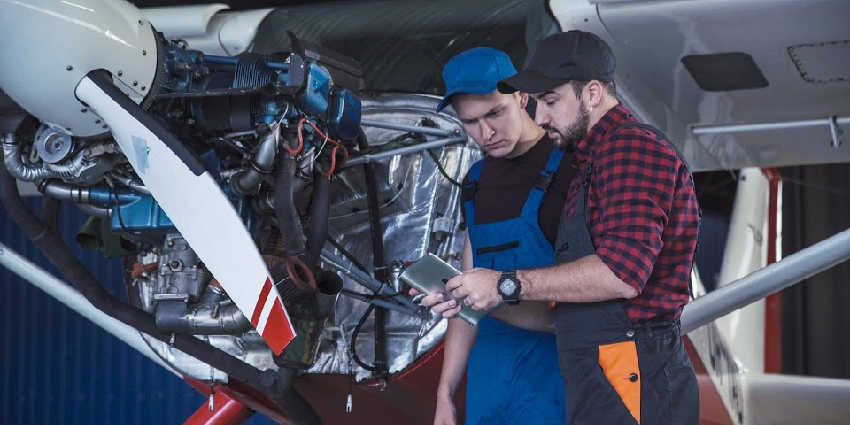
Aircraft Mechanic Schools Oklahoma
If you are a veteran, your veteran's benefits, especially the Post 9/11 GI Bill, are the best sources of funding available to pay for aircraft mechanic schools in Oklahoma. With the Post 9/11 GI Bill, you can be reimbursed for up to 100% of your aviation aircraft mechanic training expenses in Oklahoma. This is a sizeable amount of funding that goes a long way toward making you an A&P mechanic, but there are a few things to consider before taking the leap.
For Veterans, aviation mechanic training expenses in Oklahoma can be covered up to $10,000 dollar per academic year! Qualified veterans can use Post 9/11 GI Bill benefits to cover 100% of their training costs up to $10,000 dollars per academic year. Depending on the program, this is a big portion of the expense of aviation mechanic school in Oklahoma.
While it is worth noting this limitation, it is hardly causing alarm since it covers or severely reduces the costs of most aviation mechanic school courses.
A&P Mechanic Schools in Oklahoma
A&P Mechanic Schools in Oklahoma require VA approval for reimbursement. An arguably more important consideration before beginning your aviation A&P mechanic training in Oklahoma is whether a particular training provider is approved by the VA. The good news is there is a pretty standard process and it isn't a secret whether an Aircraft Mechanic School is approved.
The only potential catch is that the VA must also approve individual courses before they will reimburse your flight training costs. This means that while an aviation mechanic school in Oklahoma may have approval, every course they offer isn't necessarily covered by your Post 9/11 GI Bill benefits.
A&P Mechanic School Training Requirements
To be a certified A&P mechanic or avionics technician you need to meet several qualifications:
- Age 18 or older
- Read, write, speak, and understand the English language
- Have a high school diploma or equivalent
- Display the required technical skills
Aircraft Mechanic Trade School in Oklahoma
Today, the FAA has approximately 170 approved Aircraft Mechanic Trade Schools on their website. You can attend one or a combination of these schools to gain the practical experience you'll need to become an aircraft mechanic. These schools are mandated by the FAA to offer at least 1900 class-hours of training, and the courses last about 18 months, on average.
Some of these schools offer Associate or Bachelor degrees in conjunction with the Aircraft Mechanic Training Certification.
Many A&P mechanics today were trained in the military. As a military mechanic, you could be working on anything from large airliners and transports to jet fighters and attack helicopters. 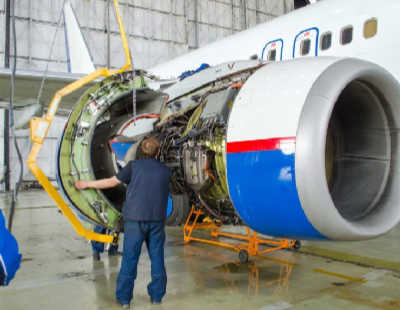 If you decide to go this route, upon your discharge from the military, you'll need to take the necessary FAA tests and have the proper documentation of your practical experience.
Once you have passed the required tests, you'll be eligible to apply for A&P mechanic jobs in Oklahoma. However, please note that military experience can sometimes be too specific, and not meet the broad specifications required by the FAA. Even after your discharge, you may have to attend one of the FAA-approved Aircraft Mechanic Trade Schools in Oklahoma.
On the job training... a very few people earn the required minimum coursework and skill set needed to pass the A&P certification tests through on the job training.
Typically, you must be under the direct supervision of an A&P for at least 30 months and be logging all of your hours to go this route. Your time log must be notarized by your employer or signed off by the supervising A&P.
A&P Mechanic Training is Improved by the VA Approval Process
The requirements for receiving an aviation mechanic certificate are standardized, but there is still a lot of variation in training programs. Since the VA mandates a fairly stringent approval process and there are ongoing paperwork requirements, most schools have a VA representative who is very familiar with the system.
The FAA demand, the approval process, and the paperwork have a net effect of improving the quality of your aviation mechanic training by weeding out weak training courses and keeping you active in your training. Once you start training, most of the paperwork can be managed for you, allowing you to focus on your aviation mechanic training.
In fact, this is the most important takeaway. The stringent requirements of the Post 9/11 GI Bill create better-equipped schools, more efficient training courses, and save you money during your aviation mechanic training. For more information and to verify your eligibility, call 1-888-GIBILL-1 or check out the GI Bill website.
FAA - A History of Aircraft Structures Facts for Oklahoma
There are five major stresses to which all aircraft are subjected: Bending. Bending stress is a combination of compression and tension. The rod in Figure 1-14E has been shortened (compressed) on the inside of the bend and stretched on the outside of the bend. A single member of the structure may be subjected to a combination of stresses. In most cases, the structural members are designed to carry end loads rather than side loads. They are designed to be subjected to tension or compression rather than bending.
Aviation Facts - High-Speed Aerodynamics
Listed below are a range of conditions that are encountered by aircraft as their designed speed increases. Subsonic conditions occur for Mach numbers less than one (100–350 mph). For the lowest subsonic conditions, compressibility can be ignored. As the speed of the object approaches the speed of sound, the flight Mach number is nearly equal to one, M = 1 (350–760 mph), and the flow is said to be transonic. At some locations on the object, the local speed of air exceeds the speed of sound. Compressibility effects are most important in transonic flows and lead to the early belief in a sound barrier. Flight faster than sound was thought to be impossible. In fact, the sound barrier was only an increase in the drag near sonic conditions because of compressibility effects. Because of the high drag associated with compressibility effects, aircraft are not operated in cruise conditions near Mach 1. Supersonic conditions occur for numbers greater than Mach 1, but less than Mach 3 (760–2,280mph). Compressibility effects of gas are important in the design of supersonic aircraft because of the shockwaves that are generated by the surface of the object. For high supersonic speeds, between Mach 3 and Mach 5 (2,280–3,600 mph), aerodynamic heating becomes a very important factor in aircraft design. For speeds greater than Mach 5, the flow is said to be hypersonic. At these speeds, some of the energy of the object now goes into exciting the chemical bonds which hold together the nitrogen and oxygen molecules of the air. At hypersonic speeds, the chemistry of the air must be considered when determining forces on the object. When the space shuttle re-enters the atmosphere at high hypersonic speeds, close to Mach 25, the heated air becomes an ionized plasma of gas, and the spacecraft must be insulated ted from the extremely high temperatures.
Aircraft Mechanic Schools in Oklahoma
How to get your A&P Aircraft Mechanic certification in Oklahoma; training requirements, eligibility, and more. To earn your A&P Aircraft Mechanic Training Certificate in Oklahoma (A&P License in Oklahoma), you must attend a Federal Aviation Administration (FAA) certified Aircraft Mechanic School in Oklahoma OR have at least 30 months of relevant civilian or military work experience (supervised by a certified aviation mechanic from Oklahoma).
The FAA issues the A&P certificates (airframe and powerplant certificates), and A&P mechanics from Oklahoma can get either an airframe rating or a power plant rating or both--most aviation mechanics from Oklahoma get both. Those who want a certificate with just a single rating and who base their application on practical experience must demonstrate 18 months of work experience applicable to the chosen rating. Learn more about the training and experience requirements to become an A&P mechanic near Oklahoma.
After your aircraft mechanic school qualifications are met, you'll be eligible to take the required oral, practical, and written tests. You must pass all these tests within 24 months. The tests cover 43 technical subjects. Typically, tests for one certificate--airframe or power plant--take about 8 hours. (Get more details about the Aircraft A&P Mechanics Tests)
When you pass, you will have earned your FAA A&P mechanic license with airframe and/or powerplant certificates (A&P license in Oklahoma), and you'll be on your way to a successful career in aviation maintenance! Learn more about aviation maintenance A&P technician schools near Oklahoma.
A&P Mechanic Schools in Oklahoma
Although your certificates earned from A&P mechanic schools in Oklahoma don't expire, aviation mechanics from Oklahoma must remain "current" by meeting several criteria, including completing a minimum of 1,000 hours of hands-on work experience during the previous 24 months (or completing a refresher course) and completing at least 16 hours of additional training every 24 months.
The additional training requirement is usually satisfied by attending manufacturer events or training with outside contractors hired to conduct the training.
Avionics Technician Specialty Training
As an A&P mechanic in Oklahoma, if you have the training, qualifications, and tools, the FAA will allow you to work on avionics as well. Avionics technicians are not specifically required to have FAA certification if they received their avionics training in the military or from working for an avionics manufacturer.
Aircraft Mechanic Trade Schools in Oklahoma
Aviation maintenance technicians keep aircraft in the air by inspecting, replacing, and fixing nearly every part of an airplane or helicopter. The term aviation maintenance technician (or A&P Mechanic) is very broad and applies to nearly anyone who works on aircraft in Oklahoma.
However, as an aspiring Aviation Mechanic in training, you'll quickly learn that there are several different types of aviation mechanics out there in Oklahoma.
First of all, airframe mechanics in Oklahoma are licensed to perform repair work on the entire aircraft with the exception of the engine(s), propellers, and instruments. Powerplant mechanics in Oklahoma are authorized to work on engines and in some cases, propellers.
Although Aviation A&P Mechanics from Oklahoma can earn either an airframe or powerplant certificate, the vast majority of Aviation Mechanic near Oklahoma earn both certificates and are hereafter referred to as A&P (airframe and powerplant) mechanics. Avionics technicians work exclusively on aircraft radios, instruments, navigation, weather, traffic, and ground proximity systems. Learn more about aviation maintenance technician jobs.
Aviation Maintenance Technician Career Paths Near Oklahoma
As an A&P mechanic in Oklahoma, you are eligible to work in a huge variety of settings. You can work as a freelance mechanic at your local airfield in Oklahoma, get a job working for a local airport near Oklahoma, work for a corporate aviation department maintaining one or a fleet of aircraft in Oklahoma, or end up at a major airline working on passenger jets and turboprops.
After three years of operating as an A&P mechanic in Oklahoma (with 24 months of hands-on experience), you're eligible to move up and become an inspection authorization mechanic (IA). IA's are A&Ps with the authority to return aircraft to service after certain types of thorough inspections.
Aviation Maintenance Technician Key Points
Aircraft Mechanic Trade Schools in Oklahoma must be detail-oriented. Aircraft mechanics perform a variety of complex tasks where mistakes can be costly in terms of money and human life. When the tools are put away, the job is not complete; aircraft mechanics must also be excellent record keepers.
Paperwork for all inspections and work completed must be filed and logged appropriately for each task completed. The larger and more complex the aircraft, the more paperwork. Find out more about aviation maintenance technician training.
Helicopter Facts for Broken Arrow
On twin-rotor craft the rotors spin in opposite directions, so their reactions cancel each other. The helicopter is propelled in a given direction by inclining the axis of the main rotor in that direction. The helicopter's speed is limited by the fact that if the blades rotate too fast they will produce compressibility effects on the blade moving forward and stall effects on the rearwardmoving blade, at the same time.
FAA - A History of Aircraft Structures Factoid for Broken Arrow
The bulk of the FAA handbook is on the airframe of aircraft; specifically, the fuselage, booms, nacelles, cowlings, fairings, airfoil surfaces, and landing gear. Also included are the various accessories and controls that accompany these structures. Note that the rotors of a helicopter are considered part of the airframe since they are actually rotating wings. By contrast, propellers and rotating airfoils of an engine on an airplane are not considered part of the airframe.
Helicopter Facts for Edmond
Helicopters have been widely adopted by the military since their first appearance during the Korean War. During the Vietnam War, they became the preferred platforms for transporting troops and evacuating wounded; in the Persian Gulf conflict helicopter gunships provided air cover for advancing tanks.
FAA - A History of Aircraft Structures Factoid for Edmond
The airframe of a fixed-wing aircraft consists of five principal units: the fuselage, wings, stabilizers, flight control surfaces, and landing gear. Helicopter airframes consist of the fuselage, main rotor and related gearbox, tail rotor (on helicopters with a single main rotor), and the landing gear.
Fun Helicopter Facts for Enid To Share With Friends
British singerJay Kayalso owns an R44 (registry code G-JKAY), which he pilots in the music video to the songWhite Knuckle Ride.
That if the engine stops, the helicopter rotor continues to spin allowing the machine to slowly land, generally without crashing to the ground.
Since around 400 BC, Chinese children have played with bamboo flying toys, and the 4th-century AD Daoist book Baopuzi reportedly describes some of the ideas inherent to rotary wing aircraft
FAA - A History of Aircraft Structures Factoid for Enid
Aircraft structural members are designed to carry a load or to resist stress. In designing an aircraft, every square inch of wing and fuselage, every rib, spar, and even each metal fitting must be considered in relation to the physical characteristics of the material of which it is made. Every part of the aircraft must be planned to carry the load to be imposed upon it.
Helicopter Facts for Lawton
Best known among its developers are the French inventor Louis Breguet and the engineers Igor Sikorsky of the United States and Juan de la Cierva of Spain. The helicopter has become very popular for short-distance transportation, because of its maneuverability and ability to land and take off in small areas; it has been adopted for a wide range of services, including air-sea rescue, fire fighting, traffic control, oil platform resupply, and business transportation.
FAA - A History of Aircraft Structures Factoid for Lawton
The most common aircraft is the fixed-wing aircraft. As the name implies, the wings on this type of flying machine are attached to the fuselage and are not intended to move independently in a fashion that results in the creation of lift. One, two, or three sets of wings have all been successfully utilized. [Figure 1-12] Rotary-wing aircraft such as helicopters are also widespread. This handbook discusses features and maintenance aspects common to both fixed wing and rotary-wing categories of aircraft. Also, in certain cases, explanations focus on information specific to only one or the other. Glider airframes are very similar to fixed wing aircraft. Unless otherwise noted, maintenance practices described for fixed-wing aircraft also apply to gliders.
Fun Helicopter Facts for Midwest City
Chilean president Sebastin Piera owns one of these choppers, and has made several public appearances flying it. Since 2002, Belgian Prince Philippe flies a red R44 for personal leisure, with the uniqueregistry code OO-PFB, which stands for Prins Filip Belgi.
FAA - A History of Aircraft Structures Factoid for Midwest City
The skin of aircraft can also be made from a variety of materials, ranging from impregnated fabric to plywood, aluminum, or composites. Under the skin and attached to the structural fuselage are the many components that support airframe function. The entire airframe and its components are joined by rivets, bolts, screws, and other fasteners. Welding, adhesives, and special bonding techniques are also used.
Helicopter Facts for Moore
In 1937 German designer Heinrich Focke built an aircraft with two huge variable pitch rotors instead of wings and achieved a controlled hover. Months later, German Anton Flettner built the first true helicopter.
If the engine of the helicopter stops, the rotor continues to spin allowing the machine to slowly land, generally without crashing to the ground.
FAA - A History of Aircraft Structures Factoid for Moore
Airframe structural components are constructed from a wide variety of materials. The earliest aircraft were constructed primarily of wood. Steel tubing and the most common material, aluminum, followed. Many newly certified aircraft are built from molded composite materials, such as carbon fiber. Structural members of an aircraft’s fuselage include stringers, longerons, ribs, bulkheads, and more. The main structural member in a wing is called the wing spar.
Fun Helicopter Facts for Norman No One WIll Know But You!
Helicopter is a type of aircraft in which lift is obtained by means of one or more power-driven horizontal propellers called rotors. When the rotor of a helicopter turns it produces reaction torque which tends to make the craft spin also. On most helicopters a small rotor near the tail compensates for this torque.
FAA - A History of Aircraft Structures Factoid for Norman
An aircraft is a device that is used for, or is intended to be used for, flight in the air. Major categories of aircraft are airplane, rotorcraft, glider, and lighter-than-air vehicles. Each of these may be divided further by major distinguishing features of the aircraft, such as airships and balloons. Both are lighter-than-air aircraft but have differentiating features and are operated differently.
Helicopter Facts for Oklahoma City
TheRobinson R44is a four-seat lighthelicopterproduced by theRobinson Helicopter Companysince 1992. Based on the companys two-placeRobinson R22, the R44 features hydraulically-assisted flight controls.
In the early 1930's, Arthur Young, a brilliant young inventor, built and successfully demonstrated a viable, flyable helicopter model. Larry Bell, a successful entrepreneur and founder of the Bell Aircraft Corporation was so impressed with Young's efforts that in 1941 he set the youthful inventor up in a small shop in Gardenville, New York
Fun Helicopter and Airplane Facts for Oklahoma City
The Ditching and Dunker trainer simulates a downed helicopter. Candidates undergo two-day training sessions that teach them how to escape from a helicopter that crashes and lands in water.
Modern Day Military Pilot Training: Army pilots start with flight school and move on to basic combat training. The Air Force's basic pilot training covers 12 weeks and Marine pilots undergo two phases of basic flight training. After basic training, pilots continue with helicopter-specific training. All branches also require the applicant to pass the Armed Services Vocational Aptitude Battery.
Fun Helicopter Facts for Stillwater
Helicopters can be flown across oceans if additional fuel is made available or in-flight refueling is employed.
Myth: Helicopters will drop like a rock when the engine shuts down. In fact, you have a better chance at surviving in a helicopter when the engine fails than you do in an airplane.
It was not until the early 1480s, when Leonardo da Vinci created a design for a machine that could be described as an aerial screw, that any recorded advancement was made towards vertical flight.
Facts of Fort Richardson
U.S. Army Alaska (USARAK), a subordinate element of U.S. Army Pacific (USARPAC), is headquartered at Joint Base Elmendorf-Richardson (JBER). The organization, commanded by a Brigadier General, provides USARPAC with focused, early entry battle command capability and acts as the Joint Force Land Component Commander for homeland defense and civil support in Alaska. USARAK's mission is to be prepared to deploy rapidly in the Pacific theater and elsewhere in support of contingency operations, USPACOM objectives
Helicopter Facts for Tulsa
Since Bell Aircraft Corporation's reputation for helicopter manufacture began to rival its reputation as a builder of conventional aircraft, the company created a separate helicopter division which was headquartered in Fort Worth, Texas. Today, with Bell helicopters flying in more than 120 different countries, they are logging another ten hours every minute of every day. And by 1951, Bell helicopters were in service around the world, breaking records as fast as they were setting them.
FAA - A History of Aircraft Structures Factoid for Tulsa
Many airframe structures are made of more than 50 percent advanced composites, with some airframes approaching 100 percent. The term “very light jet” (VLJ) has come to describe a new generation of jet aircraft made almost entirely of advanced composite materials. [Figure 1-10] It is possible that non-composite aluminum aircraft structures will become obsolete as did the methods and materials of construction used by Cayley, Lilienthal, and the Wright Brothers.