A&P Aircraft Mechanic Schools in South Dakota
Cities in South Dakota with Aviation Schools:
- Aberdeen
- Academy
- Belle Fourche
- Black Hawk
- Brandon
- Brookings
- Canton
- Corson
- Dakota Dunes
- Ellsworth AFB
- Harrisburg
- Hermosa
- Highmore
- Hot Springs
- Huron
- Keystone
- Lead
- Madison
- Milbank
- Mitchell
- Mobridge
- Pierre
- Rapid City
- Sioux Falls
- Spearfish
- Watertown
- Yankton
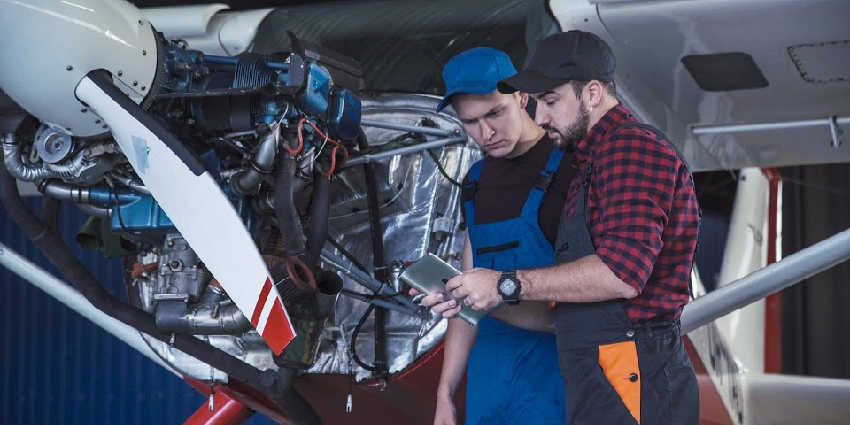
Aircraft Mechanic Schools South Dakota
If you are a veteran, your veteran's benefits, especially the Post 9/11 GI Bill, are the best sources of funding available to pay for aircraft mechanic schools in South Dakota. With the Post 9/11 GI Bill, you can be reimbursed for up to 100% of your aviation aircraft mechanic training expenses in South Dakota. This is a sizeable amount of funding that goes a long way toward making you an A&P mechanic, but there are a few things to consider before taking the leap.
For Veterans, aviation mechanic training expenses in South Dakota can be covered up to $10,000 dollar per academic year! Qualified veterans can use Post 9/11 GI Bill benefits to cover 100% of their training costs up to $10,000 dollars per academic year. Depending on the program, this is a big portion of the expense of aviation mechanic school in South Dakota.
While it is worth noting this limitation, it is hardly causing alarm since it covers or severely reduces the costs of most aviation mechanic school courses.
A&P Mechanic Schools in South Dakota
A&P Mechanic Schools in South Dakota require VA approval for reimbursement. An arguably more important consideration before beginning your aviation A&P mechanic training in South Dakota is whether a particular training provider is approved by the VA. The good news is there is a pretty standard process and it isn't a secret whether an Aircraft Mechanic School is approved.
The only potential catch is that the VA must also approve individual courses before they will reimburse your flight training costs. This means that while an aviation mechanic school in South Dakota may have approval, every course they offer isn't necessarily covered by your Post 9/11 GI Bill benefits.
A&P Mechanic School Training Requirements
To be a certified A&P mechanic or avionics technician you need to meet several qualifications:
- Age 18 or older
- Read, write, speak, and understand the English language
- Have a high school diploma or equivalent
- Display the required technical skills
Aircraft Mechanic Trade School in South Dakota
Today, the FAA has approximately 170 approved Aircraft Mechanic Trade Schools on their website. You can attend one or a combination of these schools to gain the practical experience you'll need to become an aircraft mechanic. These schools are mandated by the FAA to offer at least 1900 class-hours of training, and the courses last about 18 months, on average.
Some of these schools offer Associate or Bachelor degrees in conjunction with the Aircraft Mechanic Training Certification.
Many A&P mechanics today were trained in the military. As a military mechanic, you could be working on anything from large airliners and transports to jet fighters and attack helicopters. 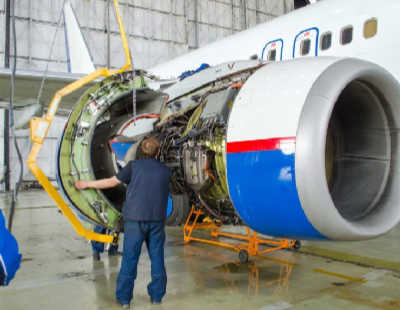 If you decide to go this route, upon your discharge from the military, you'll need to take the necessary FAA tests and have the proper documentation of your practical experience.
Once you have passed the required tests, you'll be eligible to apply for A&P mechanic jobs in South Dakota. However, please note that military experience can sometimes be too specific, and not meet the broad specifications required by the FAA. Even after your discharge, you may have to attend one of the FAA-approved Aircraft Mechanic Trade Schools in South Dakota.
On the job training... a very few people earn the required minimum coursework and skill set needed to pass the A&P certification tests through on the job training.
Typically, you must be under the direct supervision of an A&P for at least 30 months and be logging all of your hours to go this route. Your time log must be notarized by your employer or signed off by the supervising A&P.
A&P Mechanic Training is Improved by the VA Approval Process
The requirements for receiving an aviation mechanic certificate are standardized, but there is still a lot of variation in training programs. Since the VA mandates a fairly stringent approval process and there are ongoing paperwork requirements, most schools have a VA representative who is very familiar with the system.
The FAA demand, the approval process, and the paperwork have a net effect of improving the quality of your aviation mechanic training by weeding out weak training courses and keeping you active in your training. Once you start training, most of the paperwork can be managed for you, allowing you to focus on your aviation mechanic training.
In fact, this is the most important takeaway. The stringent requirements of the Post 9/11 GI Bill create better-equipped schools, more efficient training courses, and save you money during your aviation mechanic training. For more information and to verify your eligibility, call 1-888-GIBILL-1 or check out the GI Bill website.
Fixed-Wing Aircraft Facts - Wing Configurations
The wings of an aircraft can be attached to the fuselage at the top, mid-fuselage, or at the bottom. They may extend perpendicular to the horizontal plane of the fuselage or can angle up or down slightly. This angle is known as the wing dihedral. The dihedral angle affects the lateral stability of the aircraft.
Fun Facts About Flight Dispatchers
Flight dispatchers look at flight size, weather, travel time, and other areas to plan the timing of arrivals and departures. Air traffic controllers work from the airports, directing traffic on the ground and updating pilots with new information during their flights.
Aircraft Mechanic Schools in South Dakota
How to get your A&P Aircraft Mechanic certification in South Dakota; training requirements, eligibility, and more. To earn your A&P Aircraft Mechanic Training Certificate in South Dakota (A&P License in South Dakota), you must attend a Federal Aviation Administration (FAA) certified Aircraft Mechanic School in South Dakota OR have at least 30 months of relevant civilian or military work experience (supervised by a certified aviation mechanic from South Dakota).
The FAA issues the A&P certificates (airframe and powerplant certificates), and A&P mechanics from South Dakota can get either an airframe rating or a power plant rating or both--most aviation mechanics from South Dakota get both. Those who want a certificate with just a single rating and who base their application on practical experience must demonstrate 18 months of work experience applicable to the chosen rating. Learn more about the training and experience requirements to become an A&P mechanic near South Dakota.
After your aircraft mechanic school qualifications are met, you'll be eligible to take the required oral, practical, and written tests. You must pass all these tests within 24 months. The tests cover 43 technical subjects. Typically, tests for one certificate--airframe or power plant--take about 8 hours. (Get more details about the Aircraft A&P Mechanics Tests)
When you pass, you will have earned your FAA A&P mechanic license with airframe and/or powerplant certificates (A&P license in South Dakota), and you'll be on your way to a successful career in aviation maintenance! Learn more about aviation maintenance A&P technician schools near South Dakota.
A&P Mechanic Schools in South Dakota
Although your certificates earned from A&P mechanic schools in South Dakota don't expire, aviation mechanics from South Dakota must remain "current" by meeting several criteria, including completing a minimum of 1,000 hours of hands-on work experience during the previous 24 months (or completing a refresher course) and completing at least 16 hours of additional training every 24 months.
The additional training requirement is usually satisfied by attending manufacturer events or training with outside contractors hired to conduct the training.
Avionics Technician Specialty Training
As an A&P mechanic in South Dakota, if you have the training, qualifications, and tools, the FAA will allow you to work on avionics as well. Avionics technicians are not specifically required to have FAA certification if they received their avionics training in the military or from working for an avionics manufacturer.
Aircraft Mechanic Trade Schools in South Dakota
Aviation maintenance technicians keep aircraft in the air by inspecting, replacing, and fixing nearly every part of an airplane or helicopter. The term aviation maintenance technician (or A&P Mechanic) is very broad and applies to nearly anyone who works on aircraft in South Dakota.
However, as an aspiring Aviation Mechanic in training, you'll quickly learn that there are several different types of aviation mechanics out there in South Dakota.
First of all, airframe mechanics in South Dakota are licensed to perform repair work on the entire aircraft with the exception of the engine(s), propellers, and instruments. Powerplant mechanics in South Dakota are authorized to work on engines and in some cases, propellers.
Although Aviation A&P Mechanics from South Dakota can earn either an airframe or powerplant certificate, the vast majority of Aviation Mechanic near South Dakota earn both certificates and are hereafter referred to as A&P (airframe and powerplant) mechanics. Avionics technicians work exclusively on aircraft radios, instruments, navigation, weather, traffic, and ground proximity systems. Learn more about aviation maintenance technician jobs.
Aviation Maintenance Technician Career Paths Near South Dakota
As an A&P mechanic in South Dakota, you are eligible to work in a huge variety of settings. You can work as a freelance mechanic at your local airfield in South Dakota, get a job working for a local airport near South Dakota, work for a corporate aviation department maintaining one or a fleet of aircraft in South Dakota, or end up at a major airline working on passenger jets and turboprops.
After three years of operating as an A&P mechanic in South Dakota (with 24 months of hands-on experience), you're eligible to move up and become an inspection authorization mechanic (IA). IA's are A&Ps with the authority to return aircraft to service after certain types of thorough inspections.
Aviation Maintenance Technician Key Points
Aircraft Mechanic Trade Schools in South Dakota must be detail-oriented. Aircraft mechanics perform a variety of complex tasks where mistakes can be costly in terms of money and human life. When the tools are put away, the job is not complete; aircraft mechanics must also be excellent record keepers.
Paperwork for all inspections and work completed must be filed and logged appropriately for each task completed. The larger and more complex the aircraft, the more paperwork. Find out more about aviation maintenance technician training.
Fun Helicopter Facts for Aberdeen
During the mid 1500's, Italian inventor Leonardo Da Vinci made drawings of a single rotor flying machine that some experts say inspired the modern day helicopter. In 1784, French inventor, Launoy and Bienvenue created a toy with a rotary-wing that could lift and fly and proved the principle of helicopter flight. French inventor, Etienne Oehmichen built and flew a helicopter to a distance of 1 km in 1924.
Aviation Fun Facts and Figures
Flight Instructor Facts for Aberdeen t is important for you to keep track of your certification and to schedule refresher courses well in advance of your actual deadline as most classes fill up quickly.
Interesting Helicopter and Fixed-wing Facts for Brookings
The biggest helicopter was the Russian Mil Mi-12 Homer of 1968 which could lift 40,204 kg up to 2255 m. Despite all of these achievements the Soviet Air Force refused to accept the helicopter for state acceptance trials for many reasons, the main one being that the V-12's most important intended mission no longer existed, i.e. the rapid deployment of strategic ballistic missiles.
Helicopter Spotlight for Brookings
The Agusta-Westland AW119 Koala is an eight-seat utility helicopter powered by a single turboshaft engine produced for the civil market. Introduced as the Agusta A119 Koala prior to the Agusta-Westland merger it is targeted at operators favoring lower running costs of a single-engine aircraft over redundancy of a twin.The A119 designation was first applied to a proposed 11-seat stretched version of the A109 in the 1970s but this was never actually built. The helicopter that was eventually to enter production was conceived in 1994 as Agusta was recovering from the financial woes that had nearly put the company out of business and the second of two prototypes took to the air in February the following year. The first prototype was used for static tests. Civil certification was originally anticipated in 1997 but that deadline was missed with Agusta citing personnel problems and a need to increase the performance of the aircraft to meet customer expectations.
Fun Facts for Helicopter and Airplane Flight Training for Huron
There are more than 11,000 civil helicopters operating just in the U.S. and more than 15,000 civil helicopters operating in more than 157 other countries around the world.
The biggest helicopter was the Russian Mil Mi-12 Homer of 1968 which could lift 40,204 kg up to 2255 m.
Helicopter Spotlight for Huron
The AgustaWestland Apache is a licence-built version of the AH-64D Apache Longbow attack helicopter for the British Army's Army Air Corps. The first eight helicopters were built by Boeing; the remaining 59 were assembled by Westland Helicopters (now part of AgustaWestland) at Yeovil, Somerset in England from Boeing-supplied kits. Changes from the AH-64D include Rolls-Royce engines, a new electronic defensive aids suite and a folding blade mechanism allowing the British version to operate from ships. The helicopter was initially designated WAH-64 by Westland Helicopters and was later designated Apache AH Mk 1 (often shortened to Apache Ah4) by the Ministry of Defence.The Apache has become a valued form of close air support in the continuing conflict in Afghanistan, being deployed to the region since 2006. The Apache has been an object of controversy over the fitting of some munitions, such as cluster bombs and thermobaric weapons. Naval trials and temporary deployments at sea have proven the aircraft as an able platform to operate from the decks of ships, which is a unique application of the Apache amongst its operators. British Apaches served in the NATO 2011 military intervention in Libya operating from Royal Navy ships.
Interesting Helicopter and Fixed-wing Facts for Mitchell
There are over 3 million people in the air on planes at any one time. And the worlds first flying car arrives in 2012. Called the Terrafugia it costs $194,000
The biggest helicopter was the Russian Mil Mi-12 Homer of 1968 which could lift 40,204 kg up to 2255 m.
Helicopter Spotlight for Mitchell
The Light Helicopter Experimental (LHX) program was a 1980s United States Army helicopter procurement project to replace the AH-1 Cobra and OH-58 helicopters. In support of the LHX program the United States Army started the Advanced Composite Airframe Program (ACAP) to develop an all-composite helicopter fuselage.[1] In February 1981 contracts were awarded to Sikorsky (for the Sikorsky S-75) and Bell Helicopter (for the Bell D-292). An Army Aviation Mission Area Analysis, completed in 1982, identified deficiencies in current materiel and doctrine that needed to be addressed to meet the requirements of the new Airland Battle Doctrine. The specific material deficiencies were to be resolved through the LHX program.
Interesting Helicopter Facts
Robinson and the Raven Helicopter
In January 2000 Robinson introduced the Raven with hydraulically-assisted controls and adjustable pedals. In July 2002 Robinson introduced the Raven II featuring a more powerful fuel-injected engine and wider blades allowing a higher gross weight and improved altitude performance.
Interesting Helicopter and Fixed-wing Facts for Pierre
Over 3 million lives have been saved by helicopters in both peacetime and wartime operations since the first person was rescued from the sea in 1944. If you include military helicopters it is estimated that there are more than 45000 operating worldwide.
Helicopter Spotlight for Pierre
The American Helicopter XH-26 Jet Jeep (known as the XA-8 by its manufacturer) was an experimental tip jet helicopter developed in 1951 by the American Helicopter Company to meet a United States Army and Air Force (USAF) request for a collapsible and air-droppable observation helicopter. The design of the original Model XA-8 single-seat lightweight helicopter began in 1951 under the sponsorship of the U.S. Army Transportation Corps and the USAF. The Army's specification in 1950 had called for a lightweight, one-man unarmed helicopter that had to be collapsible, capable of aerial delivery to troops in rugged terrain, and assembled quickly with simple tools. The helicopter was to be used for both light observation and as an air-droppable rescue vehicle for downed aircrews. After a review of all proposals American Helicopter was awarded the development contract in June 1951, based on its XA-8 design proposal. The first of five prototype XH-26s flew in January 1952.
Interesting Facts About Airline Profitability for Rapid City
The airline industry has currently made a net loss of $31 billion dollars since 1940. The average profit per seat on a 1 hour flight is $2.20. In 1940 to fly London – New York it cost 1 years wages. Today it costs the wage of working only Monday & Tuesday.
Helicopter Spotlight for Rapid City
The Aérospatiale Gazelle is a five-seat helicopter, commonly used for light transport, scouting and light attack duties. It is powered by a single turbine engine and was the first helicopter to feature a fenestron tail instead of a conventional tail rotor. It was designed and manufactured in France by Sud Aviation, later Aérospatiale; the Gazelle has also been manufactured under licence by Westland Aircraft in the United Kingdom as the Westland Gazelle, by SOKO in Yugoslavia, and the Arab British Helicopter Company (ABHCO) in Egypt.
Since being introduced to service in 1973, the Gazelle has been procured and operated by a number of export customers. It has also participated in numerous conflicts around the world, including by Syria during the 1982 Lebanon War, by Rwanda during the Rwandan Civil War in the 1990s, and by numerous participants on both sides of the 1991 Gulf War. In French service, the Gazelle has been supplemented as an attack helicopter by the larger Eurocopter Tiger, but remains in use primarily as a scout helicopter.
Helicopter Factoid for Sioux Fallss for Sioux Falls
To steer a helicopter, the pilot must adjust the pitch of the blades, which can be set three ways. In the collective system, the pitch of all the blades attached to the rotor is identical; in the cyclic system, the pitch of each blade is designed to fluctuate as the rotor revolves, and the third system uses a combination of the first two.
Helicopter Spotlight for Sioux Falls
The Agusta A129 Mangusta (English: Mongoose) is an attack helicopter originally designed and produced by Agusta. It has the distinction of being the first attack helicopter to be designed and produced wholly in Europe. It has continued to be developed by AgustaWestland, the successor company to Agusta. The A129 has undergone several combat deployments since entering service with the Italian Army in the 1990s.
Interesting Helicopter and Fixed-wing Facts for Spearfish
If you include military helicopters it is estimated that there are more than 45,000 operating worldwide.
The fastest helicopter is the Westland Lynx, which flew at 402 km/h on 6 August 1986. The Westland Lynx is a British multi-purpose military helicopter designed and built by Westland Helicopters at its factory in Yeovil.
Flight Instructor Facts for Spearfish
A flight instructor who holds his CFII and MEI is called Multi-engine Instrument Instructor (MEII). It is also important to note that flight instructors may obtain and instruct other ratings, such as glider.
Interesting Helicopter and Fixed-wing Facts for Watertown
Over 3 million lives have been saved by helicopters in both peacetime and wartime operations since the first person was rescued from the sea in 1944. Highest altitude made in a helicopter was 40,820ft (12,442m) on 21, June 1972 in a Aerospatiale Lama and the Pilot was Jean Bouet from France.
Helicopter Facts and Figures
The United States military is another large employer of helicopter pilots, who are used in both combat and transportation roles. Due to the complexity of helicopter aviation, employers are allowed to reject applicants based on weight. Extremely overweight individuals can affect a helicopter's lift and drag, making it unsafe.
Interesting Helicopter and Fixed-wing Facts for Yankton
Did you know that if the engine stops, the helicopter rotor continues to spin allowing the machine to slowly land, generally without crashing to the ground. Much like its inspiration the Maple Tree Fruit.
Helicopter Spotlight for Yankton
The Boeing AH-64 Apache is a four-blade, twin-engine attack helicopter with a tailwheel-type landing gear arrangement, and a tandem cockpit for a two-man crew. It features a nose-mounted sensor suite for target acquisition and night vision systems. It is armed with a 30 mm (1.18 in) M230 Chain Gun carried between the main landing gear, under the aircraft's forward fuselage. It has four hardpoints mounted on stub-wing pylons, typically carrying a mixture of AGM-114 Hellfire missiles and Hydra 70 rocket pods. The AH-64 has a large amount of systems redundancy to improve combat survivability.