Flight Dispatcher Training in Arkansas
Cities in Arkansas with Aviation Schools:
- Alma
- Arkadelphia
- Avoca
- Barling
- Bella Vista
- Benton
- Bentonville
- Bismarck
- Blytheville
- Bono
- Booneville
- Brookland
- Bryant
- Cabot
- Cammack Village
- Cave Springs
- Centerton
- College Station
- Conway
- El Dorado
- Eureka Springs
- Farmington
- Fayetteville
- Forrest City
- Fort Smith
- Greenbrier
- Greenwood
- Harrison
- Heber Springs
- Hot Springs
- Hot Springs Village
- Jacksonville
- Johnson
- Jonesboro
- Little Rock
- Lowell
- Magnolia
- Malvern
- Marion
- Maumelle
- Mayflower
- Morrilton
- North Little Rock
- Paragould
- Pine Bluff
- Rogers
- Russellville
- Searcy
- Sherwood
- Springdale
- Texarkana
- Van Buren
- West Memphis

Flight Dispatcher Training in Arkansas
Flight dispatchers also called aircraft dispatchers and airline dispatchers, play a vital role in most large fleet operations, as well as at smaller cargo and flight training operations. In general, flight dispatchers work closely with pilots to plan all aspects of each flight.
Some of the factors a dispatcher must consider include weather (departure, en route, and destination), fuel requirements, aircraft weight & balance, airworthiness of the aircraft, compliance with regulations, alternate destinations, and route and altitude selection.
In general, the flight dispatcher's job is to ensure that a company's aircraft take off on time (weather permitting), are fully loaded to maximize revenues, have adequate fuel, airport, navigation, and weather information on board to complete the flight as planned, burn the least amount of fuel required for the flight, and land at the destination airport on or ahead of schedule. Get info about flight dispatcher training.
Flight Dispatcher Schools
When you attend a college or school offering flight dispatcher training, you'll learn aircraft performance specifications, how air traffic is routed in the National Airspace System by air traffic controllers, how aircraft use navigation and communications systems and facilities, aviation weather analysis, weight, and balance calculations, and of course, federal aviation regulations.
Some schools offer specialized training and accelerated courses that prepare you to take the FAA flight dispatcher certification exams. 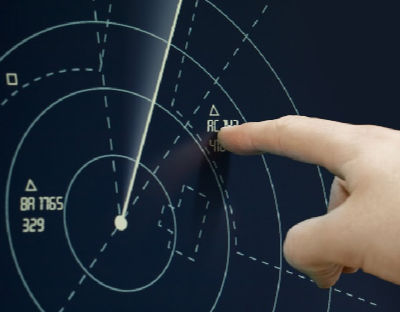 Keep in mind you must already meet the other requirements before enrolling in one of these courses. Learn more about flight dispatcher training.
As a flight dispatcher, you can expect to work for a large airline moving passengers or cargo, for smaller regional airlines as they continue to grow, or in large flight training operation.
Working in a fast-paced, high-pressure environment, you will probably have a computer workstation specialized for the task of planning flights and following changing weather all across the world. Expect to be indoors most of the time, although you will be interfacing with pilots in and around the airport environment, so you could be on the airport tarmac when required.
Flight Dispatcher Duties
Flight dispatchers share the responsibility for the safety of a given flight with the captain of the aircraft. Typically, the flight dispatcher is responsible for creating a flight plan and works with the captain directly on such issues as takeoff and landing performance, fuel load, route, altitudes, weight and balance, and weather conditions.
The flight dispatcher also "releases" a particular aircraft to make it's flight, and, once airborne, monitors the progress of all his/her current flights and shares that information with other key ground personnel. Aircraft dispatchers usually ride along in the cockpit of company-owned aircraft several times per year (the Federal Aviation Administration requires a minimum of five hours per year in the cockpit) to keep their skills sharp in relation to airline procedures, air traffic control routing, and airport environments.
Flight Dispatcher Training Courses
In order to be eligible to become a flight dispatcher, you'll need to be a high school graduate. Of course, the more education you have, the better, as airlines prefer to hire dispatchers with college degrees, and you'll be competing in a tight job market.
If you want to become a flight dispatcher, the time to start your training is now. However, keep in mind that you must be at least 21 to take the Aircraft Dispatcher Knowledge Test (written) and you must be at least 23 to hold an FAA Aircraft Dispatcher Certificate.
Where to Find Flight Dispatcher Training
You can train to become a flight dispatcher in one of three ways:
1. Graduate from a college or vocational training school's Federal Aviation Administration (FAA) approved flight dispatcher course.
2. Work for at least one year as an apprentice and under the direct supervision of an FAA certified flight dispatcher.
3. Work for two of the last three preceding years as an air traffic controller, either in the military or civilian sectors
Learn more about flight dispatcher certification.
FAA and Mitigation of the Impact of Weather
How the FAA mitigates the impact of weather. FAA air traffic controllers can’t control Mother Nature, but they have a wide range of tools to mitigate Mother Nature’s impact on the flying public. These tools are used at the agency’s Command Center in Warrenton, VA, which balances air traffic demand with system capacity on a nationwide scale, at Air Route Traffic Control Centers (ARTCC), which handle high altitude traffic, at Terminal Radar Approach Control (TRACON) facilities, which handle traffic around busy airports, and at airport towers.
Fixed-Wing Aircraft Factoid Maintaining the Aircraft
Maintenance of an aircraft is of the utmost importance for safe flight. Certificated technicians are committed to perform timely maintenance functions in accordance with the manufacturer’s instructions and under Title 14 of the Code of Federal Regulations (14 CFR). At no time is an act of aircraft maintenance taken lightly or improvised. The consequences of such action could be fatal, and the technician could lose his or her certificate and face criminal charges.
Aircraft Flight Dispatcher Training in Arkansas
Some flight dispatcher training schools in Arkansas offer specialized training and accelerated courses that prepare flight dispatcher students from Arkansas to take the FAA flight dispatcher certification exams. Keep in mind you must already meet the other requirements before enrolling in one of the flight dispatcher training courses in Arkansas.
If you attend a college or vocational school in Arkansas offering flight dispatcher training, you'll learn all about aircraft performance specifications, how air traffic is routed in the National Airspace System by air traffic controllers, how aircraft use navigation and communications systems and facilities, aviation weather analysis, weight and balance calculations, and of course, federal aviation regulations.
Flight Dispatchers in Arkansas serve as one of the most crucial components of the entire airline operation. Flight dispatchers fromArkansas are licensed airmen, certified by the Federal Aviation Administration (FAA). Flight dispatchers from Arkansas must undergo extensive testing and training to earn this highly sought after certificate, and must pass both an extensive oral examination and the comprehensive written Aircraft Dispatcher test.
The Aircraft or Flight Dispatcher tests are equivalent to the Air Transport Pilot (ATP) written and oral examinations that airline pilots take as part of their licensing procedure. They are, in essence, pilots on the ground, and are as legally liable for the aircraft as is the pilot in the cockpit.
In order to be eligible to become a flight dispatcher in Arkansas, you'll need to be a high school graduate. Of course, the more education you have, the better, as airlines prefer to hire dispatchers with college degrees, and you'll be competing in a tight job market.
If you want to become a Arkansas flight dispatcher, the time to start your training is now. However, keep in mind that you must be at least 21 to take the Aircraft Dispatcher Knowledge Test (written) and you must be at least 23 to hold an FAA Aircraft Dispatcher Certificate.
The role of an aircraft dispatcher in Arkansas is important and complex. They are the ground-based eyes and ears for the pilot in the air. Regulations stemming from the FAA hold both the pilot and the dispatcher as being equally responsible for the safety of the flight. Working jointly with the pilot, the dispatcher draws up a flight plan that will allow the aircraft to arrive at its destination safely and as cost-efficiently as possible.
Flight dispatchers from Arkansas follow the developing weather along the route as well as at the final destination. They ensure the aircraft has all the provisions (fuel, food, etc.) needed to make the flight safely. They also track the flight to ensure it remains on course per the flight plan, keeping all ground support personnel aware of its progress.
Where to Find Flight Dispatcher Training in Arkansas
You can train to become a flight dispatcher in one of three ways:
1. Graduate from a college or vocational training school's Federal Aviation Administration (FAA) approved flight dispatcher course in Arkansas.
2. Work for at least one year as an apprentice and under the direct supervision of an FAA certified flight dispatcher.
3. Work for two of the last three preceding years as an air traffic controller, either in the military or civilian sectors
Arkansas Flight Dispatchers Job Description
Arkansas Flight Dispatchers are licensed airmen certificated by the Federal Aviation Administration and have joint responsibility with the captain for the safety and operational control of flights under his/her guidance.
Flight Dispatchers from Arkansas authorize, regulate, and control commercial airline flights according to government and company regulations to expedite and ensure the safety of flight by performing the following tasks:
- responsible for economics, passenger service and operational control of day to day flight operations.
- analyze and evaluate meteorological information to determine potential hazards to the safety of flight and to select the most desirable and economic route of flight.
- compute the amount of fuel required for the safe completion of flight according to the type of aircraft, the distance of the flight, maintenance limitations, weather conditions and minimum fuel requirements prescribed by federal aviation regulations.
- prepare flight plans containing information such as maximum allowable takeoff and landing weights, weather reports, field conditions, NOTAMS and many other informational components required for the safe completion of the flight.
- prepare and signs the dispatch release which is the legal document providing authorization for a flight to depart.
- delay or cancel flights if unsafe conditions threaten the safety of his/her aircraft or passengers.
- monitor weather conditions, aircraft position reports, and aeronautical navigation charts to evaluate the progress of the flight.
- update the pilot in command of significant changes to weather or flight plan and recommends flight plan alternates, such as changing course, altitude and, if required, enroute landings in the interest of safety and economy.
- originate and disseminate flight information to others in his/her company including stations and reservations. This is the source of information provided to the traveling public.
Flight Dispatchers from Arkansas have undergone extensive training to have earned the coveted Flight Dispatcher's certificate having taken and passed both an extensive oral examination and the comprehensive Dispatch ADX test, administered by the Federal Aviation Administration. These tests are equivalent to the same Air Transport Pilot (ATP) written and oral examinations that an airline captain must successfully complete.
Flight Dispatchers from Arkansas participate in frequent and detailed recurrent training courses covering aircraft systems, company operations policy, meteorology and Federal Air Regulations as required by the FAA.
Flight Dispatcher Salaries in Arkansas
How much do flight dispatchers from Arkansas make? PayScale.com reports that flight dispatchers from Arkansas with 1-4 years experience make between $31,000 and $46,000, and those with more than five years experience earn between $40,000 and $92,000 per year.
AvJobs.com reports that the highest-paid dispatchers from Arkansas can earn $110,000 per year.
According to Careers.StateUniversity.com, flight dispatcher salaries in >Arkansas vary depending on the dispatcher's experience, size of the operation, location, and size of the airport. Starting salaries can be as low as $20,000 per year and top out at over $100,000 annually. Learn about flight dispatcher training.
Flight Dispatcher Benefits
Other flight dispatcher benefits in Arkansas may include health insurance, life insurance, retirement plans, and travel benefits (if airline employed) for you and your immediate family, including free or reduced airfares and discounts at major hotels. Another possible benefit of working for an airline is being able to ride in the cockpit jumpseat. Dispatchers are required to fly in the jumpseat at least five hours per year as part of their recurrent training, but dispatchers are also allowed to fly in the jumpseat on their own airline, and most other airlines, anywhere, anytime the jumpseat is available. Get more information about flight dispatcher jobs.
Fun Helicopter Facts for Bella Vista
Chilean president Sebastin Piera owns one of these choppers, and has made several public appearances flying it. Since 2002, Belgian Prince Philippe flies a red R44 for personal leisure, with the uniqueregistry code OO-PFB, which stands for Prins Filip Belgi.
More Helicopter Fun Facts for Bella Vista
Helicopters are safest to fly in bad weather because they can slow down, stop and/or fly backwards or sideways.
Focke & Flettners Machines
Focke and Flettners machines had 2 rotors turning in opposite directions to prevent torque reaction. This was a immense problem for the industry. It wasn't until 1939, that Russian-born American Igor Sikorsky solved this problem by adding a tail rotor to the machine.
Helicopter Facts for Benton
TheRobinson R44is a four-seat lighthelicopterproduced by theRobinson Helicopter Companysince 1992. Based on the companys two-placeRobinson R22, the R44 features hydraulically-assisted flight controls.
In the early 1930's, Arthur Young, a brilliant young inventor, built and successfully demonstrated a viable, flyable helicopter model. Larry Bell, a successful entrepreneur and founder of the Bell Aircraft Corporation was so impressed with Young's efforts that in 1941 he set the youthful inventor up in a small shop in Gardenville, New York
More Helicopter Fun Facts for Benton
The R44 is a single-engined helicopter with a semi-rigid two-bladed main rotor and a two-bladed tail rotor and a skid landing gear. It has an enclosed cabin with two rows of side-by-side seating for a pilot and three passengers.
The R44 was first flown on 31 March 1990, and receivedFAAcertification in December 1992, with the first delivery in February 1993.
Tail rotor direction of rotation on the R44 is reversed compared to the R22 for improved yaw control authority. On the R44 the advancing blade is on the bottom.
What the superior man seeks is in himself; what the small man seeks is in others. Confucius
Helicopter Facts for Bentonville
On twin-rotor craft the rotors spin in opposite directions, so their reactions cancel each other. The helicopter is propelled in a given direction by inclining the axis of the main rotor in that direction. The helicopter's speed is limited by the fact that if the blades rotate too fast they will produce compressibility effects on the blade moving forward and stall effects on the rearwardmoving blade, at the same time.
Fixed-Wing Aircraft Factoid - Wing Configurations
The wings of an aircraft can be attached to the fuselage at the top, mid-fuselage, or at the bottom. They may extend perpendicular to the horizontal plane of the fuselage or can angle up or down slightly. This angle is known as the wing dihedral. The dihedral angle affects the lateral stability of the aircraft.
Helicopter Facts for Blytheville
In 1937 German designer Heinrich Focke built an aircraft with two huge variable pitch rotors instead of wings and achieved a controlled hover. Months later, German Anton Flettner built the first true helicopter.
If the engine of the helicopter stops, the rotor continues to spin allowing the machine to slowly land, generally without crashing to the ground.
Fun Helicopter and Airplane Facts for Blytheville
Control was achieved by using auxiliary wings or servo-tabs on the trailing edges of the blades, a concept that was later adopted by other helicopter designers, including Bleeker and Kaman.
Helicopters were developed and built during the first half-century of flight, with the Focke-Wulf Fw 61 being the first operational helicopter in 1936.
Fun Helicopter Facts for Cabot To Share With Friends
British singerJay Kayalso owns an R44 (registry code G-JKAY), which he pilots in the music video to the songWhite Knuckle Ride.
That if the engine stops, the helicopter rotor continues to spin allowing the machine to slowly land, generally without crashing to the ground.
Since around 400 BC, Chinese children have played with bamboo flying toys, and the 4th-century AD Daoist book Baopuzi reportedly describes some of the ideas inherent to rotary wing aircraft
More Helicopter Fun Facts for Cabot and More
Helicopters are safest to fly in bad weather because they can slow down, stop and/or fly backwards or sideways.
If you include military helicopters it is estimated that there are more than 45,000 operating worldwide.
Fortunately analysis is not the only way to resolve inner conflicts. Life itself still remains a very effective therapiSt Karen Horney
Fun Helicopter Facts for Conway
Instead of a floor-mounted cyclic stick between the pilot's knees, the R22 uses a unique teetering T-Bar control connected to a stick that emerges from the console between the seats. This makes it easier for occupants to enter and exit the cabin and reduces chances for injury in the event of a hard landing.
Fun Helicopter and Airplane Facts for Conway
A helicopter (informally called chopper or helo) is a type of rotorcraft in which lift and thrust are supplied by engine-driven rotors.
Fun Airplane Facts
Tom Stuker is the worlds most frequent flyer. He has traveled over 10 million miles. There are over 14,000 commercial flights in the air at any one time.
Helicopter Facts for El Dorado
Since Bell Aircraft Corporation's reputation for helicopter manufacture began to rival its reputation as a builder of conventional aircraft, the company created a separate helicopter division which was headquartered in Fort Worth, Texas. Today, with Bell helicopters flying in more than 120 different countries, they are logging another ten hours every minute of every day. And by 1951, Bell helicopters were in service around the world, breaking records as fast as they were setting them.
Fun Helicopter Facts for El Dorado
In January 2000, Robinson introduced the Raven with hydraulically-assisted controls and adjustable pedals. In July 2002, Robinson introduced the Raven IIfeaturing a more powerful, fuel-injected engine and wider blades, allowing a higher gross weight and improved altitude performance.
Fun Helicopter Facts for Forrest City
Helicopters can be flown across oceans if additional fuel is made available or in-flight refueling is employed.
Myth: Helicopters will drop like a rock when the engine shuts down. In fact, you have a better chance at surviving in a helicopter when the engine fails than you do in an airplane.
It was not until the early 1480s, when Leonardo da Vinci created a design for a machine that could be described as an aerial screw, that any recorded advancement was made towards vertical flight.
Fun Helicopter Facts for Forrest City
A landing via autorotation is also sometimes necessary if the rear rotor blades stop functioning properly, no longer countering for the torque of the main rotor blades, so the helicopter will spin if the engine isnt turned off.
once the engine drops below a certain number of revolutions per minute, relative to the rotor RPM rate, a special clutch mechanism, called a freewheeling unit, disengages the engine from the main rotor automatically. This allows the main rotor to spin without resistance from the engine.
Interesting Helicopter and Fixed-wing Facts for Fort Smith
Over 3 million lives have been saved by helicopters in both peacetime and wartime operations since the first person was rescued from the sea in 1944.
The biggest helicopter was the Russian Mil Mi-12 Homer of 1968 which could lift 40,204 kg up to 2255 m.
The first reference to a rotor system is credited to inventor Leonardo da Vinci, who designed an ‘aerial screw’ in 1480. No full-scale variant was constructed during his lifetime.
Helicopter Spotlight for Fort Smith
The Boeing Vertol CH-46 Sea Knight is a medium-lift tandem rotor transport helicopter. It is used by the United States Marine Corps(USMC) to provide all-weather, day-or-night assault transport of combat troops, supplies and equipment. Additional tasks include combat support, search and rescue (SAR), support for forward refueling and rearming points, CASEVAC and Tactical Recovery of Aircraft and Personnel (TRAP).The Sea Knight was also the U.S. Navy's standard medium-lift utility helicopter until it was phased out in favor of the MH-60S Knighthawk in the early 2000s.
Fun Helicopter and Airplane Facts for Hot Springs
By derating the engine at sea level, the R22 achieves acceptable high-altitude performance without use of supercharging or turbocharging, thus saving the weight, complexity, unreliability, and shortened engine life of a forced induction system.
Fun Helicopter and Airplane Facts for Hot Springs
The first version was produced as the R22, followed by the R22 HP, R22 Alpha, R22 Beta and R22 Beta II. Superficially, the aircraft appear similar. The R22 HP was fitted with a 160 bhp Lycoming 0-320-B2C engine, an increase of 10 bhp (7.5 kW) over the original R22.
Helicopter Facts for Jacksonville
Bell Helicopter is an American rotorcraft manufacturer headquartered in Hurst, Texas, near Fort Worth. A division of Textron, Bell manufactures military helicopter and tiltrotor products in and around Fort Worth, as well as in Amarillo, Texas, and commercial rotorcraft products in Mirabel, Quebec, Canada. Bell provides training and support services worldwide.
Fun Helicopter and Airplane Facts for Jacksonville
Helicopters were developed and built during the first half-century of flight, with the Focke-Wulf Fw 61 being the first operational helicopter in 1936. There are more than 11,000 civil helicopters operating just in the U.S. and more than 15,000 civil helicopters operating in more than 157 other countries around the world.
Fun Helicopter Facts for Jonesboro
The R22 is the basis for Boeing's Maverick military unmanned aerial vehicle helicopter, and its Renegade version. In 1999, Frontier Systems developed a remotely piloted R22, the Maverick. This aircraft, along with the company, was later acquired by Boeing Phantom Works. In 2003 the U.S. Navy purchased four aircraft, equipped with Wescam EO/IR (Electro-Optical/Infrared) systems.
More Fun Helicopter Facts for Jonesboro
Owing to their versatility in flight, helicopters have a wide variety of applications. They are used for traffic surveillance, transportation, news gathering, aerial photography, crop-spraying, tourism, searching and rescuing etc.
The helicopter contributed directly to at least one revolutionary production technology. As helicopters grew larger and more powerful, the precision calculations needed for engineering the blades, which had exacting requirements, increased exponentially.
Interesting Helicopter and Fixed-wing Facts for Little Rock
Igor Sikorsky is considered to be the \father of helicopters not because he invented the firSt He is called that because he invented the first successful helicopter
The record for the fastest helicopter in the world is held by the Sikorsky X2 which during a flyby over Florida United States clocked 258mph (416kph). But this was beaten recently. On June 7th 2013 the X3 blew through the previous air speed record for helicopters by cruising at 255 knots (293 MPH) during a 40-minute flight over Southern France near Istres.
Fun Helicopter and Airplane Facts for Little Rock
Though most earlier designs used more than one main rotor, it is the single main rotor with anti-torque tail rotor configuration that has become the most common helicopter configuration. Tandem rotor helicopters are also in widespread use, due to their better payload capacity. Quadrotor helicopters and other types of multicopter have been developed for specialized applications.
Fun Helicopter and Airplane Facts for North Little Rock
There are over 3 million people in the air on planes at any one time. The worlds first flying car arrives in 2015. Called the Terrafugia it costs $279,000. Terrafugia, a Woburn manufacturer of flying cars has been working on its vehicles for almost eight years. The MIT-born company has been working on two kinds of cars: the Transition, which is scheduled to be released in mid-2016 and can fly at speeds of up to 100 miles per hour at up to 10,000 feet in the air;
Fun Helicopter and Airplane Facts for North Little Rock
There are more than 11,000 civil helicopters operating just in the U.S. and more than 15,000 civil helicopters operating in more than 157 other countries around the world.
Many helicopters use a tail rotor, an exposed blade or ducted fan mounted on the end of the tail boom typically seen on these craft. Another means of counteracting torque entails installing two rotors, attached to the same engine but rotating in opposite directions, while a third, more space-efficient design features twin rotors that are enmeshed, something like an egg beater.
Helicopter Facts for Paragould
The biggest helicopter was the Russian Mil Mi-12 Homer of 1968 which could lift 40,204 kg up to 2255 m.
At the end of 2011, Bell had approximately 10,700 employees, of which 19% were located outside the U.S. Major facilities are located in Fort Worth, Texas; Amarillo, Texas; Corpus Christi, Texas; Ozark, Alabama; Bristol, Tennessee; and Mirabel, Quebec, Canada. One third of the world fleet carry the Bell Helicopter brand.
Whirlybird Facts
There are more than 11,000 civil helicopters operating just in the U.S. and more than 15,000 civil helicopters operating in more than 157 other countries around the world.
Helicopters can be flown across oceans if additional fuel is made available or in-flight refueling is employed.
The fastest helicopter is the Westland Lynx, which flew at 402 km/h on 6 August 1986.
The way to gain a good reputation, is to endeavor to be what you desire to appear. Socrates
Fun Helicopter Facts for Pine Bluff
The R-22 is a single-engined helicopter with a semi-rigid two-bladed main rotor and a two-bladed tail rotor. The main rotor has a teetering hinge and two coning hinges, the tail rotor has only a teetering hinge.
Only 5% of the worlds population have ever been on an airplane. Flight is not the safest form of travel. The bus is on all measures. The motorcycle is the most dangerous on all measures.
More Fun Helicopter Facts for Pine Bluff
Many helicopters use a tail rotor, an exposed blade or ducted fan mounted on the end of the tail boom typically seen on these craft. Another means of counteracting torque entails installing two rotors, attached to the same engine but rotating in opposite directions, while a third, more space-efficient design features twin rotors that are enmeshed, something like an egg beater.
R22 Helicopter Trivia for Rogers
The R22 uses a horizontally mounted Lycoming O-320 (O-360-J2A on the Beta II), four-cylinder, air-cooled, normally aspirated, carburetor-equipped piston engine. It is fueled with 100LL grade aviation gasoline.
The capability to efficiently hover for extended periods of time allows a helicopter to accomplish tasks that fixed-wing aircraft and other forms of vertical takeoff and landing aircraft cannot perform.
Fun Helicopter and Airplane Facts for Rogers
Due to relatively low acquisition and operating costs, the R22 has been popular as a primary rotorcraft trainer around the world and as a livestock management tool on large ranches in North America and cattle stations in Australia.
Helicopter Facts for Russellville
Helicopters are safest to fly in bad weather because they can slow down, stop and/or fly backwards or sideways.
Every Bell Helicopter is backed by around-the-clock, award winning customer support. Bell Helicopters comprehensive, global service network is rated #1 in the industry. On every continent, in every region, we stand behind each aircraft with the expertise, parts and service needed to meet your mission requirements.
Helicopter History for Russellville
Helicopters are safest to fly in bad weather because they can slow down, stop and/or fly backwards or sideways. If the engine stops, thehelicopter rotor continues to spin allowing the machine to slowly land, generally without crashing to the ground. Over 3 million lives have been saved by helicopters in both peace time and war time operations since the first person was rescued from the sea in 1944. There are more than 11,000 civil helicopters operating just in the U.S.and more than 15,000 civil helicopters operating in more than 157 other countries around the world.
The true measure of a man is not how he behaves in moments of comfort and convenience but how he stands at times of controversy and challenges. Martin Luther King Jr.
Helicopter Facts for Searcy
Helicopters have been widely adopted by the military since their first appearance during the Korean War. During the Vietnam War, they became the preferred platforms for transporting troops and evacuating wounded; in the Persian Gulf conflict helicopter gunships provided air cover for advancing tanks.
Fun Helicopter Facts for Searcy
In 1997, a Robinson R44 was piloted byJennifer Murray for the first helicopter circumnavigation of the world by a woman, covering a distance of 36,000 miles in 97 days.
Dont be too timid and squeamish about your actions. All life is an experiment. The more experiments you make the better. Ralph Waldo Emerson
Fun Helicopter Facts for Sherwood No One WIll Know But You!
Helicopter is a type of aircraft in which lift is obtained by means of one or more power-driven horizontal propellers called rotors. When the rotor of a helicopter turns it produces reaction torque which tends to make the craft spin also. On most helicopters a small rotor near the tail compensates for this torque.
Fun Helicopter and Airplane Facts for Sherwood
Designed during the 1980s by Frank Robinson and his staff of engineers, the R44 first flew on March 31, 1990. The R44A strowas awarded an FAA Type Certificate in December1992, with the first deliveries taking place in January 1993.
We first make our habits, and then our habits make us. John Dryden
Fun Helicopter Facts for Springdale
The first version was produced as the R22, followed by the R22 HP, R22 Alpha, R22 Beta and R22 Beta II. Superficially, the aircraft appear similar. The R22 HP was fitted with a 160 bhp Lycoming 0-320-B2C engine, an increase of 10 bhp (7.5 kW) over the original R22.
Fun Helicopter and Airplane Facts for Springdale
The first version was produced as the R22, followed by the R22 HP, R22 Alpha, R22 Beta and R22 Beta II. Superficially, the aircraft appear similar. The R22 HP was fitted with a 160 bhp Lycoming 0-320-B2C engine, an increase of 10 bhp (7.5 kW) over the original R22.
The Boeing/Sikorsky RAH-66 Comanche unveiled in 1999 is the first helicopter using stealth technology. It is made of carbon-fiber and other composite materials, and the rotor hub is hidden.
Helicopter Facts for Texarkana
Globally recognized for world-class customer service, innovation and superior quality, Bell's international workforce serves customers flying Bell aircraft in more than 140 countries. Though most earlier designs used more than one main rotor, it is the single main rotor with anti-torque tail rotor configuration that has become the most common helicopter configuration.
Helicopter History for Texarkana
Helicopters are safest to fly in bad weather because they can slow down, stop and/or fly backwards or sideways. If the engine stops, thehelicopter rotor continues to spin allowing the machine to slowly land, generally without crashing to the ground. Over 3 million lives have been saved by helicopters in both peace time and war time operations since the first person was rescued from the sea in 1944. There are more than 11,000 civil helicopters operating just in the U.S.and more than 15,000 civil helicopters operating in more than 157 other countries around the world.
Helicopter Facts for Van Buren
Best known among its developers are the French inventor Louis Breguet and the engineers Igor Sikorsky of the United States and Juan de la Cierva of Spain. The helicopter has become very popular for short-distance transportation, because of its maneuverability and ability to land and take off in small areas; it has been adopted for a wide range of services, including air-sea rescue, fire fighting, traffic control, oil platform resupply, and business transportation.
Fun Helicopter and Airplane Facts for Van Buren
In 1783, Christian de Launoy, and his mechanic, Bienvenu, made a model with a pair of counter-rotating rotors, using turkey flight feathers as rotor blades, and in 1784, demonstrated it to the French Academy of Sciences.
In 1951, at the urging of his contacts at the Department of the Navy, Charles Kaman modified his K-225 synchropter with a new kind of engine, the turboshaft engine.
Fun Helicopter and Airplane Facts for West Memphis
Bell Helicopter is an industry-leading producer of commercial and military helicopters and the pioneer of tiltrotor aircraft. One-third of the world's operating vertical lift aircraft are made by Bell, including advanced military aircraft and a variety of commercial single- and twin-engine helicopters.
Fun Helicopter and Airplane Facts for West Memphis
Some helicopters reached limited production, but it was not until 1942 that a helicopter designed by Igor Sikorsky reached full-scale production, with 131 aircraft built.