Flight Dispatcher Training in Colorado
Cities in Colorado with Aviation Schools:
- Arvada
- Aurora
- Boulder
- Brighton
- Broomfield
- Broomfield
- Canon City
- Castle Rock
- Castlewood
- Centennial
- Cimarron Hills
- Clifton
- Colorado Springs
- Columbine
- Commerce City
- Dakota Ridge
- Denver
- Durango
- Englewood
- Erie
- Evans
- Firestone
- Fort Carson
- Fort Collins
- Fountain
- Frederick
- Golden
- Grand Junction
- Greeley
- Greenwood Village
- Highlands Ranch
- Johnstown
- Ken Caryl
- Lafayette
- Lakewood
- Littleton
- Lone Tree
- Longmont
- Louisville
- Loveland
- Montrose
- Northglenn
- Parker
- Pueblo
- Pueblo West
- Security-Widefield
- Sherrelwood
- Southglenn
- Thornton
- Welby
- Westminster
- Wheat Ridge
- Windsor

Flight Dispatcher Training in Colorado
Flight dispatchers also called aircraft dispatchers and airline dispatchers, play a vital role in most large fleet operations, as well as at smaller cargo and flight training operations. In general, flight dispatchers work closely with pilots to plan all aspects of each flight.
Some of the factors a dispatcher must consider include weather (departure, en route, and destination), fuel requirements, aircraft weight & balance, airworthiness of the aircraft, compliance with regulations, alternate destinations, and route and altitude selection.
In general, the flight dispatcher's job is to ensure that a company's aircraft take off on time (weather permitting), are fully loaded to maximize revenues, have adequate fuel, airport, navigation, and weather information on board to complete the flight as planned, burn the least amount of fuel required for the flight, and land at the destination airport on or ahead of schedule. Get info about flight dispatcher training.
Flight Dispatcher Schools
When you attend a college or school offering flight dispatcher training, you'll learn aircraft performance specifications, how air traffic is routed in the National Airspace System by air traffic controllers, how aircraft use navigation and communications systems and facilities, aviation weather analysis, weight, and balance calculations, and of course, federal aviation regulations.
Some schools offer specialized training and accelerated courses that prepare you to take the FAA flight dispatcher certification exams. 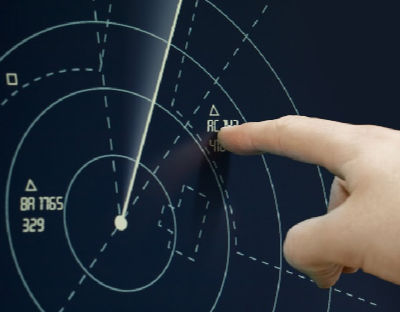 Keep in mind you must already meet the other requirements before enrolling in one of these courses. Learn more about flight dispatcher training.
As a flight dispatcher, you can expect to work for a large airline moving passengers or cargo, for smaller regional airlines as they continue to grow, or in large flight training operation.
Working in a fast-paced, high-pressure environment, you will probably have a computer workstation specialized for the task of planning flights and following changing weather all across the world. Expect to be indoors most of the time, although you will be interfacing with pilots in and around the airport environment, so you could be on the airport tarmac when required.
Flight Dispatcher Duties
Flight dispatchers share the responsibility for the safety of a given flight with the captain of the aircraft. Typically, the flight dispatcher is responsible for creating a flight plan and works with the captain directly on such issues as takeoff and landing performance, fuel load, route, altitudes, weight and balance, and weather conditions.
The flight dispatcher also "releases" a particular aircraft to make it's flight, and, once airborne, monitors the progress of all his/her current flights and shares that information with other key ground personnel. Aircraft dispatchers usually ride along in the cockpit of company-owned aircraft several times per year (the Federal Aviation Administration requires a minimum of five hours per year in the cockpit) to keep their skills sharp in relation to airline procedures, air traffic control routing, and airport environments.
Flight Dispatcher Training Courses
In order to be eligible to become a flight dispatcher, you'll need to be a high school graduate. Of course, the more education you have, the better, as airlines prefer to hire dispatchers with college degrees, and you'll be competing in a tight job market.
If you want to become a flight dispatcher, the time to start your training is now. However, keep in mind that you must be at least 21 to take the Aircraft Dispatcher Knowledge Test (written) and you must be at least 23 to hold an FAA Aircraft Dispatcher Certificate.
Where to Find Flight Dispatcher Training
You can train to become a flight dispatcher in one of three ways:
1. Graduate from a college or vocational training school's Federal Aviation Administration (FAA) approved flight dispatcher course.
2. Work for at least one year as an apprentice and under the direct supervision of an FAA certified flight dispatcher.
3. Work for two of the last three preceding years as an air traffic controller, either in the military or civilian sectors
Learn more about flight dispatcher certification.
How the FAA Mitigates the Impact of Poor Weather
Through Common Support Services controllers are able to tailor the weather information they receive via new technology and System Wide Information Management. The way these different components connect, as well as their relationship within the airspace system, are shown in the high-level overview of NextGen Weather Architecture. Looking to the future, the Weather Technology in the Cockpit program is a NextGen weather research program designed to resolve gaps in cockpit weather information and technology, pilot knowledge and training, and pilot decision making in bad weather. These are just some of the ways the FAA and its partners in the aviation industry work to help ensure passengers reach their destinations safely and on time.
Fixed-Wing Aircraft Factoid Maintaining the Aircraft
Maintaining the Aircraft Location Numbering Systems even on small, light aircraft, a method of precisely locating each structural component is required. Various numbering systems are used to facilitate the location of specific wing frames, fuselage bulkheads, or any other structural members on an aircraft. Most manufacturers use some system of station marking.
Aircraft Flight Dispatcher Training in Colorado
Some flight dispatcher training schools in Colorado offer specialized training and accelerated courses that prepare flight dispatcher students from Colorado to take the FAA flight dispatcher certification exams. Keep in mind you must already meet the other requirements before enrolling in one of the flight dispatcher training courses in Colorado.
If you attend a college or vocational school in Colorado offering flight dispatcher training, you'll learn all about aircraft performance specifications, how air traffic is routed in the National Airspace System by air traffic controllers, how aircraft use navigation and communications systems and facilities, aviation weather analysis, weight and balance calculations, and of course, federal aviation regulations.
Flight Dispatchers in Colorado serve as one of the most crucial components of the entire airline operation. Flight dispatchers fromColorado are licensed airmen, certified by the Federal Aviation Administration (FAA). Flight dispatchers from Colorado must undergo extensive testing and training to earn this highly sought after certificate, and must pass both an extensive oral examination and the comprehensive written Aircraft Dispatcher test.
The Aircraft or Flight Dispatcher tests are equivalent to the Air Transport Pilot (ATP) written and oral examinations that airline pilots take as part of their licensing procedure. They are, in essence, pilots on the ground, and are as legally liable for the aircraft as is the pilot in the cockpit.
In order to be eligible to become a flight dispatcher in Colorado, you'll need to be a high school graduate. Of course, the more education you have, the better, as airlines prefer to hire dispatchers with college degrees, and you'll be competing in a tight job market.
If you want to become a Colorado flight dispatcher, the time to start your training is now. However, keep in mind that you must be at least 21 to take the Aircraft Dispatcher Knowledge Test (written) and you must be at least 23 to hold an FAA Aircraft Dispatcher Certificate.
The role of an aircraft dispatcher in Colorado is important and complex. They are the ground-based eyes and ears for the pilot in the air. Regulations stemming from the FAA hold both the pilot and the dispatcher as being equally responsible for the safety of the flight. Working jointly with the pilot, the dispatcher draws up a flight plan that will allow the aircraft to arrive at its destination safely and as cost-efficiently as possible.
Flight dispatchers from Colorado follow the developing weather along the route as well as at the final destination. They ensure the aircraft has all the provisions (fuel, food, etc.) needed to make the flight safely. They also track the flight to ensure it remains on course per the flight plan, keeping all ground support personnel aware of its progress.
Where to Find Flight Dispatcher Training in Colorado
You can train to become a flight dispatcher in one of three ways:
1. Graduate from a college or vocational training school's Federal Aviation Administration (FAA) approved flight dispatcher course in Colorado.
2. Work for at least one year as an apprentice and under the direct supervision of an FAA certified flight dispatcher.
3. Work for two of the last three preceding years as an air traffic controller, either in the military or civilian sectors
Colorado Flight Dispatchers Job Description
Colorado Flight Dispatchers are licensed airmen certificated by the Federal Aviation Administration and have joint responsibility with the captain for the safety and operational control of flights under his/her guidance.
Flight Dispatchers from Colorado authorize, regulate, and control commercial airline flights according to government and company regulations to expedite and ensure the safety of flight by performing the following tasks:
- responsible for economics, passenger service and operational control of day to day flight operations.
- analyze and evaluate meteorological information to determine potential hazards to the safety of flight and to select the most desirable and economic route of flight.
- compute the amount of fuel required for the safe completion of flight according to the type of aircraft, the distance of the flight, maintenance limitations, weather conditions and minimum fuel requirements prescribed by federal aviation regulations.
- prepare flight plans containing information such as maximum allowable takeoff and landing weights, weather reports, field conditions, NOTAMS and many other informational components required for the safe completion of the flight.
- prepare and signs the dispatch release which is the legal document providing authorization for a flight to depart.
- delay or cancel flights if unsafe conditions threaten the safety of his/her aircraft or passengers.
- monitor weather conditions, aircraft position reports, and aeronautical navigation charts to evaluate the progress of the flight.
- update the pilot in command of significant changes to weather or flight plan and recommends flight plan alternates, such as changing course, altitude and, if required, enroute landings in the interest of safety and economy.
- originate and disseminate flight information to others in his/her company including stations and reservations. This is the source of information provided to the traveling public.
Flight Dispatchers from Colorado have undergone extensive training to have earned the coveted Flight Dispatcher's certificate having taken and passed both an extensive oral examination and the comprehensive Dispatch ADX test, administered by the Federal Aviation Administration. These tests are equivalent to the same Air Transport Pilot (ATP) written and oral examinations that an airline captain must successfully complete.
Flight Dispatchers from Colorado participate in frequent and detailed recurrent training courses covering aircraft systems, company operations policy, meteorology and Federal Air Regulations as required by the FAA.
Flight Dispatcher Salaries in Colorado
How much do flight dispatchers from Colorado make? PayScale.com reports that flight dispatchers from Colorado with 1-4 years experience make between $31,000 and $46,000, and those with more than five years experience earn between $40,000 and $92,000 per year.
AvJobs.com reports that the highest-paid dispatchers from Colorado can earn $110,000 per year.
According to Careers.StateUniversity.com, flight dispatcher salaries in >Colorado vary depending on the dispatcher's experience, size of the operation, location, and size of the airport. Starting salaries can be as low as $20,000 per year and top out at over $100,000 annually. Learn about flight dispatcher training.
Flight Dispatcher Benefits
Other flight dispatcher benefits in Colorado may include health insurance, life insurance, retirement plans, and travel benefits (if airline employed) for you and your immediate family, including free or reduced airfares and discounts at major hotels. Another possible benefit of working for an airline is being able to ride in the cockpit jumpseat. Dispatchers are required to fly in the jumpseat at least five hours per year as part of their recurrent training, but dispatchers are also allowed to fly in the jumpseat on their own airline, and most other airlines, anywhere, anytime the jumpseat is available. Get more information about flight dispatcher jobs.
Aviation Tidbits for Arvada You Should Know
In the early 1930 's, Arthur Young , a brilliant young inventor, built and successfully demonstrated a viable, flyable helicopter model. Larry Bell, a successful entrepreneur and founder of the Bell Aircraft Corporation , was so impressed with Young's efforts that in 1941 he set the youthful inventor up in a small shop in Gardenville, New York
A rotor system may be mounted horizontally as main rotors are, providing lift vertically, or it may be mounted vertically, such as a tail rotor, to provide lift horizontally as thrust to counteract torque effect.
Fun Helicopter and Airplane Facts for Arvada
Officers who are considering aviation school must have served less than 48 months. Warrant officers are enlisted soldiers who are chosen to attend Warrant Officer Training School. Once they pass, they must serve at least 36 months in warrant officer ranks before applying for aviation training. ROTC and West Point cadets are also eligible for admission to aviation school.
Fun Facts for Helicopter and Airplane Flight Training for Aurora
In recent years, private industry has probably accounted for the greatest increase in helicopter use, as many companies have begun to transport their executives via helicopter. In addition, helicopter shuttle services have proliferated, particularly along the urban corridor of the American NortheaSt Still, among civilians the helicopter remains best known for its medical, rescue, and relief uses.
Helicopter Turbine Engines
Turbine engines are more powerful and are used in a wide variety of helicopters. They produce a tremendous amount of power for their size but are generally more expensive to operate. The turbine engine used in helicopters operates differently than those used in airplane applications. In most applications, the exhaust outlets simply release expended gases and do not contribute to the forward motion of the helicopter.
Aviation Facts for Boulder
Helicopter Pilots: Their job involves not only flying and navigating but monitoring wind conditions and other weather phenomenon, as well calculating fuel requirements and weight restrictions. After flights, helicopter pilots must shut down all equipment and file post-flight paperwork.
Helicopter Spotlight for Boulder
The Atlas Oryx (named after the Oryx antelope) is a medium-sized utility helicopter which is manufactured by the Atlas Aircraft Corporation (now Denel Aviation). The SAAF was the largest user of Aérospatiale SA 330 Puma. The Oryx can trace its origins back to the Bush War. Despite the efforts of the gunship Alouette, the need for a dedicated gunship was recognized. Atlas Aircraft Corporation produced an experimental attack helicopter, the Alpha XH-1. This helicopter was used for feasibility studies and could not serve any practical purpose - this led to the more powerful XTP-1 in April 1987. Two XTP-1s were converted, and based on a Puma J airframe. Various weapons and other systems were tested on XTP-1 and paved the way for Project: Denel Rooivalk. However, the dynamic flight components of the XTP-1 made Atlas realize what advantages an upgraded Puma could have.
Helicopter Facts for Broomfield
Tasks in a helicopter pilot job description mainly depend on the type of employment, whether commercial, safety, or a defense pilot. The average income for commercial pilots in the United States is $85,000. But dependent upon where the helicopter pilot is located can determine the salary of the pilot. For example, in Utah the average helicopter pilot makes $68,000 while those that live in New York make an average of $84,000.
Aviation History for Broomfield
The earliest references for vertical flight have come from China. Since around 400 BC Chinese children have played with bamboo flying toys and the 4th-century AD Daoist book Baopuzi reportedly describes some of the ideas inherent to rotary wing aircraft
Globally recognized for world-class customer service, innovation and superior quality, Bell's international workforce serves customers flying Bell aircraft in more than 140 countries.
Helicopter Folklore in Castlewood
Though most earlier designs used more than one main rotor, it is the single main rotor with anti-torque tail rotor configuration that has become the most common helicopter configuration. Tandem rotor helicopters are also in widespread use, due to their better payload capacity. Quadrotor helicopters and other types of multicopter have been developed for specialized applications.
Helicopter Spotlight for Castlewood
The Light Helicopter Experimental (LHX) program was a 1980s United States Army helicopter procurement project to replace the AH-1 Cobra and OH-58 helicopters. In support of the LHX program the United States Army started the Advanced Composite Airframe Program (ACAP) to develop an all-composite helicopter fuselage.[1] In February 1981 contracts were awarded to Sikorsky (for the Sikorsky S-75) and Bell Helicopter (for the Bell D-292). An Army Aviation Mission Area Analysis, completed in 1982, identified deficiencies in current materiel and doctrine that needed to be addressed to meet the requirements of the new Airland Battle Doctrine. The specific material deficiencies were to be resolved through the LHX program.
Helicopter Spotlight for Colorado Springs
The Sikorsky S-92 is a four-bladed twin-engine medium-lift helicopter built by Sikorsky Aircraft for the civil and military helicopter market. The S-92 was developed from the Sikorsky S-70 helicopter and has similar parts such as flight control and rotor systems.
Helicopter History for Colorado Springs
The H-92 Superhawk is a military version of the S-92 in the utility transport role capable of carrying 22 troops. The H-92 can also be configured for specific missions including Search and Rescue and executive transportation. The CH-148 Cyclone is a shipboard maritime helicopter variant currently under development for the Canadian Forces. From February 2009 the S-92 program was placed under Sikorsky Global Helicopters Sikorsky's new civil helicopter business unit.
Responsible for Operation of a Helicopter for Columbine
To ensures any flight is conducted in the safest manner possible. The Helicopter determines flight routes, speed, and take off and landing times to fulfill scheduling requirements. All Pilots must stay current with federal and local flight regulations. All helicopter pilots must possess second class commercial helicopter pilot certificate which requires at least 1,000 hours of helicopter flying time.
Helicopter Spotlight for Columbine
The Boeing AH-64 Apache is a four-blade, twin-engine attack helicopter with a tailwheel-type landing gear arrangement, and a tandem cockpit for a two-man crew. It features a nose-mounted sensor suite for target acquisition and night vision systems. It is armed with a 30 mm (1.18 in) M230 Chain Gun carried between the main landing gear, under the aircraft's forward fuselage. It has four hardpoints mounted on stub-wing pylons, typically carrying a mixture of AGM-114 Hellfire missiles and Hydra 70 rocket pods. The AH-64 has a large amount of systems redundancy to improve combat survivability.
Interesting Aviation Facts for Englewood for Englewood
As a helicopter pilot one must execute tasks mainly as the type of employer he is working for. He may work for the law enforcement army air force or any commercial businesses. And each authority will require different skills for the pilot.
The record for the fastest helicopter in the world is held by the Sikorsky X2 which during a flyby over Florida United States clocked 258mph (416kph). But this was beaten recently on June 7th, 2013 the X3 blew through the previous air speed record for helicopters by cruising at 255 knots (293 MPH) during a 40-minute flight over Southern France near Istres.
Helicopter Spotlight for Englewood
The Aérospatiale Gazelle is a five-seat helicopter, commonly used for light transport, scouting and light attack duties. It is powered by a single turbine engine and was the first helicopter to feature a fenestron tail instead of a conventional tail rotor. It was designed and manufactured in France by Sud Aviation, later Aérospatiale; the Gazelle has also been manufactured under licence by Westland Aircraft in the United Kingdom as the Westland Gazelle, by SOKO in Yugoslavia, and the Arab British Helicopter Company (ABHCO) in Egypt.
Since being introduced to service in 1973, the Gazelle has been procured and operated by a number of export customers. It has also participated in numerous conflicts around the world, including by Syria during the 1982 Lebanon War, by Rwanda during the Rwandan Civil War in the 1990s, and by numerous participants on both sides of the 1991 Gulf War. In French service, the Gazelle has been supplemented as an attack helicopter by the larger Eurocopter Tiger, but remains in use primarily as a scout helicopter.
Interesting Helio Facts for Fort Collins
Lift in an helicopter is proportional to the change in the air's momentum (its mass times its velocity): the greater the momentum, the greater the lift.
The record for the fastest helicopter in the world is held by the Sikorsky X2 which, during a flyby over Florida, United States, clocked 258mph (416kph). But this was beaten recently. On June 7th 2013, the X3 blew through the previous air speed record for helicopters by cruising at 255 knots (293 MPH) during a 40-minute flight over Southern France near Istres.
Helicopter Fact Sheet for Fort Collins
By 1951, Bell helicopters were in service around the world, breaking records as fast as they were setting them. And since Bell Aircraft Corporation's reputation for helicopter manufacture began to rival its reputation as a builder of conventional aircraft , the company created a separate helicopter division which was headquartered in Fort Worth, Texas. Today, with Bell helicopters flying in more than 120 different countries , they are logging another ten hours every minute of every day.
Finding a Flight School for Grand Junction
The first important thing you need to do before enrolling in any pilot training schools is to go and personally check them. To begin with you can start with the yellow pages because even some good schools do not advertise. But even the best advertising does not tell you or show you what the school can offer you. For example what planes are available to fly and what are the flight instructors going to teach.
Helicopter Spotlight for Grand Junction
The Northrop Grumman MQ-8 Fire Scout is an unmanned autonomous helicopter developed by Northrop Grumman for use by the United States Armed Forces.[2] The Fire Scout is designed to provide reconnaissance situational awareness aerial fire support and precision targeting support for ground air and sea forces. The initial RQ-8A version was based on the Schweizer 330 while the enhanced MQ-8B was derived from the Schweizer 333. The larger MQ-8C variant is based on the Bell 407.
Helicopter Facts for Greeley
The main task of a commercial helicopter pilot is to fly the helicopter, abiding with the safety rules and regulations of flying. In the pilot job description, there are many other tasks that a pilot needs to carry out. Presently, the median per annual salary of these commercial pilots is averaged to be around $85,000.
Aviation History for Greeley
In 1937 German designer Heinrich Focke built an aircraft with two huge variable pitch rotors instead of wings and achieved a controlled hover. Months later, German Anton Flettner built the first true helicopter.
Fun Aviation Facts for Highlands Ranch
Helicopter pilots must be skilled not only in flying but must be spontaneous in making decisions related to changes in the weather, and other emergency processes related to the chopper. Being a helicopter pilot is not easy, you have to carefully plan the process of getting enrolled in a top helicopter pilot training school for getting a valid pilot license.
The first reference to a rotor system or helicopter flight is credited to inventor Leonardo da Vinci, who designed an ‘aerial screw’ in 1480. No full-scale variant was constructed during his lifetime. But is assumed to have been derived from the flight of a maple tree fruit as it floats to the ground.
Helicopter Spotlight for Highlands Ranch
The TAI/AgustaWestland T129 is an attack helicopter based on the Agusta A129 Mangusta. The T129 was developed by Turkish Aerospace Industries (TAI) with AgustaWestland as the primary partner. The helicopter is designed for hot and high environments.
The ATAK programme was begun to meet the Turkish Armed Forces' requirements for an attack and tactical reconnaissance helicopter. The T129 is the result of the integration of Turkish developed high-tech avionics and weapon systems onto the combat proven AgustaWestland A129 airframe with upgraded engines transmission and rotor blades. It is in use by the Turkish Army and is being offered to other air forces.
Helicopter Training, Tricks, and Tips for Ken Caryl
Most airlines or helicopter companies prefer pilots with at least two years of college-level education. For many companies, engineering degrees are becoming more and more of an expected requirement. However, experience can sometimes trump lack of education. To be eligible for FAA licensure and receive a helicopter rating, prospective pilots must accumulate at least 150 hour of total flight time.
Helicopter Spotlight for Ken Caryl
The Agusta-Westland AW119 Koala is an eight-seat utility helicopter powered by a single turboshaft engine produced for the civil market. Introduced as the Agusta A119 Koala prior to the Agusta-Westland merger it is targeted at operators favoring lower running costs of a single-engine aircraft over redundancy of a twin.The A119 designation was first applied to a proposed 11-seat stretched version of the A109 in the 1970s but this was never actually built. The helicopter that was eventually to enter production was conceived in 1994 as Agusta was recovering from the financial woes that had nearly put the company out of business and the second of two prototypes took to the air in February the following year. The first prototype was used for static tests. Civil certification was originally anticipated in 1997 but that deadline was missed with Agusta citing personnel problems and a need to increase the performance of the aircraft to meet customer expectations.
Interesting Aviation Facts for Lakewood for Lakewood
A helicopter's power comes from either a piston engine or a gas turbine (recently, the latter has predominated), which moves the rotor shaft, causing the rotor to turn. While a standard plane generates thrust by pushing air behind its wing as it moves forward, the helicopter's rotor achieves lift by pushing the air beneath it downward as it spins.
Helicopter Spotlight for Lakewood
The Bell UH-1 Iroquois (unofficially Huey) is a military helicopter powered by a singleturboshaft engine, with a two-bladed main rotor and tail rotor. The helicopter was developed by Bell Helicopter to meet theUnited States Army's requirement for a medical evacuation and utility helicopter in 1952, and first flew on 20 October 1956. Ordered into production in March 1960, the UH-1 was the first turbine-powered helicopter to enter production for the United States military, and more than 16,000 have been produced worldwide.
The first combat operation of the UH-1 was in the service of the U.S. Army during the Vietnam War. The original designation of HU-1 led to the helicopter's nickname of Huey. In September 1962, the designation was changed to UH-1, but \Huey remained in common use. Approximately 7,000 UH-1 aircraft saw service in Vietnam.
Helicopter Trivia for Littleton
Many helicopter pilots join helicopter companies (which provide charter flights or commercial shipping), and enter as co-pilots. Other pilots start their own private companies, which usually specialize in air taxiing or giving recreational flights.
Aviation Quotes for Littleton
The main thing is to keep the main thing the main thing.- Steven Covey
If a man is in need of rescue an airplane can come in and throw flowers on him and that's just about all. But a direct lift aircraft could come in and save his life.” ~Igor Sikorsky
Success is going from failure to failure without losing your enthusiasm.-Winston Churchill
Life is what we make it always has been always will be. –Grandma Moses
Helicopter Training Tips for Longmont
Helicopter pilot training schools give you the needed assistance and information that you will require to become a skilled helicopter pilot. Having helicopter training from a reputed school increases your chances of being a successful pilot.
Helicopter Spotlight for Longmont
The Lockheed Martin VH-71 Kestrel is a variant of the AgustaWestland AW101 (formerly Eh401) built to replace the United States Marine Corps' Marine One U.S. Presidential transport fleet. It was developed and built by the Lockheed Martin–led US101 Team of Lockheed Martin Systems Integration – Owego (LMSI) AgustaWestland and Bell Helicopter.
In February 2009 President Barack Obama asked Secretary of Defense Robert Gates about placing the project on hold or canceling it because of its high cost: over $13 billion for the planned 28 helicopters. In June 2009 the U.S. Navy terminated the contract after spending about $4.4 billion and taking delivery of nine VH-71s. The helicopters were then sold to Canada for $164 million for use as spare parts for its fleet of AgustaWestland CH-149 Cormorant search-and-rescue helicopters.
Interesting Helicopter Facts for Loveland
Unlike most other planes, helicopter is much more cheaper, faster and agile. Helicopter pilots must be skilled about flying and must be spontaneous in taking decisions related to landing the chopper.
The biggest helicopter was the Russian Mil Mi-12 Homer of 1968 which could lift 40,204 kg up to 2255 m.
The first reference to a rotor system is credited to inventor Leonardo da Vinci, who designed an ‘aerial screw’ in 1480. No full-scale variant was constructed during his lifetime.
Famous Quote in Loveland You Should Know
The helicopter: The flying carpet of the Scientific Age.” ~Michael Hampson
Everyone is a student in a helicopter -Unknown
Helicopter Spotlight for Loveland
The Mitsubishi MH 2000 is a 7/12 seat light utility helicopter. Low levels of interest in the aircraft forced Mitsubishi to halt sales of Mh4000 in September 2004. The Mh4000 is Japan's first indigenous helicopter with Mitsubishi Heavy Industries (MHI) having sole responsibility for developing and manufacturing the fuselage and engines.
In the development of the Mh4000 MHI aimed for safety economy and low noise levels. The program was launched in 1995 to fulfill a variety of missions include passenger and business transport law enforcement search and rescue and emergency medical services.
Aviation Tidbits for Northglenn
The Robinson R22 is a two-bladed, single-engine light utility helicopter manufactured by Robinson Helicopter. The two-seat R22 was designed in 1973 by Frank Robinson and has been in production since 1979.
Aviation Fun Facts and Figures
Flight Instructor Facts for Northglenn t is important for you to keep track of your certification and to schedule refresher courses well in advance of your actual deadline as most classes fill up quickly.
Helicopter Flight Training for Pueblo
If you don't have the required finances in order to attend a helicopter flight school, there are many financial aids that could lessen the burden that you may need to carry. There are many helicopter flight schools that have special payment schemes that could be beneficial to you if you want to complete your training. Those students who are attending under the GI Bill must find an institution that meets the requirements.
Fun Helicopter Facts for Pueblo
Oil companies often hire helicopter pilots to ferry employees, as well as equipment and supplies, between offshore rigs and coastal operations centers.
Helicopter Spotlight for Pueblo
The RotorWay Exec is a family of American two-bladed, skid-equipped, two-seat kit helicopters, manufactured by RotorWay International and supplied in kit form for amateur-construction. The Exec 162F is the latest in the Exec series of helicopters manufactured by RotorWay International.The RotorWay Scorpion design was updated with an aluminum tail and full fiberglass cockpit enclosure to become the Exec. The Exec 90 was developed in the early 1990s, it was, at the time, the only piston-powered helicopter to utilize an asymmetrical airfoil for improved autorotation characteristics and safety.In 1994, a fuel injection system with electronic ignition, and FADEC was added to the Exec 90, producing the Exec 162F. Unlike most U.S.-designed helicopters, the main rotor on the Exec 162F rotates clock-wise, as seen from above. The Exec series was further developed into the RotorWay A600 Talon, which replaced the Exec in production.
Helicopter Training, Tricks, and Tips for Security-Widefield for Security-Widefield
A commercial helicopter pilot can provide services in agro-based companies, private airlines, for TV stations, search and rescue, and training others to learn to fly helicopters. If working for an agriculture company, the pilot may need to fly the chopper over the fields in order to spray pesticides for crop growth and disinfection. Working for private companies a pilot might need to fly in executives or packages to facilities.
Helicopter Facts and Figures
The United States military is another large employer of helicopter pilots, who are used in both combat and transportation roles. Due to the complexity of helicopter aviation, employers are allowed to reject applicants based on weight. Extremely overweight individuals can affect a helicopter's lift and drag, making it unsafe.
Learn More About Aviation in Southglenn
To become a helicopter pilot, individuals must undergo rigorous training and be licensed by the Federal Aviation Administration, or FAA.
In 1951, at the urging of his contacts at the Department of the Navy, Charles Kaman modified his K-225 synchropter with a new kind of engine, the turboshaft engine.
Helicopter Spotlight for Southglenn
SpeedHawk is a concept aircraft based on applying X-49A compounding concepts to a production UH-60 Black Hawk offering better performance range and increases in useful load. The SpeedHawk aircraft includes an SPU (third engine) high forward-swept wing concept a 45-inch fuselage plug cabin extension and several other drag reducing and performance-oriented improvements including a rotor hub fairing.
Aviation Services for Thornton
A helicopter (informally called chopper or helo) is a type of rotorcraft in which lift and thrust are supplied by engine-driven rotors.
A helicopter pilot's yearly income is dependent upon a number of factors, including the pilot's credentials, flight experience, the size of the employer, and the specific type of industry the pilot is in. According to swz.salary.com, in the United States, the median annually income for a helicopter pilot is $82,585. While the bottom 25 percent of pilots make $68,781 or less, the top 75 percent make $104,749 or more.
Helicopter Spotlight for Thornton
The Aérospatiale SA 321 Super Frelon, (Super Frelon - Super Hornet) is a three-engined heavy transport helicopter produced by Aérospatiale of France. The helicopter is still in use in China where the locally produced version is known as the Z-8. The SA-3210 Super Frelon was developed by Sud-Aviation from the original SE-3200 Frelon. Sikorsky was contracted to supply the design of a new six-bladed main rotor and five-bladed tail rotor. Fiat supplied a design for a new main transmission. The first flight of the Super Frelon was December 7, 1962. A modified prototype Super Frelon helicopter was used on July 23, 1963 to break the FAI absolute helicopter world speed record with a speed of 217.7 mph.
Aviation Art In Lakewood Colorado
Never before has one artist assembled such an immeasurable collection of unfailing and inclusive illustrations as aviation artist Joe Milich. 35 years in the making, over 1300 different prints are shown and available on-line. Do you or your favorite pilot have a favorite aircraft? A print will make an excellent gift for pilots, gift for wingings, for retirements or for the Aviation History for Westminster buff. Prints can be purchased with matting, with matted and framed, with print only, or with customized or multiple prints in one unit, personalized with accessories you provide, such as patches, wings, etc.
Joe Milich has been drawing and painting his entire life. With a natural artistic ability and a passion for airplanes that began as a child, it is only expected that he's combined these two great loves into a lifelong career. With 35 years in the making, the creation of this vast Aviation Art collection of pen and ink originals, limited edition prints, and paintings is a phenomenal sight to see. Located in Lakewood Colorado, Aviation Art is able to ship quickly and promptly.
Helicopter Spotlight for Westminster
The Bell Model 309 KingCobra was an experimental attack helicopter developed by Bell Helicopter based on the Bell AH-1 Cobra. Bell announced the KingCobra program in January 1971. Two prototypes were built one with a P&WC T400-CP-400 Twin Pac dual turboshaft engine system much like that used on the AH-1J but with a stronger drive train allowing full 1800 shp (1340 kW) operation and the other with a single Lycoming T55-L-7C turboshaft engine with 2000 shp (1490 kW). The twin engine KingCobra first flew on 10 September 1971. It looked much like an AH-1J except for a longer and distinctive buzzard beak nose and a ventral fin like that on the original Model 209 demonstrator. However there were significant changes that were less noticeable:
Aviation Career After the Military
There are many interesting jobs out there in the industry, out of which most are mainly related to the hobby of the professional. One such career is that of a helicopter pilot. If you love flying and are interested in aeronautics, you should consider a career as a helicopter pilot.
There are many flight schools around the United States which will aid in the licensing process, but choosing one with a four year college degree is your best option. Using the GI Bill benefits are the ideal way to manage and receive licensing and a college degree.
Helicopter Spotlight for Wheat Ridge
The Agusta A129 Mangusta (English: Mongoose) is an attack helicopter originally designed and produced by Agusta. It has the distinction of being the first attack helicopter to be designed and produced wholly in Europe. It has continued to be developed by AgustaWestland, the successor company to Agusta. The A129 has undergone several combat deployments since entering service with the Italian Army in the 1990s.