Flight Dispatcher Training in Connecticut
Cities in Connecticut with Aviation Schools:
- Amston
- Andover
- Ansonia
- Avon
- Bantam
- Berlin
- Bethany
- Bethel
- Bethlehem
- Bloomfield
- Bolton
- Bozrah
- Branford
- Bridgeport
- Bristol
- Brookfield
- Burlington
- Canaan
- Canton
- Centerbrook
- Central Manchester
- Chaplin
- Cheshire
- Chester
- Clinton
- Colchester
- Collinsville
- Columbia
- Cos Cob
- Coventry
- Cromwell
- Danbury
- Danielson
- Darien
- Deep River
- Derby
- Durham
- East Berlin
- East Granby
- East Hampton
- East Hartford
- East Haven
- East Lyme
- East Windsor
- Easton
- Ellington
- Enfield
- Essex
- Fairfield
- Farmington
- Glastonbury
- Granby
- Greens Farms
- Greenwich
- Groton
- Guilford
- Haddam
- Hamden
- Hartford
- Harwinton
- Hebron
- Higganum
- Ivoryton
- Kent
- Killingworth
- Lakeville
- Lebanon
- Ledyard
- Lisbon
- Litchfield
- Lyme
- Madison
- Manchester
- Mansfield Center
- Marlborough
- Meriden
- Middlebury
- Middlefield
- Middletown
- Milford
- Monroe
- Montville
- Moosup
- Morris
- Mystic
- Naugatuck
- New Britain
- New Haven
- Newington
- Norwalk
- Norwich
- Shelton
- Stamford
- Stratford
- Torrington
- Trumbull
- Waterbury
- West Hartford
- West Haven
- Wetherfield

Flight Dispatcher Training in Connecticut
Flight dispatchers also called aircraft dispatchers and airline dispatchers, play a vital role in most large fleet operations, as well as at smaller cargo and flight training operations. In general, flight dispatchers work closely with pilots to plan all aspects of each flight.
Some of the factors a dispatcher must consider include weather (departure, en route, and destination), fuel requirements, aircraft weight & balance, airworthiness of the aircraft, compliance with regulations, alternate destinations, and route and altitude selection.
In general, the flight dispatcher's job is to ensure that a company's aircraft take off on time (weather permitting), are fully loaded to maximize revenues, have adequate fuel, airport, navigation, and weather information on board to complete the flight as planned, burn the least amount of fuel required for the flight, and land at the destination airport on or ahead of schedule. Get info about flight dispatcher training.
Flight Dispatcher Schools
When you attend a college or school offering flight dispatcher training, you'll learn aircraft performance specifications, how air traffic is routed in the National Airspace System by air traffic controllers, how aircraft use navigation and communications systems and facilities, aviation weather analysis, weight, and balance calculations, and of course, federal aviation regulations.
Some schools offer specialized training and accelerated courses that prepare you to take the FAA flight dispatcher certification exams. 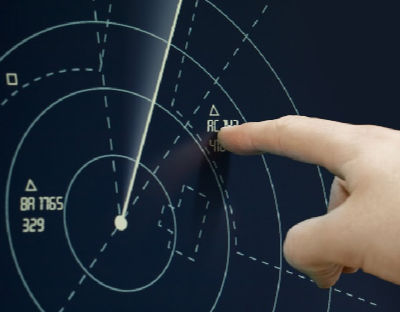 Keep in mind you must already meet the other requirements before enrolling in one of these courses. Learn more about flight dispatcher training.
As a flight dispatcher, you can expect to work for a large airline moving passengers or cargo, for smaller regional airlines as they continue to grow, or in large flight training operation.
Working in a fast-paced, high-pressure environment, you will probably have a computer workstation specialized for the task of planning flights and following changing weather all across the world. Expect to be indoors most of the time, although you will be interfacing with pilots in and around the airport environment, so you could be on the airport tarmac when required.
Flight Dispatcher Duties
Flight dispatchers share the responsibility for the safety of a given flight with the captain of the aircraft. Typically, the flight dispatcher is responsible for creating a flight plan and works with the captain directly on such issues as takeoff and landing performance, fuel load, route, altitudes, weight and balance, and weather conditions.
The flight dispatcher also "releases" a particular aircraft to make it's flight, and, once airborne, monitors the progress of all his/her current flights and shares that information with other key ground personnel. Aircraft dispatchers usually ride along in the cockpit of company-owned aircraft several times per year (the Federal Aviation Administration requires a minimum of five hours per year in the cockpit) to keep their skills sharp in relation to airline procedures, air traffic control routing, and airport environments.
Flight Dispatcher Training Courses
In order to be eligible to become a flight dispatcher, you'll need to be a high school graduate. Of course, the more education you have, the better, as airlines prefer to hire dispatchers with college degrees, and you'll be competing in a tight job market.
If you want to become a flight dispatcher, the time to start your training is now. However, keep in mind that you must be at least 21 to take the Aircraft Dispatcher Knowledge Test (written) and you must be at least 23 to hold an FAA Aircraft Dispatcher Certificate.
Where to Find Flight Dispatcher Training
You can train to become a flight dispatcher in one of three ways:
1. Graduate from a college or vocational training school's Federal Aviation Administration (FAA) approved flight dispatcher course.
2. Work for at least one year as an apprentice and under the direct supervision of an FAA certified flight dispatcher.
3. Work for two of the last three preceding years as an air traffic controller, either in the military or civilian sectors
Learn more about flight dispatcher certification.
The Aviation Maintenance Technician Handbook—Airframe
The Aviation Maintenance Technician Handbook—Airframe (FAA-H-8083-31A) is one of a series of three handbooks for persons preparing for certification as an airframe or powerplant mechanic. It is intended that this handbook provide the basic information on principles, fundamentals, and technical procedures in the subject matter areas relating to the airframe rating. It is designed to aid students enrolled in a formal course of instruction, as well as the individual who is studying on his or her own. Since the knowledge requirements for the airframe and powerplant ratings closely parallel each other in some subject areas, the chapters which discuss fire protection systems and electrical systems contain some material which is also duplicated in the Aviation Maintenance Technician Handbook—Powerplant (FAA-H-8083-32A).
Fixed-Wing Aircraft Factoid Maintaining the Aircraft Access and Inspection Panels
Knowing where a particular structure or component is located on an aircraft needs to be combined with gaining access to that area to perform the required inspections or maintenance. To facilitate this, access and inspection panels are located on most surfaces of the aircraft. Small panels that are hinged or removable allow inspection and servicing. Large panels and doors allow components to be removed and installed, as well as human entry for maintenance purposes.
Aircraft Flight Dispatcher Training in Connecticut
Some flight dispatcher training schools in Connecticut offer specialized training and accelerated courses that prepare flight dispatcher students from Connecticut to take the FAA flight dispatcher certification exams. Keep in mind you must already meet the other requirements before enrolling in one of the flight dispatcher training courses in Connecticut.
If you attend a college or vocational school in Connecticut offering flight dispatcher training, you'll learn all about aircraft performance specifications, how air traffic is routed in the National Airspace System by air traffic controllers, how aircraft use navigation and communications systems and facilities, aviation weather analysis, weight and balance calculations, and of course, federal aviation regulations.
Flight Dispatchers in Connecticut serve as one of the most crucial components of the entire airline operation. Flight dispatchers fromConnecticut are licensed airmen, certified by the Federal Aviation Administration (FAA). Flight dispatchers from Connecticut must undergo extensive testing and training to earn this highly sought after certificate, and must pass both an extensive oral examination and the comprehensive written Aircraft Dispatcher test.
The Aircraft or Flight Dispatcher tests are equivalent to the Air Transport Pilot (ATP) written and oral examinations that airline pilots take as part of their licensing procedure. They are, in essence, pilots on the ground, and are as legally liable for the aircraft as is the pilot in the cockpit.
In order to be eligible to become a flight dispatcher in Connecticut, you'll need to be a high school graduate. Of course, the more education you have, the better, as airlines prefer to hire dispatchers with college degrees, and you'll be competing in a tight job market.
If you want to become a Connecticut flight dispatcher, the time to start your training is now. However, keep in mind that you must be at least 21 to take the Aircraft Dispatcher Knowledge Test (written) and you must be at least 23 to hold an FAA Aircraft Dispatcher Certificate.
The role of an aircraft dispatcher in Connecticut is important and complex. They are the ground-based eyes and ears for the pilot in the air. Regulations stemming from the FAA hold both the pilot and the dispatcher as being equally responsible for the safety of the flight. Working jointly with the pilot, the dispatcher draws up a flight plan that will allow the aircraft to arrive at its destination safely and as cost-efficiently as possible.
Flight dispatchers from Connecticut follow the developing weather along the route as well as at the final destination. They ensure the aircraft has all the provisions (fuel, food, etc.) needed to make the flight safely. They also track the flight to ensure it remains on course per the flight plan, keeping all ground support personnel aware of its progress.
Where to Find Flight Dispatcher Training in Connecticut
You can train to become a flight dispatcher in one of three ways:
1. Graduate from a college or vocational training school's Federal Aviation Administration (FAA) approved flight dispatcher course in Connecticut.
2. Work for at least one year as an apprentice and under the direct supervision of an FAA certified flight dispatcher.
3. Work for two of the last three preceding years as an air traffic controller, either in the military or civilian sectors
Connecticut Flight Dispatchers Job Description
Connecticut Flight Dispatchers are licensed airmen certificated by the Federal Aviation Administration and have joint responsibility with the captain for the safety and operational control of flights under his/her guidance.
Flight Dispatchers from Connecticut authorize, regulate, and control commercial airline flights according to government and company regulations to expedite and ensure the safety of flight by performing the following tasks:
- responsible for economics, passenger service and operational control of day to day flight operations.
- analyze and evaluate meteorological information to determine potential hazards to the safety of flight and to select the most desirable and economic route of flight.
- compute the amount of fuel required for the safe completion of flight according to the type of aircraft, the distance of the flight, maintenance limitations, weather conditions and minimum fuel requirements prescribed by federal aviation regulations.
- prepare flight plans containing information such as maximum allowable takeoff and landing weights, weather reports, field conditions, NOTAMS and many other informational components required for the safe completion of the flight.
- prepare and signs the dispatch release which is the legal document providing authorization for a flight to depart.
- delay or cancel flights if unsafe conditions threaten the safety of his/her aircraft or passengers.
- monitor weather conditions, aircraft position reports, and aeronautical navigation charts to evaluate the progress of the flight.
- update the pilot in command of significant changes to weather or flight plan and recommends flight plan alternates, such as changing course, altitude and, if required, enroute landings in the interest of safety and economy.
- originate and disseminate flight information to others in his/her company including stations and reservations. This is the source of information provided to the traveling public.
Flight Dispatchers from Connecticut have undergone extensive training to have earned the coveted Flight Dispatcher's certificate having taken and passed both an extensive oral examination and the comprehensive Dispatch ADX test, administered by the Federal Aviation Administration. These tests are equivalent to the same Air Transport Pilot (ATP) written and oral examinations that an airline captain must successfully complete.
Flight Dispatchers from Connecticut participate in frequent and detailed recurrent training courses covering aircraft systems, company operations policy, meteorology and Federal Air Regulations as required by the FAA.
Flight Dispatcher Salaries in Connecticut
How much do flight dispatchers from Connecticut make? PayScale.com reports that flight dispatchers from Connecticut with 1-4 years experience make between $31,000 and $46,000, and those with more than five years experience earn between $40,000 and $92,000 per year.
AvJobs.com reports that the highest-paid dispatchers from Connecticut can earn $110,000 per year.
According to Careers.StateUniversity.com, flight dispatcher salaries in >Connecticut vary depending on the dispatcher's experience, size of the operation, location, and size of the airport. Starting salaries can be as low as $20,000 per year and top out at over $100,000 annually. Learn about flight dispatcher training.
Flight Dispatcher Benefits
Other flight dispatcher benefits in Connecticut may include health insurance, life insurance, retirement plans, and travel benefits (if airline employed) for you and your immediate family, including free or reduced airfares and discounts at major hotels. Another possible benefit of working for an airline is being able to ride in the cockpit jumpseat. Dispatchers are required to fly in the jumpseat at least five hours per year as part of their recurrent training, but dispatchers are also allowed to fly in the jumpseat on their own airline, and most other airlines, anywhere, anytime the jumpseat is available. Get more information about flight dispatcher jobs.
Helicopter Training Trivia
The first version was produced as the R22, followed by the R22 HP, R22 Alpha, R22 Beta and R22 Beta II. Superficially, the aircraft appear similar. The R22 HP was fitted with a 160 bhp Lycoming 0-320-B2C engine, an increase of 10 bhp (7.5 kW) over the original R22.
Helicopter Spotlight for Bridgeport
The American Helicopter XH-26 Jet Jeep (known as the XA-8 by its manufacturer) was an experimental tip jet helicopter developed in 1951 by the American Helicopter Company to meet a United States Army and Air Force (USAF) request for a collapsible and air-droppable observation helicopter. The design of the original Model XA-8 single-seat lightweight helicopter began in 1951 under the sponsorship of the U.S. Army Transportation Corps and the USAF. The Army's specification in 1950 had called for a lightweight, one-man unarmed helicopter that had to be collapsible, capable of aerial delivery to troops in rugged terrain, and assembled quickly with simple tools. The helicopter was to be used for both light observation and as an air-droppable rescue vehicle for downed aircrews. After a review of all proposals American Helicopter was awarded the development contract in June 1951, based on its XA-8 design proposal. The first of five prototype XH-26s flew in January 1952.
Facts of Helicopters
Army AH-1G's totaled 1,110,716 flight hours in Vietnam. We believe that the Huey along with the Huey Cobra have more combat flight time than any other aircraft in the history of warfare assuming you count actual hostile fire exposure versus battle area exposure.
Eurocopter EC120: Everything you need rolled into a handy little package.
Fun Helicopter Facts for Bristol
Eurocopter Superpuma: The AS332 L1 is a twin engine medium-weight civil helicopter equipped with a new avionics glass cockpit.
Aviation History for Central Manchester and Fun Facts in Central Manchester
Helicopter Pilot Jobs for Central Manchester A relatively common helicopter pilot job is working for emergency medical services. This typically involves flying solo and in weather conditions and over terrain that is challenging.
Helicopter Facts for Central Manchester
Helicopter Training Facts for Central Manchester: Before you commit to a full program of lessons, it can be a good idea to take a test lesson in a helicopter to make sure that you like flying in the rotor-powered vehicles.
Helicopter Pilot Jobs for Central Manchester A relatively common helicopter pilot job is working for emergency medical services. This typically involves flying solo and in weather conditions and over terrain that is challenging.
Helicopter Factoid for Danburys for Danbury
The International Helicopter Safety Team (IHST) is focused on reducing all helicopter accidents and it envisions an international civil helicopter community that experiences zero accidents. To reach this goal, the IHST is focused on educating all operators and pilots about how civil helicopter accidents occur and how they can be prevented.
Aviation Info You Never Knew But Should
Helicopter Jobs: Law enforcement, military, and government agencies also offer helicopter pilot jobs. Government jobs are found in areas such as transportation, wildlife monitoring, immigration, and national security.
Success or failure depends more upon attitude than upon capacity successful men act as though they have accomplished or are enjoying something. Soon it becomes a reality. Act look feel successful conduct yourself accordingly and you will be amazed at the positive results. William James
Helicopter Facts for East Hartford
The Germans used helicopters for artillery spotting on the Russian front in WWII. The German engineers also built (& BTW their design was better than any other nations) a rotor-kite (which is a helicopter with no engine) that was towed behind a U-Boat to increase the range at which targets could be spotted. Since it had no power of its own, there was no torque, and absolutely no need for a tail rotor.
Aviation Training Facts for East Hartford
Helicopter Training Facts for East Hartford: After you begin pilot training, it isn't all about being in the air. You'll have to take courses on safety and other topics before you leave the ground. A minimum of 40 hours of helicopter flight time and a student helicopter pilot certificate.
Helicopter Facts for East Haven
The capability to efficiently hover for extended periods of time allows a helicopter to accomplish tasks that fixed-wing aircraft and other forms of vertical takeoff and landing aircraft cannot perform.
The word 'Helicopter' comes from the French word 'helicopter' which is derived from the Greek words 'helix/helik' (which means 'twisted / curved') and 'pteron' (which means 'wing').
Helicopter Facts for East Haven
Pilot ratings remove flying restrictions. An instrument rating says that a pilot doesn't need visual references to fly, and can instead rely solely on a plane's instruments. It's required for airline transport pilots, though private and commercial pilots also commonly earn it. Without a multi-engine rating, pilots can fly only single-engine planes. Commercial pilots need the multi-engine rating for employment.
Interesting Helicopter Facts for Hartford
The annual salary for Helicopter Pilots as per the flight industry - Military or Armed Forces pilots make between $57,000 and $92,500; Transportation Pilots make between $52,000 and $72,000; Commercial Aviation pilots make between $53,000 and $87,000; and Pilots working with Government Agencies make between $58,000 and $94,500.
Flight Instructor Facts for Hartford
A flight instructor who holds his CFII and MEI is called Multi-engine Instrument Instructor (MEII). It is also important to note that flight instructors may obtain and instruct other ratings, such as glider.
Helicopter Facts for Meriden
Helicopters in Vietnam seldom flew above 1,500 feet which makes it an altitude for bombers to target the copters. Flying at this altitude always exposed the helicopters and its crew to hostile fire even while their were in their base camps.
The EC120 B, also known as the (Hummingbird) Colibri, is a 1.7 ton, single-engine aircraft designed for mission flexibility.
Fun Helicopter and Airplane Facts for Meriden
Post Vietnam Era Military Pilot Training: From 1971 to 2004, SUPT-H at Fort Rucker primarily operated as an Army owned and controlled program. In 2004, the training remained at Fort Rucker, but the Air Force mission required changes in the training program and the Air Force assumed ownership/responsibility for conducting SUPT-H.
Helicopter Facts for Middletown
Helicopter is a type of aircraft in which lift is obtained by means of one or more power-driven horizontal propellers called rotors. When the rotor of a helicopter turns it produces reaction torque which tends to make the craft spin also. On most helicopters a small rotor near the tail compensates for this torque.
Aviation History for Middletown and Fun Facts in Middletown
Flight Instructor Facts for Middletown If you are required to take a flight instructor refresher, you typically must do so within the three months preceding the expiration of your certification. The 24-month period between refresher requirements begins on the day after you complete the most recent refresher course.
Helicopter Facts for Milford
Over 40,000 helicopter pilots served in the Vietnam War according to the database found at the pentagon. Out of the 40,000 helicopter pilots who served 2,202 pilots were killed in action. According to the database, over 2,704 crew members died in service during the Vietnam War alone.
Helicopter Fun Facts for Milford
US Army Helicopter Pilot Criteria: You must be a citizen of US. If a candidate is not a US citizen, he must apply for the same, at the earlieSt Remember, however, five years of minimum residential stay in the country is important for a citizenship.
Helicopter Facts for Naugatuck
Focke and Flettners machines had two rotors turning in opposite directions to prevent torque reaction. In 1939, Russian-born American Igor Sikorsky solved the problem by adding a tail rotor.
Auto rotation is the ability for the rotor blades of the helicopter to continue turning and providing lift even if the engine fails. So if the engine ever quits, the helicopter will be able to land safely.
Helicopter Facts for Naugatuck
Helicopter Training Facts for Naugatuck: There are a lot of facts, laws, rules, and regulations that must be memorized in helicopter pilot training. The ability to quickly memorize information and retain it is very important. Almost 60 percent of training is completed in the classroom. Be prepared for hours of class, followed by long hours of studying.
Interesting Helicopter Factoid for New Britains for New Britain
Any type of accident is unfortunate, but an accident that results in a fatality is especially tragic. Analyzing multiple years of accident data, IHST safety experts have determined what type of operational occurrence contributes the most to helicopter accident fatalities. The data shows that Loss of Control figures into one out of every five fatal accidents with Visibility issues (Visual Meteorological Conditions into Instrument Meteorological Conditions, darkness, fog, glare, etc.) not far behind. Taken together, Loss of Control and Visibility problems contribute to one-third of all fatal helicopter accidents.
Feature Helicopter for New Britain
Eurocopter Dauphin: The AS365 N3+ belongs to the Dauphin family, which is well known for its unique design. This medium sized helicopter has proven its ability to perform any kind of mission, anywhere in the world. It even excels in the most severe climatic conditions, such as high altitudes or hot temperatures.
Helicopter Facts for New Britain
Highest altitude made in a helicopter was 40,820ft (12,442m) on 21, June 1972 in a Aerospatiale Lama and the Pilot was Jean Bouet from France.
Tips for Helicopter Pilots from New Haven
The Helicopter licensing program comprises classroom training, in-flight assignments, and a teSt Those in specific job areas like air force or law enforcement will have to meet requirements set by the respective authorities. To Ensure flights are conducted safely and according to federal regulations. The helicopter pilots will determine scheduling and maintenance of flight records. Some agencies will require an associate's degree or its equivalent and 4-6 years of experience in the field or in a related area. Pilots must be familiar with a variety of the field's concepts, practices, and procedures. A wide degree of creativity and latitude is expected of all pilots.
Helicopter Spotlight for New Haven
The AgustaWestland Apache is a licence-built version of the AH-64D Apache Longbow attack helicopter for the British Army's Army Air Corps. The first eight helicopters were built by Boeing; the remaining 59 were assembled by Westland Helicopters (now part of AgustaWestland) at Yeovil, Somerset in England from Boeing-supplied kits. Changes from the AH-64D include Rolls-Royce engines, a new electronic defensive aids suite and a folding blade mechanism allowing the British version to operate from ships. The helicopter was initially designated WAH-64 by Westland Helicopters and was later designated Apache AH Mk 1 (often shortened to Apache Ah4) by the Ministry of Defence.The Apache has become a valued form of close air support in the continuing conflict in Afghanistan, being deployed to the region since 2006. The Apache has been an object of controversy over the fitting of some munitions, such as cluster bombs and thermobaric weapons. Naval trials and temporary deployments at sea have proven the aircraft as an able platform to operate from the decks of ships, which is a unique application of the Apache amongst its operators. British Apaches served in the NATO 2011 military intervention in Libya operating from Royal Navy ships.
Helicopter Facts for Newington
The helicopter has become very popular for many short-distance transports, because of its maneuverability and its ability to land and take off in small areas. The helicopter has been adopted for a wide range of services, including air and sea rescue, fire fighting and management, traffic control, oil platform resupply, business transportation and ambulatory services.
Helicopter Facts for Newington
The Boeing/Sikorsky RAH-66 Comanche unveiled in 1999 is the first helicopter using stealth technology. It is made of carbon-fiber and other composite materials, and the rotor hub is hidden.
Aviation Truths in Norwalk
How to become a flight instructor: In the United States, commercial pilot's certificates and flight instructor certificates have the same flight hour requirements.
Aviation Tidbits for Norwalk
Flight Instructor Facts for Norwalk Many flight instructors share time between helicopter and airplane flight instruction, which requires that the instructors be certified in both types of aircraft.
History of the Helicopter for Norwich
Best known among its developers of the helicopter are the French inventor Louis Breguet and the engineers Igor Sikorsky of the United States and Juan de la Cierva of Spain. The helicopter has become very popular for short-distance transportation, because of its maneuverability and ability to land and take off in small areas; it has been adopted for a wide range of services, including air-sea rescue, fire fighting, traffic control, oil platform resupply, and business transportation.
Helicopter Spotlight for Norwich
The Aérospatiale SA 315B Lama is a French single-engined helicopter developed to meet hot and high operational requirements of the Indian Armed Forces. It combines the lighter Aérospatiale Alouette II airframe with Alouette III components and powerplant. The helicopter was licence-built by Hindustan Aeronautics Limited (HAL) in India as the Cheetah; an upgraded variant powered by the Turbomeca TM 333-2M2 engine is known as the HAL Cheetal. Originally designed to meet an Nepalese Army Air Service and Indian Air Force requirement for operation at in hot and high conditions, the Lama combines the Artouste powerplant and rotor system of the Alouette III with a reinforced Alouette II airframe. First flown on 17 March 1969, the SA 315B received its French airworthiness certificate in 1970 and was introduced as the Lama in July 1971. As with the Alouette series, the Lama can be fitted for various roles, such as light passenger transport or agricultural tasks. The military variants include liaison, observation, photography, air/sea rescue, transport and ambulance duties. The SA315B is particularly suited to mountainous areas due to its performance and can carry underslung loads of up to 1000 kg (2,205 lb)
Maintenance, Rebuilding and Alteration of Aircraft
Each person who maintains, conducts preventive maintenance, rebuilds or makes alterations to an aircraft, airframe, aircraft engine, propeller, appliance or component aircraft part shall make an entry in the maintenance record of that equipment.
Finding a Aviation School for Shelton
The first important thing you need to do before enrolling in any pilot training schools is to go and personally check them. To begin with you can start with the yellow pages because even some good schools do not advertise. But even the best advertising does not tell you or show you what the school can offer you. For example what planes are available to fly and what are the flight instructors going to teach.
Interesting Aviation Facts for Stamford for Stamford
The Annual Salary for Helicopter Pilots as per the most popular states for flying: Florida helicopter pilots make between $55,887 and $96,534, California helicopter pilots make between $61,042 and $93,506, Texas Pilots make between $55,462 and $85,762, and Louisiana Pilots make between $53,805 and $85,000.
Helicopter Spotlight for Stamford
The Sikorsky S-92 is a four-bladed twin-engine medium-lift helicopter built by Sikorsky Aircraft for the civil and military helicopter market. The S-92 was developed from the Sikorsky S-70 helicopter and has similar parts such as flight control and rotor systems.
The H-92 Superhawk is a military version of the S-92 in the utility transport role, capable of carrying 22 troops. The H-92 can also be configured for specific missions, including Search and Rescue and executive transportation. The CH-148 Cyclone is a shipboard maritime helicopter variant currently under development for the Canadian Forces. From February 2009, the S-92 program was placed under Sikorsky Global Helicopters, Sikorsky's new civil helicopter business unit.
Helicopter Facts for Stratford
The forerunner of modern helicopters is the Vought-Sikorsky VS-300. It was designed by the Russian American Igor Sikorsky in the year 1939.
The helicopter is one member of the versatile family of airplanes known as vertical takeoff and landing craft (VTOL). In addition to being able to take off and land in a small area without having to use a runway, it can hover in midair and fly forward, backward, or sideways.
Aviation Safety Lab for Stratford
Helicopter Training Facts for Stratford: After you begin pilot training, it isn't all about being in the air. You'll have to take courses on safety and other topics before you leave the ground. A minimum of 40 hours of helicopter flight time and a student helicopter pilot certificate.
Helicopter Facts for Torrington
Helicopters have been widely used by the military since their first appearance during the Forties. During the Korean War, Vietnam War, and subsequent wars and squirmishes, the helicopter has became the preferred platforms for transporting troops and evacuating wounded, used as gunships to provide air cover for advancing enemy tanks.
Aircraft Maintenance Record Entries
- A description of the work performed
- The date of completion
- The name of the person performing the work
- The signature, certificate number and kind of certificate held by person approving the work
Aviation Pilot Jobs for Torrington
Helicopter Pilot Jobs for Torrington News helicopter pilots may simply provide a means to get aerial footage, or they may transport reporters to the scene as well.
Aviation Facts - Primary Flight Controls
The primary controls are the ailerons, elevator, and the rudder, which provide the aerodynamic force to make the aircraft follow a desired flightpath. The flight control surfaces are hinged or movable airfoils designed to change the attitude of the aircraft by changing the airflow over the aircraft’s surface during flight. These surfaces are used for moving the aircraft about its three axes.
Helicopter Facts for Trumbull
Every helicopter pilot must obtain a private helicopter pilot license to fly. Students must be at least 17 years old, obtain a FAA medical certificate and pass a FAA written teSt Additionally, the student must take at least 40 hours of flight time, 10 of which must be solo flight time. As part of those 40 hours, the student must do three hours of dual cross-country flying, three hours of dual nighttime flying and three hours of solo cross-country flying. The student must also do at least one 75-nautical mile cross-country flight and perform three solo takeoffs and landings.
Interesting Aviation History for Waterbury for Waterbury
Flight Instructor Facts for Waterbury Many flight instructors share time between helicopter and airplane flight instruction, which requires that the instructors be certified in both types of aircraft.
Helicopter Spotlight for Waterbury
The Bell 412 is a utility helicopter manufactured by Bell Helicopter. Development began in the late 1970s with two Bell 212 being converted into 412 prototypes. An advanced four blade main rotor with a smaller diameter replaced the 212's two blade rotor. A Bell 412 prototype first flew in August 1979. The initial model was certified in January 1981 with the deliveries commencing in the same month. Over 700 Model 412s (including 260 by AgustaWestland) have been built.
Helicopter Facts for West Hartford
Approximately 12,000 helicopters saw action in Vietnam (all services). Army UH-1's totaled 9,713,762 flight hours in Vietnam between October 1966 and the end of American involvement in early 1973.
The larger helicopter's operational characteristics, such as the large cabin, explains why these newer more luxurious helicopters are particularly for successful passenger transport.
Helicopter Fun Facts for West Hartford
Eurocopter EC175: The best medium twin for the future of helicopters. Designed with our customers, the EC175 sets new standards for all your missions. Ingeniously optimized.
Featured Helicopter
Bell Helicopters built 10,005 Hueys from 1957 to 1975. Prior to 1957 there were three XH-40 prototypes and six YH-1B test helicopters manufactured. Of the 10,005 production Huey's the first 732 were designated HU-1A and HU-1B. 9,216 of these went to the US Army, 79 to the US Air Force, 42 to the Navy, and 127 to the Marine Corps. The rest went to other countries.
Bell 206L-4: The 206L-4 features a high-inertia two-bladed rotor system, while the patented suspension system delivers an incredibly smooth ride. The 206L-4 can hold up to seven passengers, very comfortably, and the club-passenger seating allows for face-to-face conversations.
Fun Helicopter and Airplane Facts for West Haven
Commercial Helicopter License Tips: Pilots who have their fixed wing license may be able to apply that flying time to their rotorcraft add-on license as well which will save both time and money.
Helicopter Facts for Wetherfield
The word helicopter is adapted from the French hlicoptre, coined by Gustave de Ponton dAmecourt in 1861. The word \Helicopter originates from the Greek helix/helik which means twisted or curved and pteron which means wing.
Because helicopters have engine driven rotors for propulsion they have the following advantages over fixed-wing aircrafts: 1)Helicopters can take off and land vertically. 2) They can hover and fly in any direction (forwards backwards and sidewards).
Helicopter Facts for Wetherfield
Helicopter Careers - Military: The other factor to consider is the time commitment required to obtain your helicopter pilot license in the military. The military absolutely expects that you are a military officer first and a pilot second. This exchange requires a lot of give and take and should be considered prior to making a concrete decision. If you feel strongly about the military and are willing to sacrifice a block of your time