Flight Dispatcher Training in Maryland
Cities in Maryland with Aviation Schools:
- Annapolis
- Aspen Hill
- Baltimore
- Bel Air North
- Bel Air South
- Bethesda
- Bowie
- Carney
- Catonsville
- Chillum
- Clinton
- College Park
- Columbia
- Crofton
- Dundalk
- Edgewood
- Eldersburg
- Ellicott City
- Essex
- Frederick
- Gaithersburg
- Germantown
- Glen Burnie
- Hagerstown
- Ilchester
- Laurel
- Lochearn
- Milford Mill
- Montgomery Village
- North Bethesda
- Odenton
- Olney
- Owings Mills
- Parkville
- Pasadena
- Perry Hall
- Pikesville
- Potomac
- Randallstown
- Reisterstown
- Rockville
- Salisbury
- Severn
- Severna Park
- Silver Spring
- South Laurel
- Towson
- Waldorf
- Wheaton
- Woodlawn
Flight Dispatcher Training in Maryland
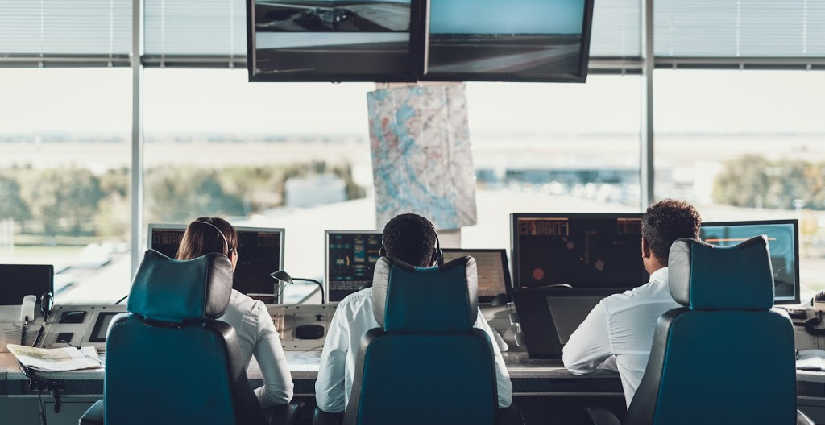
Flight dispatchers also called aircraft dispatchers and airline dispatchers, play a vital role in most large fleet operations, as well as at smaller cargo and flight training operations. In general, flight dispatchers work closely with pilots to plan all aspects of each flight.
Some of the factors a dispatcher must consider include weather (departure, en route, and destination), fuel requirements, aircraft weight & balance, airworthiness of the aircraft, compliance with regulations, alternate destinations, and route and altitude selection.
In general, the flight dispatcher's job is to ensure that a company's aircraft take off on time (weather permitting), are fully loaded to maximize revenues, have adequate fuel, airport, navigation, and weather information on board to complete the flight as planned, burn the least amount of fuel required for the flight, and land at the destination airport on or ahead of schedule. Get info about flight dispatcher training.
Flight Dispatcher Schools
When you attend a college or school offering flight dispatcher training, you'll learn aircraft performance specifications, how air traffic is routed in the National Airspace System by air traffic controllers, how aircraft use navigation and communications systems and facilities, aviation weather analysis, weight, and balance calculations, and of course, federal aviation regulations.
Some schools offer specialized training and accelerated courses that prepare you to take the FAA flight dispatcher certification exams. 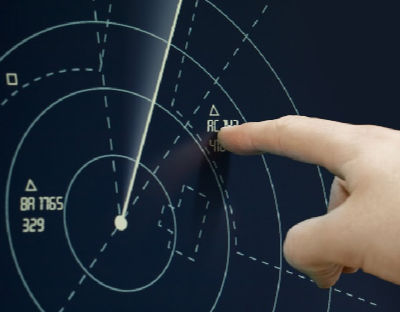 Keep in mind you must already meet the other requirements before enrolling in one of these courses. Learn more about flight dispatcher training.
As a flight dispatcher, you can expect to work for a large airline moving passengers or cargo, for smaller regional airlines as they continue to grow, or in large flight training operation.
Working in a fast-paced, high-pressure environment, you will probably have a computer workstation specialized for the task of planning flights and following changing weather all across the world. Expect to be indoors most of the time, although you will be interfacing with pilots in and around the airport environment, so you could be on the airport tarmac when required.
Flight Dispatcher Duties
Flight dispatchers share the responsibility for the safety of a given flight with the captain of the aircraft. Typically, the flight dispatcher is responsible for creating a flight plan and works with the captain directly on such issues as takeoff and landing performance, fuel load, route, altitudes, weight and balance, and weather conditions.
The flight dispatcher also "releases" a particular aircraft to make it's flight, and, once airborne, monitors the progress of all his/her current flights and shares that information with other key ground personnel. Aircraft dispatchers usually ride along in the cockpit of company-owned aircraft several times per year (the Federal Aviation Administration requires a minimum of five hours per year in the cockpit) to keep their skills sharp in relation to airline procedures, air traffic control routing, and airport environments.
Flight Dispatcher Training Courses
In order to be eligible to become a flight dispatcher, you'll need to be a high school graduate. Of course, the more education you have, the better, as airlines prefer to hire dispatchers with college degrees, and you'll be competing in a tight job market.
If you want to become a flight dispatcher, the time to start your training is now. However, keep in mind that you must be at least 21 to take the Aircraft Dispatcher Knowledge Test (written) and you must be at least 23 to hold an FAA Aircraft Dispatcher Certificate.
Where to Find Flight Dispatcher Training
You can train to become a flight dispatcher in one of three ways:
1. Graduate from a college or vocational training school's Federal Aviation Administration (FAA) approved flight dispatcher course.
2. Work for at least one year as an apprentice and under the direct supervision of an FAA certified flight dispatcher.
3. Work for two of the last three preceding years as an air traffic controller, either in the military or civilian sectors
Learn more about flight dispatcher certification.
FAA - A History of Airplane Structures Facts for Maryland
Into the 1930s, all-metal aircraft accompanied new lighter and more powerful engines. Larger semimonocoque fuselages were complimented with stress-skin wing designs. Fewer truss and fabric aircraft were built. World War II (WWII) brought about a myriad of airplane designs using all metal technology. Deep fuel-carrying wings were the norm, but the desire for higher flight speeds prompted the development of thin-winged aircraft in which fuel was carried in the fuselage. The first composite structure aircraft, the De Havilland Mosquito, used a balsa wood sandwich material in the construction of the fuselage. The fiberglass radome was also developed during this period.
Aerodynamics and the Laws of Physics
The law of conservation of energy states that energy may neither be created nor destroyed. Motion is the act or process of changing place or position. An object may be in motion with respect to one object and motionless with respect to another. For example, a person sitting quietly in an aircraft flying at 200 knots is at rest or motionless with respect to the aircraft; however, the person and the aircraft are in motion with respect to the air and to the earth.
Aircraft Flight Dispatcher Training in Maryland
Some flight dispatcher training schools in Maryland offer specialized training and accelerated courses that prepare flight dispatcher students from Maryland to take the FAA flight dispatcher certification exams. Keep in mind you must already meet the other requirements before enrolling in one of the flight dispatcher training courses in Maryland.
If you attend a college or vocational school in Maryland offering flight dispatcher training, you'll learn all about aircraft performance specifications, how air traffic is routed in the National Airspace System by air traffic controllers, how aircraft use navigation and communications systems and facilities, aviation weather analysis, weight and balance calculations, and of course, federal aviation regulations.
Flight Dispatchers in Maryland serve as one of the most crucial components of the entire airline operation. Flight dispatchers fromMaryland are licensed airmen, certified by the Federal Aviation Administration (FAA). Flight dispatchers from Maryland must undergo extensive testing and training to earn this highly sought after certificate, and must pass both an extensive oral examination and the comprehensive written Aircraft Dispatcher test.
The Aircraft or Flight Dispatcher tests are equivalent to the Air Transport Pilot (ATP) written and oral examinations that airline pilots take as part of their licensing procedure. They are, in essence, pilots on the ground, and are as legally liable for the aircraft as is the pilot in the cockpit.
In order to be eligible to become a flight dispatcher in Maryland, you'll need to be a high school graduate. Of course, the more education you have, the better, as airlines prefer to hire dispatchers with college degrees, and you'll be competing in a tight job market.
If you want to become a Maryland flight dispatcher, the time to start your training is now. However, keep in mind that you must be at least 21 to take the Aircraft Dispatcher Knowledge Test (written) and you must be at least 23 to hold an FAA Aircraft Dispatcher Certificate.
The role of an aircraft dispatcher in Maryland is important and complex. They are the ground-based eyes and ears for the pilot in the air. Regulations stemming from the FAA hold both the pilot and the dispatcher as being equally responsible for the safety of the flight. Working jointly with the pilot, the dispatcher draws up a flight plan that will allow the aircraft to arrive at its destination safely and as cost-efficiently as possible.
Flight dispatchers from Maryland follow the developing weather along the route as well as at the final destination. They ensure the aircraft has all the provisions (fuel, food, etc.) needed to make the flight safely. They also track the flight to ensure it remains on course per the flight plan, keeping all ground support personnel aware of its progress.
Where to Find Flight Dispatcher Training in Maryland
You can train to become a flight dispatcher in one of three ways:
1. Graduate from a college or vocational training school's Federal Aviation Administration (FAA) approved flight dispatcher course in Maryland.
2. Work for at least one year as an apprentice and under the direct supervision of an FAA certified flight dispatcher.
3. Work for two of the last three preceding years as an air traffic controller, either in the military or civilian sectors
Maryland Flight Dispatchers Job Description
Maryland Flight Dispatchers are licensed airmen certificated by the Federal Aviation Administration and have joint responsibility with the captain for the safety and operational control of flights under his/her guidance.
Flight Dispatchers from Maryland authorize, regulate, and control commercial airline flights according to government and company regulations to expedite and ensure the safety of flight by performing the following tasks:
- responsible for economics, passenger service and operational control of day to day flight operations.
- analyze and evaluate meteorological information to determine potential hazards to the safety of flight and to select the most desirable and economic route of flight.
- compute the amount of fuel required for the safe completion of flight according to the type of aircraft, the distance of the flight, maintenance limitations, weather conditions and minimum fuel requirements prescribed by federal aviation regulations.
- prepare flight plans containing information such as maximum allowable takeoff and landing weights, weather reports, field conditions, NOTAMS and many other informational components required for the safe completion of the flight.
- prepare and signs the dispatch release which is the legal document providing authorization for a flight to depart.
- delay or cancel flights if unsafe conditions threaten the safety of his/her aircraft or passengers.
- monitor weather conditions, aircraft position reports, and aeronautical navigation charts to evaluate the progress of the flight.
- update the pilot in command of significant changes to weather or flight plan and recommends flight plan alternates, such as changing course, altitude and, if required, enroute landings in the interest of safety and economy.
- originate and disseminate flight information to others in his/her company including stations and reservations. This is the source of information provided to the traveling public.
Flight Dispatchers from Maryland have undergone extensive training to have earned the coveted Flight Dispatcher's certificate having taken and passed both an extensive oral examination and the comprehensive Dispatch ADX test, administered by the Federal Aviation Administration. These tests are equivalent to the same Air Transport Pilot (ATP) written and oral examinations that an airline captain must successfully complete.
Flight Dispatchers from Maryland participate in frequent and detailed recurrent training courses covering aircraft systems, company operations policy, meteorology and Federal Air Regulations as required by the FAA.
Flight Dispatcher Salaries in Maryland
How much do flight dispatchers from Maryland make? PayScale.com reports that flight dispatchers from Maryland with 1-4 years experience make between $31,000 and $46,000, and those with more than five years experience earn between $40,000 and $92,000 per year.
AvJobs.com reports that the highest-paid dispatchers from Maryland can earn $110,000 per year.
According to Careers.StateUniversity.com, flight dispatcher salaries in >Maryland vary depending on the dispatcher's experience, size of the operation, location, and size of the airport. Starting salaries can be as low as $20,000 per year and top out at over $100,000 annually. Learn about flight dispatcher training.
Flight Dispatcher Benefits
Other flight dispatcher benefits in Maryland may include health insurance, life insurance, retirement plans, and travel benefits (if airline employed) for you and your immediate family, including free or reduced airfares and discounts at major hotels. Another possible benefit of working for an airline is being able to ride in the cockpit jumpseat. Dispatchers are required to fly in the jumpseat at least five hours per year as part of their recurrent training, but dispatchers are also allowed to fly in the jumpseat on their own airline, and most other airlines, anywhere, anytime the jumpseat is available. Get more information about flight dispatcher jobs.
Aviation Training History and Facts for Columbia
Heliports: Rural heliports often house helicopters used to spray agricultural fields where a standard crop-dusting airplane may not be able to operate. County sheriff's police as well as search and rescue crews may also base helicopters out of one of these locations.
Aviation Factoids and Figures and Fun for Columbia
Robison Helicopters: Robinson's R44 Raven Series Helicopters provide excellent reliability, responsive handling, and altitude performance, making the R44 the ideal helicopter for private, business, and utility applications.
Aviation Training History and Facts for Ellicott City
Helicopter Jobs: An advantage to flying for the military is the chance to earn free and advanced training. These jobs can, of course, be dangerous, especially when flying near combat zones. Helicopter pilot jobs with law enforcement agencies typically require pilots to also be fully-trained police officers.
Fun Helicopter and Airplane Facts for Ellicott City
The R44 IFR Trainer is a R44 Raven I or II with a specifically designed instrument flight training package to prepare and qualify IFR pilots at a fraction of the cost associated with larger, more expensive instrument-equipped helicopters, but with the same high-quality equipment.
Aviation Training History and Facts for Frederick
Helicopter Jobs: Helicopter pilots must successfully complete a flight training program and log a certain number of hours flying before beginning any job.
Helicopter Jobs: helicopter pilot jobs may entail lifting heavy equipment to work sites. For example, pilots that work with off-shore oil rigs are used to transport workers and equipment. These workers may be required to stay on-site for several days so they are readily available for transporting.
Fun Helicopter and Airplane Facts for Frederick
Unusual But Interesting Helicopter Facts in Frederick Light Turbine Helicopters - The light turbine-powered helicopter series incorporates the best of two worlds: legacy of proven flight design originated in the 269 Series and state-of-the art turbine technology.
Fun Helicopter and Airplane Facts for Gaithersburg
Becoming a commercial helicopter pilot may require additional training, according to an employer's requirements. The amount of time it takes to complete training depends on the student's available time and money, as well as scheduling constraints of the flight school.
Fun Helicopter and Airplane Facts for Gaithersburg
Sikorsky Helicopters - Light Turbine Helicopters: Now the S-434TM helicopter will soon take to the sky. The light turbine series is a modern, fast, progressive helicopter line that will keep you flying for many decades to come.
Aviation Training History and Facts for Germantown
Helicopter Training Facts: Commercial uses for helicopters include flying passengers on sightseeing trips, assisting in search-and-rescue operations and patrolling oil pipelines, to name just a few examples. If you want to become a commercial helicopter pilot, first you typically must earn your private pilot's license, then fly additional hours to become a commercial helicopter pilot.
Aviation Factoids and Figures and Fun for Germantown
Robinson Helicopters: The high performance R44 Raven II has a Lycoming IO-540 fuel-injected, angle-valve, tuned-induction engine, which eliminates the need for carburetor heat. The standard 28-volt electrical system ensures good starting performance in hot or cold weather, and provides additional electrical power for optional equipment.
Fun Helicopter and Airplane Facts for Glen Burnie
Helicopter Jobs: Some helicopter pilots land high-flying careers by working with television programs or motion picture production companies. Others spend most of their work day with their feet on the ground by working as flight instructors.
Fun Helicopter and Airplane Facts for Glen Burnie
Sikorsky Helicopters - Light Turbine Helicopters: Dating back to 1956 with the first TH-55A U.S. Army , the 269 Series includes more than 3,750 aircraft operating in more than 70 countries with more than 20 million total flight hours. The turbine engine series was advanced with the S-333TM helicopter certified in 2000.
Fun Helicopter and Airplane Facts for Rockville
Helicopter Flight Training for Rockville During this period, the instructor will have the students ride along on a helicopter flight and learn the many capabilities of the aircraft. As the students progress through training, the helicopter flight instructor will allow the students to take over control of the craft and attempt to fly.
Fun Helicopter and Airplane Facts for Rockville
Unusual But Interesting Helicopter Facts in Rockville The S-333 helicopter has set the standard for light turbine powered helicopters. It has the power, speed and hover performance to meet a broad spectrum of operational requirements in missions ranging from airborne law enforcement, flight training, power and pipeline patrol to personal transportation. Best of all, the S-333 helicopter provides lower direct operating cost than most turbine powered helicopters.
Aviation Training History and Facts for Silver Spring
Helicopter Training Facts: With enough hours and experience, you can look for jobs with charter companies, tourism and sightseeing organizations and other places that use helicopters in their operations. Some employers might also expect their pilots to have some level of college education.
Fun Helicopter and Airplane Facts for Silver Spring
Robinson Helicopters: Equipped with a Lycoming O-540 carbureted engine, the R44 Raven I offers a balance between performance and affordability. Raven I features carburetor heat assist that enhances safety and reduces pilot workload by automatically adjusting carburetor heat in response to power changes by the pilot.
Aviation Training History and Facts for Waldorf
Helicopter Pilot Jobs for Waldorf Specialized training, based on the kind of aircraft the pilot flies, is another requirement. Helicopter pilots are also required to have and maintain excellent physical and mental health.
Fun Helicopter and Airplane Facts for Waldorf
Robinson Helicopters: Robinson's R44 Clippers are Ravens equipped with seaworthy floats and corrosion protection for over-water operations. The Clipper's low center-of-gravity provides excellent stability on water, and the float design enables safe emergency water landings and takeoffs. Special ground-handling wheels are included with each Clipper.