Flight Dispatcher Training in New Hampshire
Cities in New Hampshire with Aviation Schools:
- Berlin
- Claremont
- Concord
- Derry
- Dover
- Durham
- Exeter
- Franklin
- Hampton
- Hanover
- Hudson
- Keene
- Laconia
- Lebanon
- Londonderry
- Manchester
- Milford
- Nashua
- Newmarket
- Pinardville
- Portsmouth
- Rochester
- Somersworth
- South Hooksett
- Suncook

Flight Dispatcher Training in New Hampshire
Flight dispatchers also called aircraft dispatchers and airline dispatchers, play a vital role in most large fleet operations, as well as at smaller cargo and flight training operations. In general, flight dispatchers work closely with pilots to plan all aspects of each flight.
Some of the factors a dispatcher must consider include weather (departure, en route, and destination), fuel requirements, aircraft weight & balance, airworthiness of the aircraft, compliance with regulations, alternate destinations, and route and altitude selection.
In general, the flight dispatcher's job is to ensure that a company's aircraft take off on time (weather permitting), are fully loaded to maximize revenues, have adequate fuel, airport, navigation, and weather information on board to complete the flight as planned, burn the least amount of fuel required for the flight, and land at the destination airport on or ahead of schedule. Get info about flight dispatcher training.
Flight Dispatcher Schools
When you attend a college or school offering flight dispatcher training, you'll learn aircraft performance specifications, how air traffic is routed in the National Airspace System by air traffic controllers, how aircraft use navigation and communications systems and facilities, aviation weather analysis, weight, and balance calculations, and of course, federal aviation regulations.
Some schools offer specialized training and accelerated courses that prepare you to take the FAA flight dispatcher certification exams. 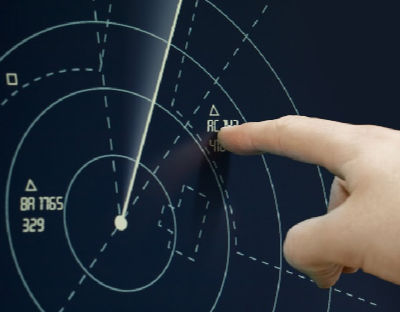 Keep in mind you must already meet the other requirements before enrolling in one of these courses. Learn more about flight dispatcher training.
As a flight dispatcher, you can expect to work for a large airline moving passengers or cargo, for smaller regional airlines as they continue to grow, or in large flight training operation.
Working in a fast-paced, high-pressure environment, you will probably have a computer workstation specialized for the task of planning flights and following changing weather all across the world. Expect to be indoors most of the time, although you will be interfacing with pilots in and around the airport environment, so you could be on the airport tarmac when required.
Flight Dispatcher Duties
Flight dispatchers share the responsibility for the safety of a given flight with the captain of the aircraft. Typically, the flight dispatcher is responsible for creating a flight plan and works with the captain directly on such issues as takeoff and landing performance, fuel load, route, altitudes, weight and balance, and weather conditions.
The flight dispatcher also "releases" a particular aircraft to make it's flight, and, once airborne, monitors the progress of all his/her current flights and shares that information with other key ground personnel. Aircraft dispatchers usually ride along in the cockpit of company-owned aircraft several times per year (the Federal Aviation Administration requires a minimum of five hours per year in the cockpit) to keep their skills sharp in relation to airline procedures, air traffic control routing, and airport environments.
Flight Dispatcher Training Courses
In order to be eligible to become a flight dispatcher, you'll need to be a high school graduate. Of course, the more education you have, the better, as airlines prefer to hire dispatchers with college degrees, and you'll be competing in a tight job market.
If you want to become a flight dispatcher, the time to start your training is now. However, keep in mind that you must be at least 21 to take the Aircraft Dispatcher Knowledge Test (written) and you must be at least 23 to hold an FAA Aircraft Dispatcher Certificate.
Where to Find Flight Dispatcher Training
You can train to become a flight dispatcher in one of three ways:
1. Graduate from a college or vocational training school's Federal Aviation Administration (FAA) approved flight dispatcher course.
2. Work for at least one year as an apprentice and under the direct supervision of an FAA certified flight dispatcher.
3. Work for two of the last three preceding years as an air traffic controller, either in the military or civilian sectors
Learn more about flight dispatcher certification.
FAA - A History of Airplane Structures Facts for New Hampshire
Airframe structural components are constructed from a wide variety of materials. The earliest aircraft were constructed primarily of wood. Steel tubing and the most common material, aluminum, followed. Many newly certified aircraft are built from molded composite materials, such as carbon fiber. Structural members of an aircraft’s fuselage include stringers, longerons, ribs, bulkheads, and more. The main structural member in a wing is called the wing spar.
Center of Gravity (CG)
The CG is determined by the general design of the aircraft. The designers estimate how far the CP travels. They then fix the CG in front of the CP for the corresponding flight speed in order to provide an adequate restoring moment for flight equilibrium. The Axes of an Aircraft Whenever an aircraft changes its attitude in flight
Aircraft Flight Dispatcher Training in New Hampshire
Some flight dispatcher training schools in New Hampshire offer specialized training and accelerated courses that prepare flight dispatcher students from New Hampshire to take the FAA flight dispatcher certification exams. Keep in mind you must already meet the other requirements before enrolling in one of the flight dispatcher training courses in New Hampshire.
If you attend a college or vocational school in New Hampshire offering flight dispatcher training, you'll learn all about aircraft performance specifications, how air traffic is routed in the National Airspace System by air traffic controllers, how aircraft use navigation and communications systems and facilities, aviation weather analysis, weight and balance calculations, and of course, federal aviation regulations.
Flight Dispatchers in New Hampshire serve as one of the most crucial components of the entire airline operation. Flight dispatchers fromNew Hampshire are licensed airmen, certified by the Federal Aviation Administration (FAA). Flight dispatchers from New Hampshire must undergo extensive testing and training to earn this highly sought after certificate, and must pass both an extensive oral examination and the comprehensive written Aircraft Dispatcher test.
The Aircraft or Flight Dispatcher tests are equivalent to the Air Transport Pilot (ATP) written and oral examinations that airline pilots take as part of their licensing procedure. They are, in essence, pilots on the ground, and are as legally liable for the aircraft as is the pilot in the cockpit.
In order to be eligible to become a flight dispatcher in New Hampshire, you'll need to be a high school graduate. Of course, the more education you have, the better, as airlines prefer to hire dispatchers with college degrees, and you'll be competing in a tight job market.
If you want to become a New Hampshire flight dispatcher, the time to start your training is now. However, keep in mind that you must be at least 21 to take the Aircraft Dispatcher Knowledge Test (written) and you must be at least 23 to hold an FAA Aircraft Dispatcher Certificate.
The role of an aircraft dispatcher in New Hampshire is important and complex. They are the ground-based eyes and ears for the pilot in the air. Regulations stemming from the FAA hold both the pilot and the dispatcher as being equally responsible for the safety of the flight. Working jointly with the pilot, the dispatcher draws up a flight plan that will allow the aircraft to arrive at its destination safely and as cost-efficiently as possible.
Flight dispatchers from New Hampshire follow the developing weather along the route as well as at the final destination. They ensure the aircraft has all the provisions (fuel, food, etc.) needed to make the flight safely. They also track the flight to ensure it remains on course per the flight plan, keeping all ground support personnel aware of its progress.
Where to Find Flight Dispatcher Training in New Hampshire
You can train to become a flight dispatcher in one of three ways:
1. Graduate from a college or vocational training school's Federal Aviation Administration (FAA) approved flight dispatcher course in New Hampshire.
2. Work for at least one year as an apprentice and under the direct supervision of an FAA certified flight dispatcher.
3. Work for two of the last three preceding years as an air traffic controller, either in the military or civilian sectors
New Hampshire Flight Dispatchers Job Description
New Hampshire Flight Dispatchers are licensed airmen certificated by the Federal Aviation Administration and have joint responsibility with the captain for the safety and operational control of flights under his/her guidance.
Flight Dispatchers from New Hampshire authorize, regulate, and control commercial airline flights according to government and company regulations to expedite and ensure the safety of flight by performing the following tasks:
- responsible for economics, passenger service and operational control of day to day flight operations.
- analyze and evaluate meteorological information to determine potential hazards to the safety of flight and to select the most desirable and economic route of flight.
- compute the amount of fuel required for the safe completion of flight according to the type of aircraft, the distance of the flight, maintenance limitations, weather conditions and minimum fuel requirements prescribed by federal aviation regulations.
- prepare flight plans containing information such as maximum allowable takeoff and landing weights, weather reports, field conditions, NOTAMS and many other informational components required for the safe completion of the flight.
- prepare and signs the dispatch release which is the legal document providing authorization for a flight to depart.
- delay or cancel flights if unsafe conditions threaten the safety of his/her aircraft or passengers.
- monitor weather conditions, aircraft position reports, and aeronautical navigation charts to evaluate the progress of the flight.
- update the pilot in command of significant changes to weather or flight plan and recommends flight plan alternates, such as changing course, altitude and, if required, enroute landings in the interest of safety and economy.
- originate and disseminate flight information to others in his/her company including stations and reservations. This is the source of information provided to the traveling public.
Flight Dispatchers from New Hampshire have undergone extensive training to have earned the coveted Flight Dispatcher's certificate having taken and passed both an extensive oral examination and the comprehensive Dispatch ADX test, administered by the Federal Aviation Administration. These tests are equivalent to the same Air Transport Pilot (ATP) written and oral examinations that an airline captain must successfully complete.
Flight Dispatchers from New Hampshire participate in frequent and detailed recurrent training courses covering aircraft systems, company operations policy, meteorology and Federal Air Regulations as required by the FAA.
Flight Dispatcher Salaries in New Hampshire
How much do flight dispatchers from New Hampshire make? PayScale.com reports that flight dispatchers from New Hampshire with 1-4 years experience make between $31,000 and $46,000, and those with more than five years experience earn between $40,000 and $92,000 per year.
AvJobs.com reports that the highest-paid dispatchers from New Hampshire can earn $110,000 per year.
According to Careers.StateUniversity.com, flight dispatcher salaries in >New Hampshire vary depending on the dispatcher's experience, size of the operation, location, and size of the airport. Starting salaries can be as low as $20,000 per year and top out at over $100,000 annually. Learn about flight dispatcher training.
Flight Dispatcher Benefits
Other flight dispatcher benefits in New Hampshire may include health insurance, life insurance, retirement plans, and travel benefits (if airline employed) for you and your immediate family, including free or reduced airfares and discounts at major hotels. Another possible benefit of working for an airline is being able to ride in the cockpit jumpseat. Dispatchers are required to fly in the jumpseat at least five hours per year as part of their recurrent training, but dispatchers are also allowed to fly in the jumpseat on their own airline, and most other airlines, anywhere, anytime the jumpseat is available. Get more information about flight dispatcher jobs.
Aviation Factoids and Figures and Fun for Berlin
The helicopter was eventually perfected by Igor Sikorsky. Advances in aerodynamic theory and building materials had been made since Sikorsky's initial endeavor, and, in 1939, he lifted off the ground in his first operational helicopter. Two years later, an improved design enabled him to remain aloft for an hour and a half, setting a world record for sustained helicopter flight.
Aviation History for Berlin and Fun Facts for Berlin
The Ditching and Dunker trainer simulates a downed helicopter. Candidates undergo two-day training sessions that teach them how to escape from a helicopter that crashes and lands in water.
Fun Helicopter and Airplane Facts for Claremont
During World War I, Hungarian engineer Theodore von Karman constructed a helicopter that, when tethered, was able to hover for extended periods. Several years later, Spaniard Juan de la Cierva developed a machine he called an autogiro in response to the tendency of conventional airplanes to lose engine power and crash while landing.
Aviation History for Claremont and Fun Facts for Claremont
A pilot who is a commissioned officer begins at the lowest rank, designated O-1, on the basic military pay chart. This rank is a second lieutenant in the Air Force or Marine Corps, and an ensign in the Navy. Because the basic pay chart cross-references rank and time of a service, an O-1 with less than two years in the military -- the lowest step -- earned $2,829 a month, or $33,948 a year, as of 2012.
Aviation Factoids and Figures and Fun for Concord
As the helicopter approaches the ground, the pilot must then get rid of most of their forward motion and slow the decent using the stored up kinetic energy in the rotors. If done perfectly, the landing will be quite gentle. They accomplish this by executing a flare, pitching the nose up, at the right moment.
Interesting Aviation Facts for Concord for Concord
Become a commercial helicopter pilot: Go to the Find an Aviation Medical Examiner (AME) page of the Federal Aviation Administration (FAA) website and find an FAA-authorized AME to give you a physical examination. If you pass the examination, the AME will give you a medical certificate that will allow you start flight training. People planning to become air ambulance pilots should ask for at least a second-class certificate, as this is the certificate required by commercial pilots.
Aviation Factoids and Figures and Fun for Derry
Early efforts to imitate maple pods produced the whirligig, a children's toy popular in China as well as in medieval Europe. During the fifteenth century, Leonardo da Vinci, the renowned Italian painter, sculptor, architect, and engineer, sketched a flying machine that may have been based on the whirligig.
Interesting Aviation Facts for Derry for Derry
Information about how to become a commercial helicopter pilot that you need to know. Apply for a flight instructor job at a flight school. An air ambulance company may require its pilots to have a minimum of 1000 hours flight time. Teaching people how to fly is a legitimate way of building up your flight hours.
Aviation Factoids and Figures and Fun for Dover
Numerous individuals have contributed to the conception and development of the helicopter. The idea appears to have been bionic in origin, meaning that it derived from an attempt to adapt a natural phenomenain this case, the whirling, bifurcated fruit of the maple treeto a mechanical design.
Interesting Aviation Facts for Dover for Dover
Become a commercial helicopter pilot: Get an instrument rating. As air ambulances respond to medical emergencies in all weather conditions, you must be rated to fly by instruments, as this will demonstrate your ability to fly when there is low visibility. Youll need 40 hours of instrument flight experience and will also be required to pass a written exam and to demonstrate your ability to fly by instruments to an examiner.
Aviation Factoids and Figures and Fun for Durham
A helicopter's power comes from either a piston engine or a gas turbine (recently, the latter has predominated), which moves the rotor shaft, causing the rotor to turn. While a standard plane generates thrust by pushing air behind its wing as it moves forward, the helicopter's rotor achieves lift by pushing the air beneath it downward as it spins.
Aviation History for Durham and Fun Facts for Durham
Helicopter Pilot's License for Durham Federal Aviation Regulations, or FAR, require all pilots to be trained, pass tests, accrue flight hours, and secure medical clearances. Licensing involves earning a student, recreational, private, commercial or airline transport pilot certificate through a written exam and a minimum number of flight hours. Along with certificates, pilots also earn expertise ratings for instruments, various flight scenarios and plane types. Without these ratings, a pilot can only fly in limited situations, no matter what certificate he holds.
Aviation Factoids and Figures and Fun for Exeter
The helicopter was put to military use almost immediately after its introduction. While it was not utilized extensively during World War II, the jungle terrain of both Korea and Vietnam prompted the helicopter's widespread use during both of those wars, and technological refinements made it a valuable tool during the Persian Gulf War as well.
Aviation History for Exeter and Fun Facts for Exeter
Training for new rotary wing aviators is called IERW, or Initial Entry Rotary Wing, training. It covers both lighter aircraft used for training purposes and actual military helicopters. Trainees also use flight simulators to become familiar with the techniques needed to fly helicopters. The course lasts for 32 weeks, and it is divided into four parts, or phases.
Aviation Factoids and Figures and Fun for Franklin
Lift is proportional to the change in the air's momentum (its mass times its velocity): the greater the momentum, the greater the lift.
Aviation History for Franklin and Fun Facts for Franklin
Helicopter Pilot's License for Franklin The FAR lays out three medical certificate levels. All require good hearing; a vision check; mental, neurological, and cardiovascular health; no substance abuse problems; and no diabetes. Student, recreational and private pilots need only a third-class certificate. Pilots intending to become commercial pilots should begin with the required second-class certificate. Major airline pilots need a first-class certificate, which requires the most medical fitness.
Aviation Factoids and Figures and Fun for Hampton
In recent years, however, private industry has probably accounted for the greatest increase in helicopter use, as many companies have begun to transport their executives via helicopter. In addition, helicopter shuttle services have proliferated, particularly along the urban corridor of the American Northeast. Still, among civilians the helicopter remains best known for its medical, rescue, and relief uses.
Aviation History for Hampton and Fun Facts for Hampton
Pilots License: A recreational pilot taking a short daytime trip in a small plane shoulders less responsibility than a 747 pilot ferrying passengers at night across an ocean. Recognizing this, the Federal Aviation Administration dictates increasingly stringent pilot licensing requirements according to passenger responsibility, plane complexity and the purpose of the flight.
Aviation Factoids and Figures and Fun for Hanover
Cost to Obtain a Helicopter License: Overall, you should expect a cost of about $10,000-$15,000 to obtain your Private Pilot License with an additional $16,000-$20,000 involved to obtain your Commercial Rotorcraft License. Of course these numbers can vary, depending upon your ability, the location of your school and the helicopter model you are training in.
Aviation History for Hanover and Fun Facts for Hanover
Helicopter Pilot's License for Hanover All pilots begin with a student certificate. Eligibility starts at 14 years old for balloon or glider pilots. To fly planes, applicants must be at least 16. The student certificate has many restrictions. Students can't carry passengers, nor can they fly solo until they gain flight experience, prove cockpit proficiency and pass the written exam.
Interesting Aviation Facts for Hudson for Hudson
Flight Instructor Facts for Hudson FIIs fly in IFR (Instrument Flight Rules) weather, which requires them to depend on only their instruments when operating an aircraft. Additionally, they help their students in acquiring their instrument pilot's rating by teaching them to fly under the hood.
Aviation History for Hudson and Fun Facts for Hudson
Helicopter Pilot's License for Hudson A recreational certificate allows pilots to carry one passenger. Among its restrictions, this certificate limits pilots to daytime flights of less than 50 miles. Pilots must be at least 17 to take the test and prove proficiency to a flight instructor who endorses the applicant's logged flight hours.
Fun Helicopter and Airplane Facts for Keene
The next surviving sketch of a helicopter dates from the early nineteenth century, when British scientist Sir George Cayley drew a twin-rotor aircraft in his notebook. During the early twentieth century, Frenchman Paul Cornu managed to lift himself off the ground for a few seconds in an early helicopter.
Aviation History for Keene and Fun Facts for Keene
U.S. Army rotary wing aviators are warrant officers who are trained to fly military helicopters. Rotary wing aviation is one of only four special tasks within the Army that are open to applicants between the ages of 18 and 33 who do not have specific prior expertise, training or experience.
Fun Helicopter and Airplane Facts for Laconia
Igor Sikorsky, a Russian engineer, built his first helicopter in 1909. When neither this prototype nor its 1910 successor succeeded, Sikorsky decided that he could not build a helicopter without more sophisticated materials and money, so he transferred his attention to aircraft.
Aviation History for Laconia and Fun Facts for Laconia
Military pilots are paid according to the basic military pay scale, meaning pilots of equivalent ranks are paid the same no matter what branch of the service they are in. However, while jet pilots in the Air Force, Marine Corps and Navy must be commissioned officers, helicopter pilots in the Army are warrant officers, a rank between enlisted personnel and commissioned officers.
Fun Helicopter and Airplane Facts for Lebanon
If he could design an aircraft in which lift and thrust (forward speed) were separate functions, Cierva speculated, he could circumvent this problem. The autogiro he subsequently invented incorporated features of both the helicopter and the airplane, although it resembled the latter more.
Aviation History for Lebanon and Fun Facts for Lebanon
Army helicopter pilots are often designated as officers by warrant as a specialist, rather than by commission. A new warrant officer is designated as W-1 on the pay scale. As of 2012, a warrant officer with less than two years' experience was paid $2,765 a month, or $33,180 a year. The proposed pay for 2013 was $2,812 a month, or $33,744 a year.
Fun Helicopter and Airplane Facts for Londonderry
To avoid landing problems, the engine could be disconnected and the autogiro brought gently to rest by the rotor, which would gradually cease spinning as the machine reached the ground. Popular during the 1920s and 1930s, autogiros ceased to be produced after the refinement of the conventional helicopter.
Aviation History for Londonderry and Fun Facts for Londonderry
Before potential rotary wing aviators begin actual helicopter training, they must complete the U.S. Army Aviation Center Survival Escape Resistance and Evasion, or SERE-C, course, and Helicopter Ditching and Dunker training. The SERE-C course teaches how to survive in extreme circumstances, including how to find water and food and even how to improvise weapons.
Aviation Factoids and Figures and Fun for Manchester
Currently, helicopters are used to dust crops, apply pesticide, access remote areas for environmental work, deliver supplies to workers on remote maritime oil rigs, take photographs, film movies, rescue people trapped in inaccessible spots, transport accident victims, and put out fires. Moreover, they have numerous intelligence and military applications.
Interesting Aviation Facts for Manchester for Manchester
Become a commercial helicopter pilot: Air ambulance piloting is a tough field to get into and requires you to first qualify as a commercial pilot. Each air ambulance company will have a minimum set of requirements involving education, flight hours and certification.
Aviation Factoids and Figures and Fun for Milford
Helicopter rotor systems consist of between two and six blades attached to a central hub. Usually long and narrow, the blades turn relatively slowly, because this minimizes the amount of power necessary to achieve and maintain lift, and also because it makes controlling the vehicle easier.
Aviation History for Milford and Fun Facts for Milford
Pilot ratings remove flying restrictions. An instrument rating says that a pilot doesn't need visual references to fly, and can instead rely solely on a plane's instruments. It's required for airline transport pilots, though private and commercial pilots also commonly earn it. Without a multi-engine rating, pilots can fly only single-engine planes. Commercial pilots need the multi-engine rating for employment.
Aviation Factoids and Figures and Fun for Nashua
Exactly what the correct glide angle is to maintain optimal rotor RPM varies with different helicopter designs, but this information is readily available in the helicopters manual. The glide angle also varies based on weather conditions (wind, temperature, etc.), weight, altitude, and airspeed, but in all cases a correct glide angle has the effect of producing an upward flow of air that will spin the main rotor at some optimal RPM, storing kinetic energy in the blades.
Interesting Aviation Facts for Nashua for Nashua
Become a commercial helicopter pilot: Enroll in a college and earn a degree. Air ambulance companies wont employ you as a pilot unless you have at least two years, and a four-year degree is preferable. Choose a major such as math, physics, aeronautical engineering or English.
Interesting Aviation Facts for Newmarket for Newmarket
How to become a flight instructor: Those requirements are usually to be 18 years old, or older, obtain a certain number of flight hours, and pass a medical examination.
Aviation History for Newmarket and Fun Facts for Newmarket
Helicopter Pilot's License for NewmarketIf you hold no rating at all, you will need to take 20 hours of instruction and log 20 hours of solo practice. Generally, however, it will take you closer to 45 hours of dual instruction before you are ready for your checkride, giving you closer to 65 hours total time in helicopters, if you are an average student.
Interesting Aviation Facts for Pinardville for Pinardville
Flight Instructor Facts for Pinardville To obtain a MEI rating, a flight instructor must already have his CFI rating and five hours of pilot-in-command time of whichever multi-engine plane he is instructing in.
Aviation History for Pinardville and Fun Facts for Pinardville
Helicopter Pilot's License for PinardvillePrivate pilot certificates allow pilots who are 17 and older to command single-engine aircraft and carry passengers night or day. Eligibility includes 40 flight hours, 20 of them solo. If attending flight school, pilots need 35 on-the-ground training hours, with another 35 in the air, 15 of those hours flown solo.
Fun Helicopter and Airplane Facts for Portsmouth
Cornu was constrained by the same problems that would continue to plague all early designers for several decades: no one had yet devised an engine that could generate enough vertical thrust to lift both the helicopter and any significant load (including passengers) off the ground.
Aviation History for Portsmouth and Fun Facts for Portsmouth
Candidates for warrant officer flight training school must score at least 90 percent on the Alternate Flight Aptitude Selection Test, or AFAST. This test consists of 200 multiple-choice questions. It measures knowledge of basic concepts in aviation, including familiarity with compasses and other navigation devices.
Aviation Factoids and Figures and Fun for Rochester
Helicopters are classified as rotary wing aircraft, and their rotary wing is commonly referred to as the main rotor or simply the rotor.
Interesting Aviation Facts for Rochester for Rochester
Become a commercial helicopter pilot: Attend a civilian flight school certified by the FAA and earn a pilot certificate. Any college or university that is FAA-certified and that offers pilot training as part of an aviation degree counts as a flight school. An alternative to flight school is to take lessons from a FAA certified instructor. If you've served in the military and have already received extensive flight training and amassed sufficient flight hours, you have the advantage of not having to undergo civilian training.
Fun Helicopter and Airplane Facts for Somersworth
The autogiro had a rotor that functioned something like a windmill. Once set in motion by taxiing on the ground, the rotor could generate supplemental lift; however, the autogiro was powered primarily by a conventional airplane engine.
Aviation History for Somersworth and Fun Facts for Somersworth
Future rotary wing aviators are required to pass the Class 1 Flying Duty Medical Examination. This entails a thorough physical examination, and candidates can be disqualified if they are diagnosed with common physical and mental illnesses and conditions. The Army conducts interviews with potential candidates for rotary wing training after they pass the AFAST.
Interesting Aviation Facts for South Hooksett for South Hooksett
How to become a flight instructor: The requirements to become a helicopter flight instructor can differ from one country to another, though they are typically similar to the commercial pilot's license requirements.
Aviation History for South Hooksett and Fun Facts for South Hooksett
Helicopter Pilot's License for South HooksettIf you are thinking about getting your helicopter license, there are a few things you may want to know first. Most people who decide to get their helicopter license break down into one of two categories. Someone who holds no pilot rating at all, or someone who holds some sort of fixed wing rating. Of course, there is the occasional balloon pilot, or other exotic, but these are quite rare.
Interesting Aviation Facts for Suncook for Suncook
Flight Instructor Facts for Suncook A flight instructor who holds his CFII and MEI is called Multi-engine Instrument Instructor (MEII). It is also important to note that flight instructors may obtain and instruct other ratings, such as glider.
Aviation History for Suncook and Fun Facts for Suncook
Helicopter Pilot's License for SuncookCommercial pilots must be at least 18 with 190 or more flight hours logged through flight school. Otherwise, applicants need 250 hours, including 100 solo hours and 40 hours flown cross-country. The FAR allows commercial pilots to accept pay for their services.