Flight Dispatcher Training in Ohio
Cities in Ohio with Aviation Schools:
- Akron
- Beavercreek
- Boardman
- Bowling Green
- Brunswick
- Canton
- Cincinnati
- Cinncinati
- Cleveland
- Cleveland Heights
- Columbus
- Cuyahoga Falls
- Dayton
- Delaware
- Dublin
- Elyria
- Euclid
- Fairborn
- Fairfield
- Findlay
- Gahanna
- Grove City
- Hamilton
- Hilliard
- Huber Heights
- Kettering
- Lakewood
- Lancaster
- Lima
- Lorain
- Mansfield
- Marion
- Mason
- Massillon
- Mentor
- Middletown
- Newark
- North Olmsted
- North Ridgeville
- North Royalton
- Parma
- Reynoldsburg
- Springfield
- Stow
- Strongsville
- Toledo
- Upper Arlington
- Warren
- Westerville
- Westlake
- Youngstown

Flight Dispatcher Training in Ohio
Flight dispatchers also called aircraft dispatchers and airline dispatchers, play a vital role in most large fleet operations, as well as at smaller cargo and flight training operations. In general, flight dispatchers work closely with pilots to plan all aspects of each flight.
Some of the factors a dispatcher must consider include weather (departure, en route, and destination), fuel requirements, aircraft weight & balance, airworthiness of the aircraft, compliance with regulations, alternate destinations, and route and altitude selection.
In general, the flight dispatcher's job is to ensure that a company's aircraft take off on time (weather permitting), are fully loaded to maximize revenues, have adequate fuel, airport, navigation, and weather information on board to complete the flight as planned, burn the least amount of fuel required for the flight, and land at the destination airport on or ahead of schedule. Get info about flight dispatcher training.
Flight Dispatcher Schools
When you attend a college or school offering flight dispatcher training, you'll learn aircraft performance specifications, how air traffic is routed in the National Airspace System by air traffic controllers, how aircraft use navigation and communications systems and facilities, aviation weather analysis, weight, and balance calculations, and of course, federal aviation regulations.
Some schools offer specialized training and accelerated courses that prepare you to take the FAA flight dispatcher certification exams. 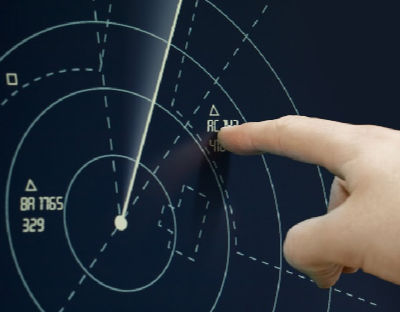 Keep in mind you must already meet the other requirements before enrolling in one of these courses. Learn more about flight dispatcher training.
As a flight dispatcher, you can expect to work for a large airline moving passengers or cargo, for smaller regional airlines as they continue to grow, or in large flight training operation.
Working in a fast-paced, high-pressure environment, you will probably have a computer workstation specialized for the task of planning flights and following changing weather all across the world. Expect to be indoors most of the time, although you will be interfacing with pilots in and around the airport environment, so you could be on the airport tarmac when required.
Flight Dispatcher Duties
Flight dispatchers share the responsibility for the safety of a given flight with the captain of the aircraft. Typically, the flight dispatcher is responsible for creating a flight plan and works with the captain directly on such issues as takeoff and landing performance, fuel load, route, altitudes, weight and balance, and weather conditions.
The flight dispatcher also "releases" a particular aircraft to make it's flight, and, once airborne, monitors the progress of all his/her current flights and shares that information with other key ground personnel. Aircraft dispatchers usually ride along in the cockpit of company-owned aircraft several times per year (the Federal Aviation Administration requires a minimum of five hours per year in the cockpit) to keep their skills sharp in relation to airline procedures, air traffic control routing, and airport environments.
Flight Dispatcher Training Courses
In order to be eligible to become a flight dispatcher, you'll need to be a high school graduate. Of course, the more education you have, the better, as airlines prefer to hire dispatchers with college degrees, and you'll be competing in a tight job market.
If you want to become a flight dispatcher, the time to start your training is now. However, keep in mind that you must be at least 21 to take the Aircraft Dispatcher Knowledge Test (written) and you must be at least 23 to hold an FAA Aircraft Dispatcher Certificate.
Where to Find Flight Dispatcher Training
You can train to become a flight dispatcher in one of three ways:
1. Graduate from a college or vocational training school's Federal Aviation Administration (FAA) approved flight dispatcher course.
2. Work for at least one year as an apprentice and under the direct supervision of an FAA certified flight dispatcher.
3. Work for two of the last three preceding years as an air traffic controller, either in the military or civilian sectors
Learn more about flight dispatcher certification.
FAA - A History of Airplane Structures Facts for Ohio
There are five major stresses to which all aircraft are subjected: Shear. Shear is the stress that resists the force tending to cause one layer of a material to slide over an adjacent layer. Two riveted plates in tension subject the rivets to a shearing force. Usually, the shearing strength of a material is either equal to or less than its tensile or compressive strength. Airplane parts, especially screws, bolts, and rivets, are often subject to a shearing force.
Semi-Useless Aviation Trivia You Should Learn
Increases in carbon dioxide in the atmosphere are increasing the incidents of airplane turbulence. The oxygen in an airplane’s emergency oxygen masks lasts for only about 15 minutes. English is the international language of flight. All flight controllers and all commercial pilots who fly on international flights are required to speak English. The world’s smallest jet is the BD-5 Micro. Its wingspan is 14–21 feet and weighs just 358 pounds.
Aircraft Flight Dispatcher Training in Ohio
Some flight dispatcher training schools in Ohio offer specialized training and accelerated courses that prepare flight dispatcher students from Ohio to take the FAA flight dispatcher certification exams. Keep in mind you must already meet the other requirements before enrolling in one of the flight dispatcher training courses in Ohio.
If you attend a college or vocational school in Ohio offering flight dispatcher training, you'll learn all about aircraft performance specifications, how air traffic is routed in the National Airspace System by air traffic controllers, how aircraft use navigation and communications systems and facilities, aviation weather analysis, weight and balance calculations, and of course, federal aviation regulations.
Flight Dispatchers in Ohio serve as one of the most crucial components of the entire airline operation. Flight dispatchers fromOhio are licensed airmen, certified by the Federal Aviation Administration (FAA). Flight dispatchers from Ohio must undergo extensive testing and training to earn this highly sought after certificate, and must pass both an extensive oral examination and the comprehensive written Aircraft Dispatcher test.
The Aircraft or Flight Dispatcher tests are equivalent to the Air Transport Pilot (ATP) written and oral examinations that airline pilots take as part of their licensing procedure. They are, in essence, pilots on the ground, and are as legally liable for the aircraft as is the pilot in the cockpit.
In order to be eligible to become a flight dispatcher in Ohio, you'll need to be a high school graduate. Of course, the more education you have, the better, as airlines prefer to hire dispatchers with college degrees, and you'll be competing in a tight job market.
If you want to become a Ohio flight dispatcher, the time to start your training is now. However, keep in mind that you must be at least 21 to take the Aircraft Dispatcher Knowledge Test (written) and you must be at least 23 to hold an FAA Aircraft Dispatcher Certificate.
The role of an aircraft dispatcher in Ohio is important and complex. They are the ground-based eyes and ears for the pilot in the air. Regulations stemming from the FAA hold both the pilot and the dispatcher as being equally responsible for the safety of the flight. Working jointly with the pilot, the dispatcher draws up a flight plan that will allow the aircraft to arrive at its destination safely and as cost-efficiently as possible.
Flight dispatchers from Ohio follow the developing weather along the route as well as at the final destination. They ensure the aircraft has all the provisions (fuel, food, etc.) needed to make the flight safely. They also track the flight to ensure it remains on course per the flight plan, keeping all ground support personnel aware of its progress.
Where to Find Flight Dispatcher Training in Ohio
You can train to become a flight dispatcher in one of three ways:
1. Graduate from a college or vocational training school's Federal Aviation Administration (FAA) approved flight dispatcher course in Ohio.
2. Work for at least one year as an apprentice and under the direct supervision of an FAA certified flight dispatcher.
3. Work for two of the last three preceding years as an air traffic controller, either in the military or civilian sectors
Ohio Flight Dispatchers Job Description
Ohio Flight Dispatchers are licensed airmen certificated by the Federal Aviation Administration and have joint responsibility with the captain for the safety and operational control of flights under his/her guidance.
Flight Dispatchers from Ohio authorize, regulate, and control commercial airline flights according to government and company regulations to expedite and ensure the safety of flight by performing the following tasks:
- responsible for economics, passenger service and operational control of day to day flight operations.
- analyze and evaluate meteorological information to determine potential hazards to the safety of flight and to select the most desirable and economic route of flight.
- compute the amount of fuel required for the safe completion of flight according to the type of aircraft, the distance of the flight, maintenance limitations, weather conditions and minimum fuel requirements prescribed by federal aviation regulations.
- prepare flight plans containing information such as maximum allowable takeoff and landing weights, weather reports, field conditions, NOTAMS and many other informational components required for the safe completion of the flight.
- prepare and signs the dispatch release which is the legal document providing authorization for a flight to depart.
- delay or cancel flights if unsafe conditions threaten the safety of his/her aircraft or passengers.
- monitor weather conditions, aircraft position reports, and aeronautical navigation charts to evaluate the progress of the flight.
- update the pilot in command of significant changes to weather or flight plan and recommends flight plan alternates, such as changing course, altitude and, if required, enroute landings in the interest of safety and economy.
- originate and disseminate flight information to others in his/her company including stations and reservations. This is the source of information provided to the traveling public.
Flight Dispatchers from Ohio have undergone extensive training to have earned the coveted Flight Dispatcher's certificate having taken and passed both an extensive oral examination and the comprehensive Dispatch ADX test, administered by the Federal Aviation Administration. These tests are equivalent to the same Air Transport Pilot (ATP) written and oral examinations that an airline captain must successfully complete.
Flight Dispatchers from Ohio participate in frequent and detailed recurrent training courses covering aircraft systems, company operations policy, meteorology and Federal Air Regulations as required by the FAA.
Flight Dispatcher Salaries in Ohio
How much do flight dispatchers from Ohio make? PayScale.com reports that flight dispatchers from Ohio with 1-4 years experience make between $31,000 and $46,000, and those with more than five years experience earn between $40,000 and $92,000 per year.
AvJobs.com reports that the highest-paid dispatchers from Ohio can earn $110,000 per year.
According to Careers.StateUniversity.com, flight dispatcher salaries in >Ohio vary depending on the dispatcher's experience, size of the operation, location, and size of the airport. Starting salaries can be as low as $20,000 per year and top out at over $100,000 annually. Learn about flight dispatcher training.
Flight Dispatcher Benefits
Other flight dispatcher benefits in Ohio may include health insurance, life insurance, retirement plans, and travel benefits (if airline employed) for you and your immediate family, including free or reduced airfares and discounts at major hotels. Another possible benefit of working for an airline is being able to ride in the cockpit jumpseat. Dispatchers are required to fly in the jumpseat at least five hours per year as part of their recurrent training, but dispatchers are also allowed to fly in the jumpseat on their own airline, and most other airlines, anywhere, anytime the jumpseat is available. Get more information about flight dispatcher jobs.
Helicopter Facts and Other Fun Aviation Factoids for Akron
A helicopter's rotary wing blades are usually made of fiber-reinforced resin, which may be adhesively bonded with an external sheet metal layer to protect edges. The helicopter's windscreen and windows are formed of polycarbonate sheeting.
Aviation Factoids and Figures and Fun for Akron
Flight Instructor Facts for Akron Do you really feel confident leading? Do you think of a position being a helicopter pilot? Will you be an individual who is a patient, calm and mentoring to teach others to take to the skies as well? If this describes you at all then it would make sense for you to become a certified flight instructor.
Helicopter Facts for Canton
The helicopter contributed directly to at least one revolutionary production technology. As helicopters grew larger and more powerful, the precision calculations needed for engineering the blades, which had exacting requirements, increased exponentially.
Certificates and Ratings Issued
The following certificates are issued to an applicant who satisfactorily accomplishes the training and certification requirements for the certificate they seek:
Pilot certificates
- Student Pilot
- Sport Pilot
- Recreational Pilot
- Private Pilot
- Commercial Pilot
- Airline Transport Pilot
- Flight Instructor Certificates
- Ground Instructor Certificates
A strong imagination begetteth opportunity. Michel de Montaigne
Helicopter Facts for Cinncinati
Many helicopters use a tail rotor, an exposed blade or ducted fan mounted on the end of the tail boom typically seen on these craft. Another means of counteracting torque entails installing two rotors, attached to the same engine but rotating in opposite directions, while a third, more space-efficient design features twin rotors that are enmeshed, something like an egg beater.
Aviation Factoids and Figures and Fun for Cinncinati
Flight Instructor Facts for Cinncinati As the students progress through training, the helicopter flight instructor will allow the students to take over control of the craft and attempt to fly.
Helicopter Facts for Cleveland
Torque, another problem associated with the physics of a rotating wing, causes the helicopter fuselage (cabin) to rotate in the opposite direction from the rotor, especially when the helicopter is moving at low speeds or hovering.
Aviation Factoids and Figures and Fun for Cleveland
Flight Instructor Facts for Cleveland Once the ground school portion has been completed, the instructor will lead students through the actual flying portion of the training. During this period, the instructor will have the students ride along on a helicopter flight and learn the many capabilities of the aircraft.
Helicopter History for Cleveland Heights
Modern Day Military Pilot Training for Cleveland Heights: Army helicopter pilots fly OH-58 Kiowa, UH-60 Black Hawk, AH-64 Apache and CH-47 Chinook combat helicopters, as of 2012. They learn to fly these helicopters in Army aviation school, where each aspiring pilot is taught to specialize in flying a particular type. Acceptance into aviation school for helicopter flight training is open to lieutenants, captains and warrant officers who meet age, health, experience and aptitude requirements.
Aviation Factoids and Figures and Fun for Cleveland Heights
Helicopter Pilot Facts: Helicopter pilots often have exciting job duties that include transporting survivors from natural disasters, hovering over newsworthy events and taking passengers to exotic locations.
Helicopter Facts for Columbus
Typically, the means of compensating for these unpredictable variations in lift and drag is to manufacture flexible blades connected to the rotor by a hinge. This design allows each blade to shift up or down, adjusting to changes in lift and drag.
Aviation Factoids and Figures and Fun for Columbus
Flight Instructor Facts for Columbus All of the tallest objects in a given area are clearly listed on a pilot's map. The student must be educated in the dangers of coming into contact with power lines and antennas as well as any emergency action that must be taken if incidental contact is made with one of these objects.
Helicopter History for Cuyahoga Falls
Modern Day Military Pilot Training for Cuyahoga Falls: Flying aircraft is a coveted career in the United States armed services, and the process to become a military pilot is a competitive one. Most candidates need at least a bachelors degree to apply. The exception is the Army, where the fleet consists mainly of helicopters rather than fixed-wing aircraft. Becoming a helicopter pilot in the Army does not require higher education or prior enlistment.
Aviation Factoids and Figures and Fun for Cuyahoga Falls
Helicopter Pilot Facts: Flying a helicopter isn't a job you can hop up and do without any training. The FAA offers training courses that start on the ground with the basics and move onto in-flight training.
Helicopter Facts and Other Fun Aviation Factoids for Dayton
In 1939, a Russian emigre to the United States tested what was to become a prominent prototype for later helicopters. Already a prosperous aircraft manufacturer in his native land, Igor Sikorsky fled the 1917 revolution, drawn to the United States by stories of Thomas Edison and Henry Ford.
Aviation Factoids and Figures and Fun for Dayton
Flight Instructor Facts for Dayton A helicopter flight instructor is trained to act as an extension of the FAA. As a helicopter flight instructor you'll be accountable for training and certifying new students that will then go on to get their helicopter pilots license.
Fun Helicopter and Airplane Facts for Elyria
Vietnam Era Military Pilot Training: The first Air Force SUPT-H students began attending Army sponsored helicopter pilot training at Fort Rucker in 1971. In April 1971, the 1550th ATTW was activated at Hill AFB, Utah. After initial training by the Army, the pilots were upgraded for Air Force missions in the UH-1, CH-3, or H-53.
Aviation Factoids and Figures and Fun for Elyria
Flight Certificate Facts: Often times, the first job taken as a helicopter pilot is a certified flight instructor. This can be a very rewarding and fun job. When compared to a commercial license the flight instructor certificate is considerably less expensive.
Fun Aviation Facts and Figures for Euclid
Modern Day Military Pilot Training for Euclid: Candidates for flight training can be no younger than 18 and no older than 32 when they begin their training. They must pass a special Flying Duty Medical Examination, FDME 1/A, which is available to candidates who have passed the Flight Aptitude Selection Test. The FDME includes body-size requirements, such as a sitting height of 40.15 inches or less and arm reach of 64.56 inches or more. Vision, hearing, pulse, blood-pressure and laboratory tests are also required.
Aviation Factoids and Figures and Fun for Euclid
Helicopter Flight Training Facts: Over the next few years the demand for helicopter pilots is expected to rapidly increase. There is an expected 60,000 Vietnam War era pilots who are expected to retire and the void needs to be filled by somebody.
Modern Day Military Pilot Training for Fairfield:
A candidate for Army aviation school must score 90 or higher out of a possible 176 on the Flight Aptitude Selection Test. This exam includes seven sections, of which two request personal and background information and the other five cover actual topics in aviation such as the use and function of flight instruments and helicopter motions. The Army provides a study guide and practice test.
Aviation Training History and Facts for Fairfield
Helicopter Careers - Military: There are two paths you can choose to obtain your helicopter license. Many people will recommend that you gain your experience and training in the military because it is offered free of charge. The truth is that the time and risk investment can be costly and although you can receive your training for free.
Fun Helicopter and Airplane Facts for Hamilton
Modern Day Military Pilot Training for Hamilton: After completing Primary helicopter school at Fort Wolters, now we go to the Advance Helicopter Training portion.
Aviation Factoids and Figures and Fun for Hamilton
Flight Instructor Facts for Hamilton A private helicopter license is design for people who like to fly for mainly fun or to take joy rides. The FAA (Federal Aviation Administration) requires people who want to get a private helicopter license to have at least 40 hours of flight time. Students will also need to complete a series of ground written and verbal tests before given the private license.
Fun Helicopter and Airplane Facts for Kettering
Post Vietnam Era Military Pilot Training: From 1971 to 2004, SUPT-H at Fort Rucker primarily operated as an Army owned and controlled program. In 2004, the training remained at Fort Rucker, but the Air Force mission required changes in the training program and the Air Force assumed ownership/responsibility for conducting SUPT-H.
Aviation Factoids and Figures and Fun for Kettering
Commercial Helicopter License Facts: After you get your private helicopter license you will have the option to move on to a commercial helicopter license. The main difference between the commercial and private is that you can now start to charge for your services.
Fun Helicopter and Airplane Facts for Lakewood
Post Vietnam Era Military Pilot Training: The Training unit moved to Kirtland AFB, New Mexico during the first quarter of 1976. Pilot qualification in the MH-60 began in 1991. The H-3 was phased out in 1992.
Aviation Factoids and Figures and Fun for Lakewood
Commercial Helicopter License Facts: You will need to have at least 150 hours of flight time. The price will also be quite a bit higher with the cost coming in around $30,000. However, once you get your commercial pilots license you will be able to take jobs at many different helicopter pilot careers.
Helicopter Facts and Other Fun Aviation Factoids for Lorain
In 1947, John C. Parsons of Traverse City, Michigan, began looking for ways to speed the engineering of blades produced by his company. Parsons contacted the International Business Machine Corp. and asked to try one of their new main frame office computers.
Aviation Factoids and Figures and Fun for Lorain
Flight Instructor Facts for Lorain The actual cost of earning your flight instructor certificate will possibly vary depending on which school you attend. Upon getting your commercial pilot license, that may cost in more than $30,000 to $40,000, in all likelihood you'll need to pay another $4,000 or so.
Helicopter History for Mansfield
Modern Day Military Pilot Training for Mansfield: Army pilots start with flight school and move on to basic combat training. The Air Force's basic pilot training covers 12 weeks and Marine pilots undergo two phases of basic flight training. After basic training, pilots continue with helicopter-specific training. All branches also require the applicant to pass the Armed Services Vocational Aptitude Battery.
Aviation Factoids and Figures and Fun for Mansfield
Helicopter Pilot Facts: Flying a helicopter takes planning and forethought. Helicopter pilots must pay close attention to the weather in their takeoff and landing locations as well as all points in between. Also, they must learn how to properly file a flight plan and how to follow it.
Helicopter History for Mentor
Modern Day Military Pilot Training for Mentor: Lieutenants and captains are officers who must undergo Army Reserve Officer Training Corps training in college, attend officer candidate school after college or graduate from the United States Military Academy (West Point) to achieve appointments as officers. Officers who are considering aviation school must have served less than 48 months.
Aviation Factoids and Figures and Fun for Mentor
Helicopter School Facts: It is important to remember that when picking a helicopter flight school you need to research as much as you can about them. Look for reviews online, call up the instructors and do a mini interview with them, and take as much time as you need to find the right school for you.
Helicopter History for Middletown
Modern Day Military Pilot Training for Middletown: Warrant officers are enlisted soldiers who are chosen to attend Warrant Officer Training School. Once they pass, they must serve at least 36 months in warrant officer ranks before applying for aviation training. ROTC and West Point cadets are also eligible for admission to aviation school.
Aviation Factoids and Figures and Fun for Middletown
Helicopter Schools Facts: As you look to choose the right helicopter flight school for you it is important to know the basics about picking the right school, such as type of flight school.
Aviation Training History and Facts for Newark
Modern Day Military Pilot Training for Newark: All five branches of the United States military employ helicopter pilots for combat and non-combat uses. Each branch uses similar types of helicopters, with minor differences between each type. For example, the Air Force flies Pave Hawks, which are nearly identical to the Army's Blackhawk, Navy's Skyhawk and Coast Guard's Jayhawk, with several subtle differences that promote each branch's mission. Before getting behind the controls of a military helicopter, pilots must fulfill a number of requirements.
Aviation Training History and Facts for Newark
On May 2, 1952, the British Overseas Aircraft Corporation (BOAC) began the world’s first commercial jet service with the 44â€seat Comet 1A, flying paying passengers from London to Johannesburg.
Helicopter Facts and Other Fun Aviation Factoids for Parma
Sikorsky soon became a successful aircraft manufacturer in his adopted homeland. But his dream was vertical take-off, rotary wing flight. He experimented for more than twenty years and finally, in 1939, flew his first flight in a craft dubbed the VS 300.
Aviation Factoids and Figures and Fun for Parma
Flight Instructor Facts for Parma In order to get those 800 hours or so you now have two choices. Pay some one to let you fly their helicopter or let them pay you to tutor others to fly their helicopter. Surprisingly, it doesn't take much to get a flight instructor certificate and the benefits of having one will greatly out way the amount of time that is required to get the certificate.
Fun Helicopter and Airplane Facts for Springfield
Modern Day Military Pilot Training for Springfield: The Rotary Wing training at Rucker began in the Department of Rotary Wing Training. The first four weeks in the Basic Instrument Division at Shell AAF (originally designed as a Fixed Wing Field). The student went from there to the Advanced Instrument Training Division at Hanchey AHP. At Hanchey we used the TH-13T helicopters instrument trainer, and later, the Huey (UH-1).
Aviation Factoids and Figures and Fun for Springfield
Flight Instructor Facts for Springfield Compared to earning your private license and commercial license, earning your flight instructor certificate will take considerably less time. There are no more flight hours that you may need to build up besides taking the practical flight test.
Aviation Training History and Facts for Strongsville
Modern Day Military Pilot Training for Strongsville: A candidate who fulfills the regulations for acceptance into aviation school and is admitted must serve at least five years in active duty after completing the course or voluntarily dropping it. If a candidate is removed from the course because of medical reasons or incompetence, he must serve at least one year beyond any service commitments he made before entering flight school.
Aviation Training History and Facts for Strongsville
Helicopter Pilot Jobs for Strongsville Law Enforcement, Fire Fighting, Drug Abatement, Charters and Tours, Search and Rescue, Air Taxi Service, Air Ambulance/EMS, Corporate VIP Transport, Offshore, Oil Rig Support, Aerial Photography/ Surveillance, Electronic News Gathering, External Load/ Heavy Lifting, Agriculture Support, Logging Operations, Certified Flight Instructor.
Helicopter Facts and Other Fun Aviation Factoids for Toledo
The airframe, or fundamental structure, of a helicopter can be made of either metal or organic composite materials, or some combination of the two. Higher performance requirements will incline the designer to favor composites with higher strength-to-weight ratio, often epoxy (a resin) reinforced with glass, aramid (a strong, flexible nylon fiber), or carbon fiber.
Aviation Factoids and Figures and Fun for Toledo
Flight Instructor Facts for Toledo the instructor commonly maintains a grip on the controls in order to overcome any emergency condition that might occur during the student's flight. Once a student has completed the entire training session, and has demonstrated the proper level of knowledge to safely operate a helicopter, the flight instructor will allow the student to perform a solo flight.
Helicopter History for Warren
Modern Day Military Pilot Training for Warren: Before starting pilot training, a student must have at least a four-year bachelor's degree in any field. Beyond a bachelor's degree, each of the branches has its own education and training requirements, with most requiring some type of officer training along with introductory flight training. Navy pilots must take part in Officer Candidate School, followed by a six-week air indoctrination course.
Aviation Factoids and Figures and Fun for Warren
Helicopter Pilot Facts: Helicopter pilots perform several jobs in the military, including search and rescue, medical evacuation and troop deployment. In the civilian world, there are even more options. For example, you can go for the entertainment crowd by giving helicopter tours of the beach or work as a charter pilot to a remote destination.
Helicopter Facts and Other Fun Aviation Factoids for Youngstown
Tethered to the ground with long ropes, his craft flew no higher than 50 feet off the ground on its first several flights. Even then, there were problems: the craft flew up, down, and sideways, but not forward. However, helicopter technology developed so rapidly that some were actually put into use by U.S. troops during World War II.
Aviation Factoids and Figures and Fun for Youngstown
Flight Instructor Facts for Youngstown When compared with a private license or commercial license the flight instructor certificate is considerably much easier to obtain. The FAA requires that you must: at least 18 years of age, read, write and speak English, have a commercial license, FAA Medical Certified, Pass FAA written, oral and practical flight test